

92
6 Ultrasound as Mechanical Force
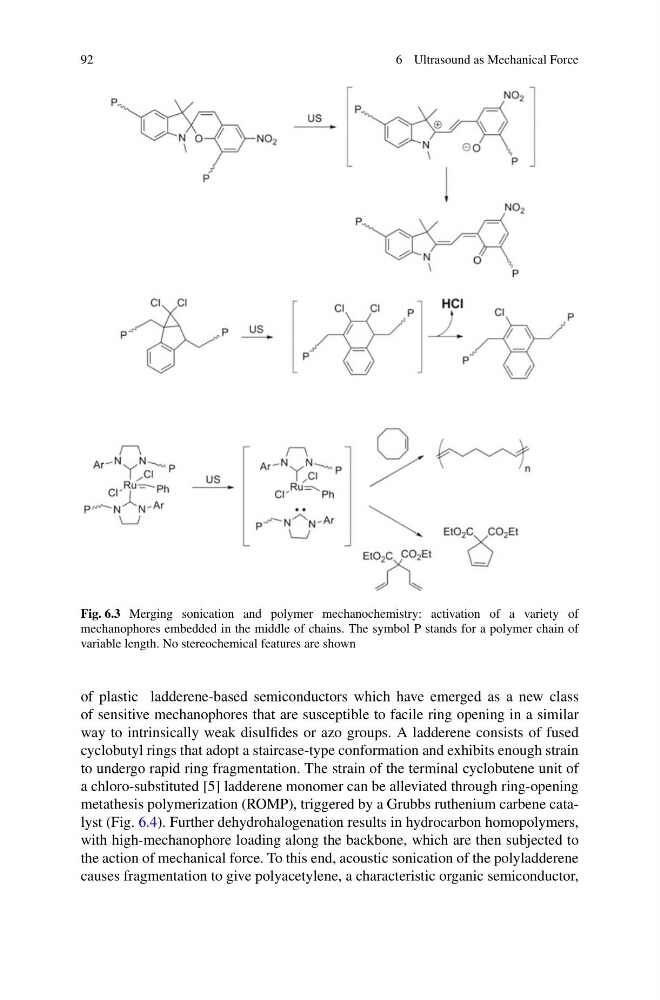
Fig. 6.3 Merging sonication and polymer mechanochemistry: activation of a variety of
mechanophores embedded in the middle of chains. The symbol P stands for a polymer chain of
variable length. No stereochemical features are shown
of plastic ladderene-based semiconductors which have emerged as a new class
of sensitive mechanophores that are susceptible to facile ring opening in a similar
way to intrinsically weak disulfides or azo groups. A ladderene consists of fused
cyclobutyl rings that adopt a staircase-type conformation and exhibits enough strain
to undergo rapid ring fragmentation. The strain of the terminal cyclobutene unit of
a chloro-substituted [5] ladderene monomer can be alleviated through ring-opening
metathesis polymerization (ROMP), triggered by a Grubbs ruthenium carbene catalyst (Fig. 6.4). Further dehydrohalogenation results in hydrocarbon homopolymers,
with high-mechanophore loading along the backbone, which are then subjected to
the action of mechanical force. To this end, acoustic sonication of the polyladderene
causes fragmentation to give polyacetylene, a characteristic organic semiconductor,
6 Ultrasound as Mechanical Force
Fig. 6.3 Merging sonication and polymer mechanochemistry: activation of a variety of
mechanophores embedded in the middle of chains. The symbol P stands for a polymer chain of
variable length. No stereochemical features are shown
of plastic ladderene-based semiconductors which have emerged as a new class
of sensitive mechanophores that are susceptible to facile ring opening in a similar
way to intrinsically weak disulfides or azo groups. A ladderene consists of fused
cyclobutyl rings that adopt a staircase-type conformation and exhibits enough strain
to undergo rapid ring fragmentation. The strain of the terminal cyclobutene unit of
a chloro-substituted [5] ladderene monomer can be alleviated through ring-opening
metathesis polymerization (ROMP), triggered by a Grubbs ruthenium carbene catalyst (Fig. 6.4). Further dehydrohalogenation results in hydrocarbon homopolymers,
with high-mechanophore loading along the backbone, which are then subjected to
the action of mechanical force. To this end, acoustic sonication of the polyladderene
causes fragmentation to give polyacetylene, a characteristic organic semiconductor,