

6.3 The Mechanophore Concept: Ultrasonication of Polymers
91
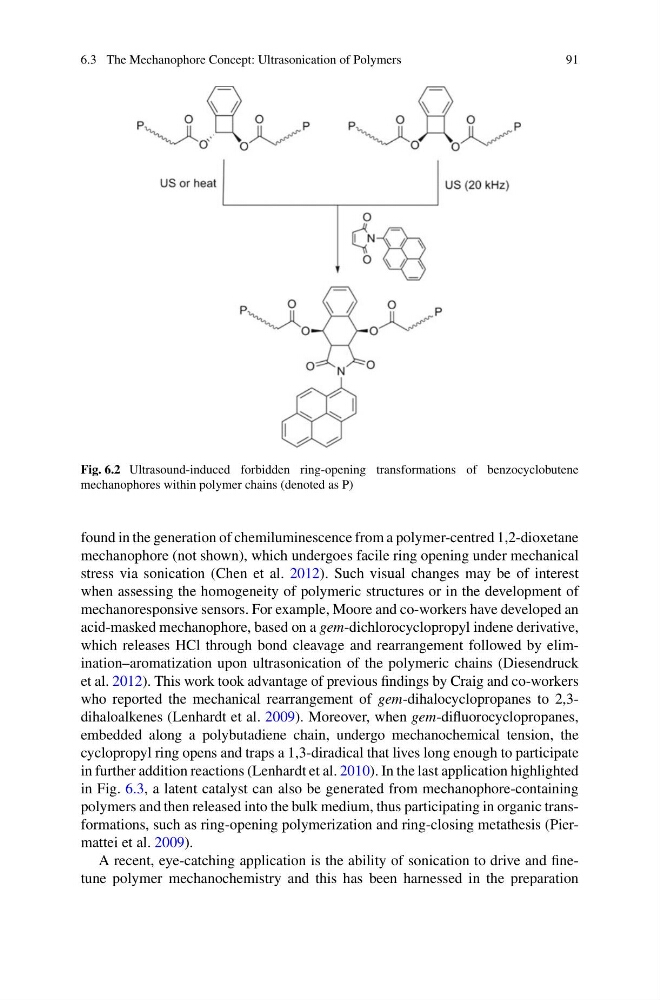
Fig. 6.2 Ultrasound-induced forbidden ring-opening transformations of benzocyclobutene
mechanophores within polymer chains (denoted as P)
found in the generation of chemiluminescence from a polymer-centred 1,2-dioxetane
mechanophore (not shown), which undergoes facile ring opening under mechanical
stress via sonication (Chen et al. 2012). Such visual changes may be of interest
when assessing the homogeneity of polymeric structures or in the development of
mechanoresponsive sensors. For example, Moore and co-workers have developed an
acid-masked mechanophore, based on a gem-dichlorocyclopropyl indene derivative,
which releases HCl through bond cleavage and rearrangement followed by elimination–aromatization upon ultrasonication of the polymeric chains (Diesendruck
et al. 2012). This work took advantage of previous findings by Craig and co-workers
who reported the mechanical rearrangement of gem-dihalocyclopropanes to 2,3dihaloalkenes (Lenhardt et al. 2009). Moreover, when gem-difluorocyclopropanes,
embedded along a polybutadiene chain, undergo mechanochemical tension, the
cyclopropyl ring opens and traps a 1,3-diradical that lives long enough to participate
in further addition reactions (Lenhardt et al. 2010). In the last application highlighted
in Fig. 6.3, a latent catalyst can also be generated from mechanophore-containing
polymers and then released into the bulk medium, thus participating in organic transformations, such as ring-opening polymerization and ring-closing metathesis (Piermattei et al. 2009).
A recent, eye-catching application is the ability of sonication to drive and finetune polymer mechanochemistry and this has been harnessed in the preparation
91
Fig. 6.2 Ultrasound-induced forbidden ring-opening transformations of benzocyclobutene
mechanophores within polymer chains (denoted as P)
found in the generation of chemiluminescence from a polymer-centred 1,2-dioxetane
mechanophore (not shown), which undergoes facile ring opening under mechanical
stress via sonication (Chen et al. 2012). Such visual changes may be of interest
when assessing the homogeneity of polymeric structures or in the development of
mechanoresponsive sensors. For example, Moore and co-workers have developed an
acid-masked mechanophore, based on a gem-dichlorocyclopropyl indene derivative,
which releases HCl through bond cleavage and rearrangement followed by elimination–aromatization upon ultrasonication of the polymeric chains (Diesendruck
et al. 2012). This work took advantage of previous findings by Craig and co-workers
who reported the mechanical rearrangement of gem-dihalocyclopropanes to 2,3dihaloalkenes (Lenhardt et al. 2009). Moreover, when gem-difluorocyclopropanes,
embedded along a polybutadiene chain, undergo mechanochemical tension, the
cyclopropyl ring opens and traps a 1,3-diradical that lives long enough to participate
in further addition reactions (Lenhardt et al. 2010). In the last application highlighted
in Fig. 6.3, a latent catalyst can also be generated from mechanophore-containing
polymers and then released into the bulk medium, thus participating in organic transformations, such as ring-opening polymerization and ring-closing metathesis (Piermattei et al. 2009).
A recent, eye-catching application is the ability of sonication to drive and finetune polymer mechanochemistry and this has been harnessed in the preparation