

30
2 Efficient Organic Synthesis: What Ultrasound Makes Easier
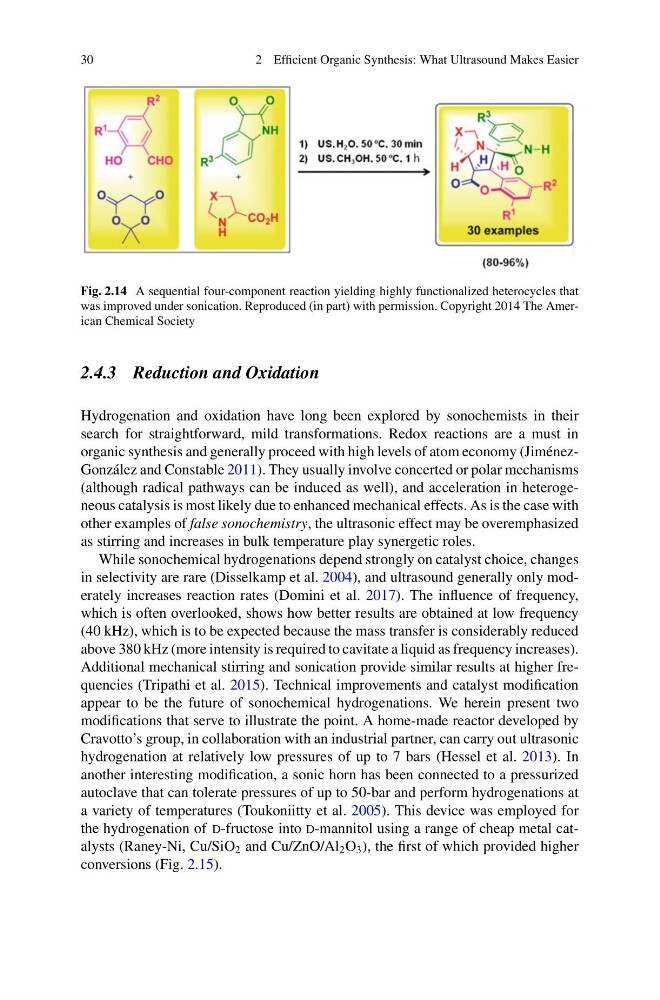
Fig. 2.14 A sequential four-component reaction yielding highly functionalized heterocycles that
was improved under sonication. Reproduced (in part) with permission. Copyright 2014 The American Chemical Society
2.4.3 Reduction and Oxidation
Hydrogenation and oxidation have long been explored by sonochemists in their
search for straightforward, mild transformations. Redox reactions are a must in
organic synthesis and generally proceed with high levels of atom economy (JiménezGonzález and Constable 2011). They usually involve concerted or polar mechanisms
(although radical pathways can be induced as well), and acceleration in heterogeneous catalysis is most likely due to enhanced mechanical effects. As is the case with
other examples of false sonochemistry, the ultrasonic effect may be overemphasized
as stirring and increases in bulk temperature play synergetic roles.
While sonochemical hydrogenations depend strongly on catalyst choice, changes
in selectivity are rare (Disselkamp et al. 2004), and ultrasound generally only moderately increases reaction rates (Domini et al. 2017). The influence of frequency,
which is often overlooked, shows how better results are obtained at low frequency
(40 kHz), which is to be expected because the mass transfer is considerably reduced
above 380 kHz (more intensity is required to cavitate a liquid as frequency increases).
Additional mechanical stirring and sonication provide similar results at higher frequencies (Tripathi et al. 2015). Technical improvements and catalyst modification
appear to be the future of sonochemical hydrogenations. We herein present two
modifications that serve to illustrate the point. A home-made reactor developed by
Cravotto’s group, in collaboration with an industrial partner, can carry out ultrasonic
hydrogenation at relatively low pressures of up to 7 bars (Hessel et al. 2013). In
another interesting modification, a sonic horn has been connected to a pressurized
autoclave that can tolerate pressures of up to 50-bar and perform hydrogenations at
a variety of temperatures (Toukoniitty et al. 2005). This device was employed for
the hydrogenation of d-fructose into d-mannitol using a range of cheap metal catalysts (Raney-Ni, Cu/SiO 2 and Cu/ZnO/Al 2 O 3 ), the first of which provided higher
conversions (Fig. 2.15).
2 Efficient Organic Synthesis: What Ultrasound Makes Easier
Fig. 2.14 A sequential four-component reaction yielding highly functionalized heterocycles that
was improved under sonication. Reproduced (in part) with permission. Copyright 2014 The American Chemical Society
2.4.3 Reduction and Oxidation
Hydrogenation and oxidation have long been explored by sonochemists in their
search for straightforward, mild transformations. Redox reactions are a must in
organic synthesis and generally proceed with high levels of atom economy (JiménezGonzález and Constable 2011). They usually involve concerted or polar mechanisms
(although radical pathways can be induced as well), and acceleration in heterogeneous catalysis is most likely due to enhanced mechanical effects. As is the case with
other examples of false sonochemistry, the ultrasonic effect may be overemphasized
as stirring and increases in bulk temperature play synergetic roles.
While sonochemical hydrogenations depend strongly on catalyst choice, changes
in selectivity are rare (Disselkamp et al. 2004), and ultrasound generally only moderately increases reaction rates (Domini et al. 2017). The influence of frequency,
which is often overlooked, shows how better results are obtained at low frequency
(40 kHz), which is to be expected because the mass transfer is considerably reduced
above 380 kHz (more intensity is required to cavitate a liquid as frequency increases).
Additional mechanical stirring and sonication provide similar results at higher frequencies (Tripathi et al. 2015). Technical improvements and catalyst modification
appear to be the future of sonochemical hydrogenations. We herein present two
modifications that serve to illustrate the point. A home-made reactor developed by
Cravotto’s group, in collaboration with an industrial partner, can carry out ultrasonic
hydrogenation at relatively low pressures of up to 7 bars (Hessel et al. 2013). In
another interesting modification, a sonic horn has been connected to a pressurized
autoclave that can tolerate pressures of up to 50-bar and perform hydrogenations at
a variety of temperatures (Toukoniitty et al. 2005). This device was employed for
the hydrogenation of d-fructose into d-mannitol using a range of cheap metal catalysts (Raney-Ni, Cu/SiO 2 and Cu/ZnO/Al 2 O 3 ), the first of which provided higher
conversions (Fig. 2.15).