

2.4 Sonochemical Approaches in Organic Synthesis
25
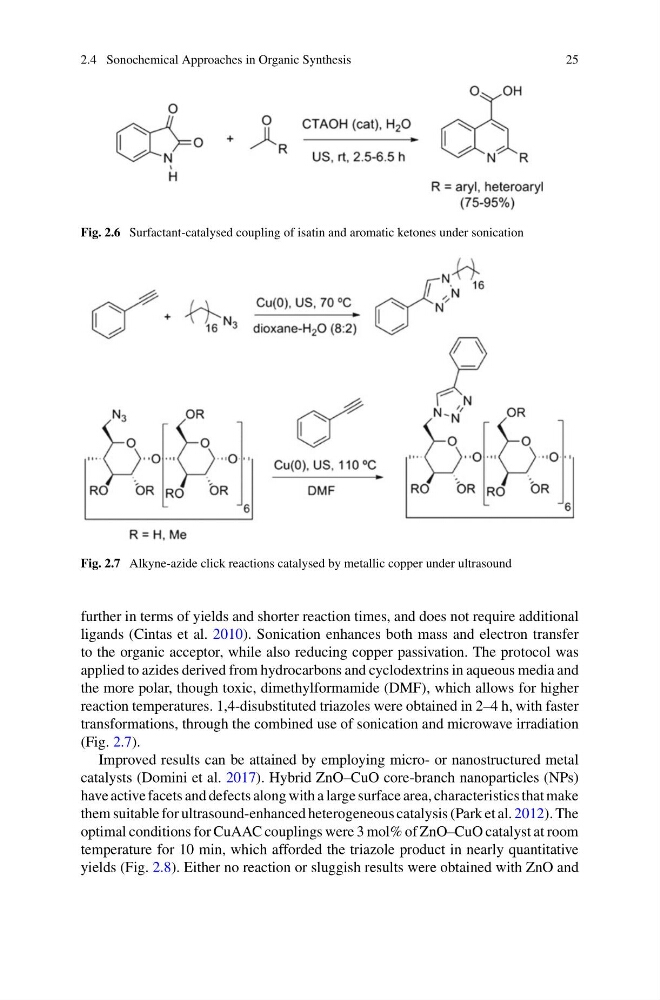
Fig. 2.6 Surfactant-catalysed coupling of isatin and aromatic ketones under sonication
Fig. 2.7 Alkyne-azide click reactions catalysed by metallic copper under ultrasound
further in terms of yields and shorter reaction times, and does not require additional
ligands (Cintas et al. 2010). Sonication enhances both mass and electron transfer
to the organic acceptor, while also reducing copper passivation. The protocol was
applied to azides derived from hydrocarbons and cyclodextrins in aqueous media and
the more polar, though toxic, dimethylformamide (DMF), which allows for higher
reaction temperatures. 1,4-disubstituted triazoles were obtained in 2–4 h, with faster
transformations, through the combined use of sonication and microwave irradiation
(Fig. 2.7).
Improved results can be attained by employing micro- or nanostructured metal
catalysts (Domini et al. 2017). Hybrid ZnO–CuO core-branch nanoparticles (NPs)
have active facets and defects along with a large surface area, characteristics that make
them suitable for ultrasound-enhanced heterogeneous catalysis (Park et al. 2012). The
optimal conditions for CuAAC couplings were 3 mol% of ZnO–CuO catalyst at room
temperature for 10 min, which afforded the triazole product in nearly quantitative
yields (Fig. 2.8). Either no reaction or sluggish results were obtained with ZnO and
25
Fig. 2.6 Surfactant-catalysed coupling of isatin and aromatic ketones under sonication
Fig. 2.7 Alkyne-azide click reactions catalysed by metallic copper under ultrasound
further in terms of yields and shorter reaction times, and does not require additional
ligands (Cintas et al. 2010). Sonication enhances both mass and electron transfer
to the organic acceptor, while also reducing copper passivation. The protocol was
applied to azides derived from hydrocarbons and cyclodextrins in aqueous media and
the more polar, though toxic, dimethylformamide (DMF), which allows for higher
reaction temperatures. 1,4-disubstituted triazoles were obtained in 2–4 h, with faster
transformations, through the combined use of sonication and microwave irradiation
(Fig. 2.7).
Improved results can be attained by employing micro- or nanostructured metal
catalysts (Domini et al. 2017). Hybrid ZnO–CuO core-branch nanoparticles (NPs)
have active facets and defects along with a large surface area, characteristics that make
them suitable for ultrasound-enhanced heterogeneous catalysis (Park et al. 2012). The
optimal conditions for CuAAC couplings were 3 mol% of ZnO–CuO catalyst at room
temperature for 10 min, which afforded the triazole product in nearly quantitative
yields (Fig. 2.8). Either no reaction or sluggish results were obtained with ZnO and