

2.4 Sonochemical Approaches in Organic Synthesis
23
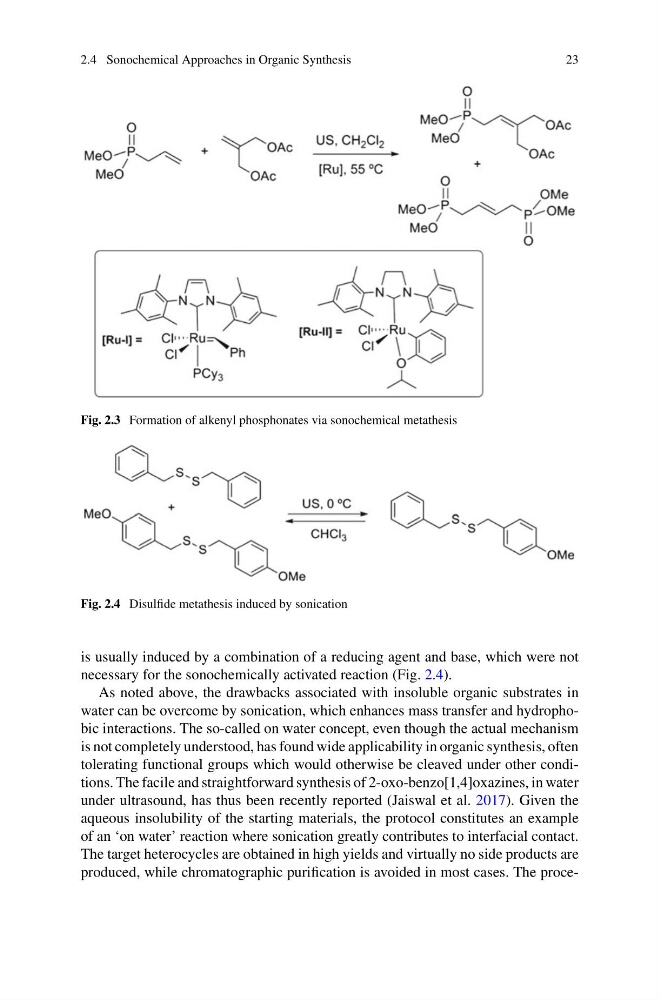
Fig. 2.3 Formation of alkenyl phosphonates via sonochemical metathesis
Fig. 2.4 Disulfide metathesis induced by sonication
is usually induced by a combination of a reducing agent and base, which were not
necessary for the sonochemically activated reaction (Fig. 2.4).
As noted above, the drawbacks associated with insoluble organic substrates in
water can be overcome by sonication, which enhances mass transfer and hydrophobic interactions. The so-called on water concept, even though the actual mechanism
is not completely understood, has found wide applicability in organic synthesis, often
tolerating functional groups which would otherwise be cleaved under other conditions. The facile and straightforward synthesis of 2-oxo-benzo[1,4]oxazines, in water
under ultrasound, has thus been recently reported (Jaiswal et al. 2017). Given the
aqueous insolubility of the starting materials, the protocol constitutes an example
of an ‘on water’ reaction where sonication greatly contributes to interfacial contact.
The target heterocycles are obtained in high yields and virtually no side products are
produced, while chromatographic purification is avoided in most cases. The proce-
23
Fig. 2.3 Formation of alkenyl phosphonates via sonochemical metathesis
Fig. 2.4 Disulfide metathesis induced by sonication
is usually induced by a combination of a reducing agent and base, which were not
necessary for the sonochemically activated reaction (Fig. 2.4).
As noted above, the drawbacks associated with insoluble organic substrates in
water can be overcome by sonication, which enhances mass transfer and hydrophobic interactions. The so-called on water concept, even though the actual mechanism
is not completely understood, has found wide applicability in organic synthesis, often
tolerating functional groups which would otherwise be cleaved under other conditions. The facile and straightforward synthesis of 2-oxo-benzo[1,4]oxazines, in water
under ultrasound, has thus been recently reported (Jaiswal et al. 2017). Given the
aqueous insolubility of the starting materials, the protocol constitutes an example
of an ‘on water’ reaction where sonication greatly contributes to interfacial contact.
The target heterocycles are obtained in high yields and virtually no side products are
produced, while chromatographic purification is avoided in most cases. The proce-