

7.6 Combined MW/US in the Preparation of Adsorbents
109
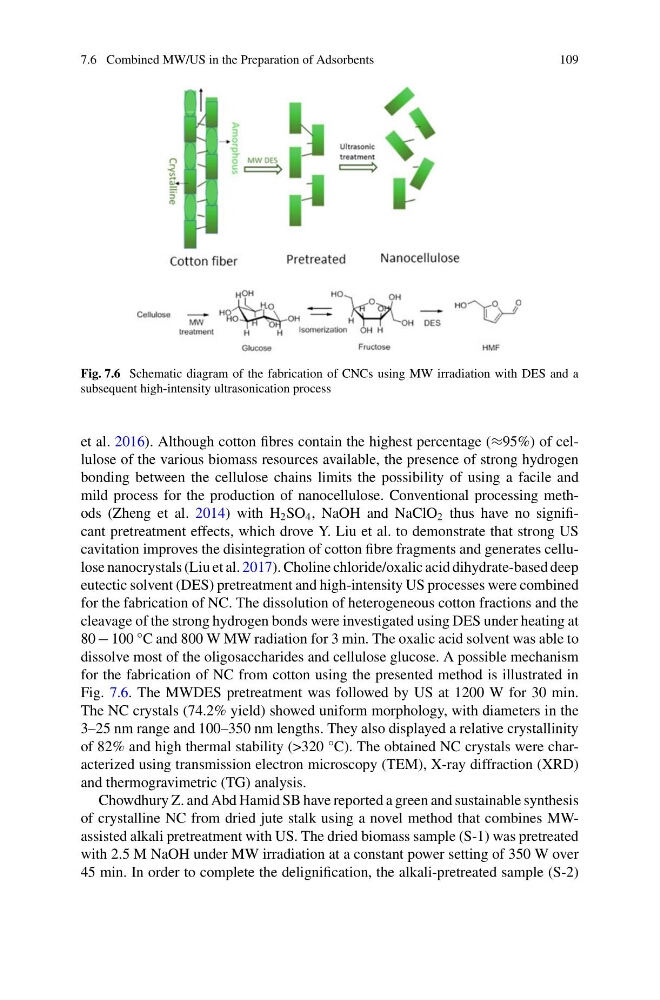
Fig. 7.6 Schematic diagram of the fabrication of CNCs using MW irradiation with DES and a
subsequent high-intensity ultrasonication process
et al. 2016). Although cotton fibres contain the highest percentage (≈95%) of cellulose of the various biomass resources available, the presence of strong hydrogen
bonding between the cellulose chains limits the possibility of using a facile and
mild process for the production of nanocellulose. Conventional processing methods (Zheng et al. 2014) with H 2 SO 4 , NaOH and NaClO 2 thus have no significant pretreatment effects, which drove Y. Liu et al. to demonstrate that strong US
cavitation improves the disintegration of cotton fibre fragments and generates cellulose nanocrystals (Liu et al. 2017). Choline chloride/oxalic acid dihydrate-based deep
eutectic solvent (DES) pretreatment and high-intensity US processes were combined
for the fabrication of NC. The dissolution of heterogeneous cotton fractions and the
cleavage of the strong hydrogen bonds were investigated using DES under heating at
80 − 100 °C and 800 W MW radiation for 3 min. The oxalic acid solvent was able to
dissolve most of the oligosaccharides and cellulose glucose. A possible mechanism
for the fabrication of NC from cotton using the presented method is illustrated in
Fig. 7.6. The MWDES pretreatment was followed by US at 1200 W for 30 min.
The NC crystals (74.2% yield) showed uniform morphology, with diameters in the
3–25 nm range and 100–350 nm lengths. They also displayed a relative crystallinity
of 82% and high thermal stability (>320 °C). The obtained NC crystals were characterized using transmission electron microscopy (TEM), X-ray diffraction (XRD)
and thermogravimetric (TG) analysis.
Chowdhury Z. and Abd Hamid SB have reported a green and sustainable synthesis
of crystalline NC from dried jute stalk using a novel method that combines MWassisted alkali pretreatment with US. The dried biomass sample (S-1) was pretreated
with 2.5 M NaOH under MW irradiation at a constant power setting of 350 W over
45 min. In order to complete the delignification, the alkali-pretreated sample (S-2)
109
Fig. 7.6 Schematic diagram of the fabrication of CNCs using MW irradiation with DES and a
subsequent high-intensity ultrasonication process
et al. 2016). Although cotton fibres contain the highest percentage (≈95%) of cellulose of the various biomass resources available, the presence of strong hydrogen
bonding between the cellulose chains limits the possibility of using a facile and
mild process for the production of nanocellulose. Conventional processing methods (Zheng et al. 2014) with H 2 SO 4 , NaOH and NaClO 2 thus have no significant pretreatment effects, which drove Y. Liu et al. to demonstrate that strong US
cavitation improves the disintegration of cotton fibre fragments and generates cellulose nanocrystals (Liu et al. 2017). Choline chloride/oxalic acid dihydrate-based deep
eutectic solvent (DES) pretreatment and high-intensity US processes were combined
for the fabrication of NC. The dissolution of heterogeneous cotton fractions and the
cleavage of the strong hydrogen bonds were investigated using DES under heating at
80 − 100 °C and 800 W MW radiation for 3 min. The oxalic acid solvent was able to
dissolve most of the oligosaccharides and cellulose glucose. A possible mechanism
for the fabrication of NC from cotton using the presented method is illustrated in
Fig. 7.6. The MWDES pretreatment was followed by US at 1200 W for 30 min.
The NC crystals (74.2% yield) showed uniform morphology, with diameters in the
3–25 nm range and 100–350 nm lengths. They also displayed a relative crystallinity
of 82% and high thermal stability (>320 °C). The obtained NC crystals were characterized using transmission electron microscopy (TEM), X-ray diffraction (XRD)
and thermogravimetric (TG) analysis.
Chowdhury Z. and Abd Hamid SB have reported a green and sustainable synthesis
of crystalline NC from dried jute stalk using a novel method that combines MWassisted alkali pretreatment with US. The dried biomass sample (S-1) was pretreated
with 2.5 M NaOH under MW irradiation at a constant power setting of 350 W over
45 min. In order to complete the delignification, the alkali-pretreated sample (S-2)