

624
not alarm, as the M2 concentration is just below 1.5%. As the shearer continues to travel
towards to tailgate, the M2 concentration will exceed 1.5%. Considering that the time lag of
the machine-mounted sensor may be 20 seconds or more (see Taylor et al., 2010), the shearer
may be well on its way back and snaking in for the next pass by the time the sensor responds.
At a speed of 1 m/s, the shearer would advance 10 shields in 20 s. This puts the headgate-side
cutter drum near the explosive zone at shield 150, where an explosion hazard exists. At this
location, the M3 methane concentration is exceeding 4.5%. It should also be noted that handheld methane readings in this scenario would read around 1.0% which may not raise concerns
if the ventilation plan allows up to 1.5% in the longwall face.
3 A METHANE EXPLOSION HAZARD PROXIMITY MODEL
Rather than relying on one or two point-type methane detectors, future methane monitoring are expected to utilize real-time CFD modeling, supported by remote infrared detectors
combined with multiple, strategically positioned point-type sensors. Researchers at the Colorado School of Mines propose a methane hazard proximity model that can detect a cloud of
explosive or flammable methane-air mixture and track the explosive zones as they form and
move through the face.
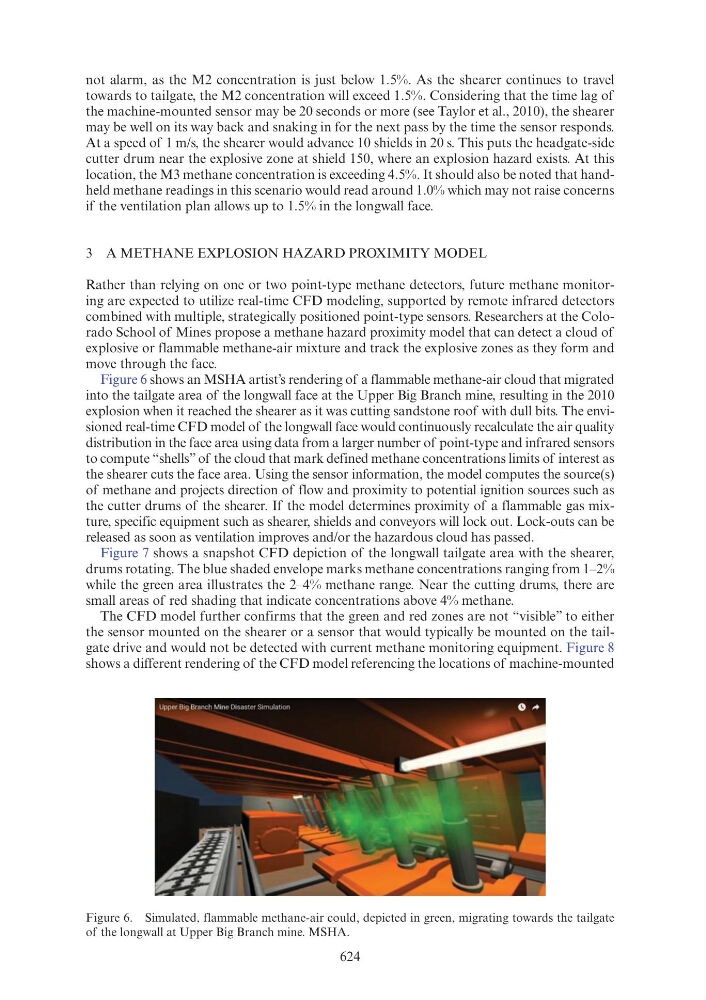
Figure 6 shows an MSHA artist’s rendering of a flammable methane-air cloud that migrated
into the tailgate area of the longwall face at the Upper Big Branch mine, resulting in the 2010
explosion when it reached the shearer as it was cutting sandstone roof with dull bits. The envisioned real-time CFD model of the longwall face would continuously recalculate the air quality
distribution in the face area using data from a larger number of point-type and infrared sensors
to compute “shells” of the cloud that mark defined methane concentrations limits of interest as
the shearer cuts the face area. Using the sensor information, the model computes the source(s)
of methane and projects direction of flow and proximity to potential ignition sources such as
the cutter drums of the shearer. If the model determines proximity of a flammable gas mixture, specific equipment such as shearer, shields and conveyors will lock out. Lock-outs can be
released as soon as ventilation improves and/or the hazardous cloud has passed.
Figure 7 shows a snapshot CFD depiction of the longwall tailgate area with the shearer,
drums rotating. The blue shaded envelope marks methane concentrations ranging from 1–2%
while the green area illustrates the 2–4% methane range. Near the cutting drums, there are
small areas of red shading that indicate concentrations above 4% methane.
The CFD model further confirms that the green and red zones are not “visible” to either
the sensor mounted on the shearer or a sensor that would typically be mounted on the tailgate drive and would not be detected with current methane monitoring equipment. Figure 8
shows a different rendering of the CFD model referencing the locations of machine-mounted
Figure 6. Simulated, flammable methane-air could, depicted in green, migrating towards the tailgate
of the longwall at Upper Big Branch mine. MSHA.