

486
In the simulation model, three main algorithms were constructed. The first algorithm provides the coal flow in the system. According to the first algorithm, face coal enters the system
and is transported out of the mine by using of AFC, BSL, BC-1, BC-2, and BC-3, respectively. On the other hand, top coal enters the system and is transported out of the mine by
using of RC, BSL, BC-1, BC-2, and BC-3, respectively. The second algorithm determines the
shearer movement in bi-directional cutting sequence. According to the second algorithm, the
production of face coal and top coal is determined. The third algorithm determines whether
there is enough space on the AFC and RC for face coal entities and top coal entities for the
transportation to BSL. With the aid of this algorithm, different delay times can be assigned
to every entity entering the system. The simulation model allows transportation time of face
coal entities and top coal entities on the AFC and RC to be estimated.
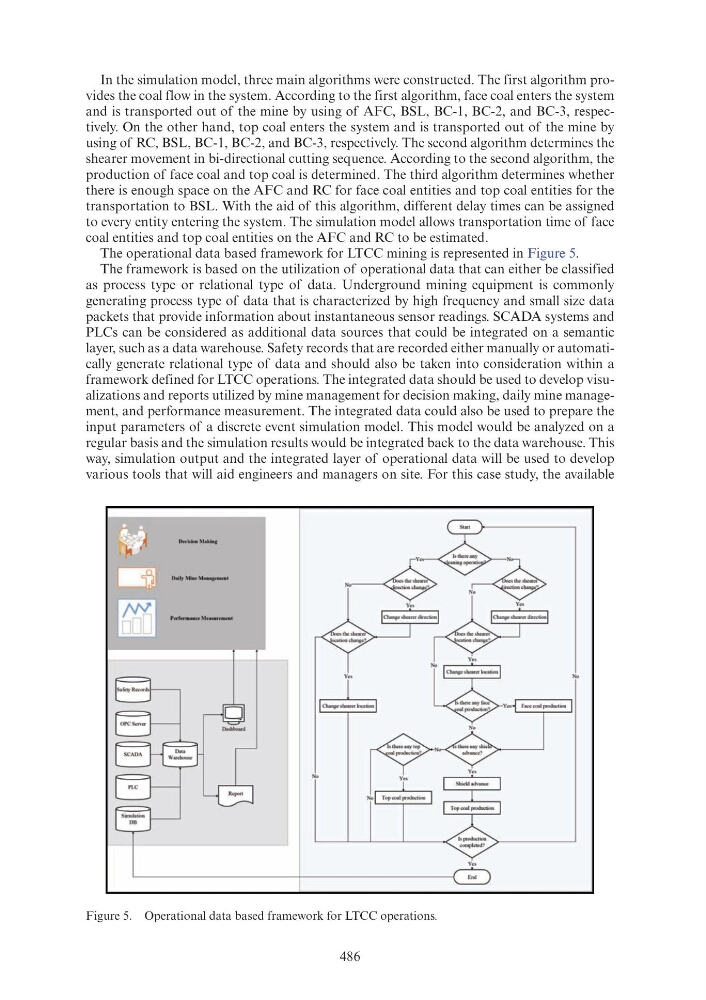
The operational data based framework for LTCC mining is represented in Figure 5.
The framework is based on the utilization of operational data that can either be classified
as process type or relational type of data. Underground mining equipment is commonly
generating process type of data that is characterized by high frequency and small size data
packets that provide information about instantaneous sensor readings. SCADA systems and
PLCs can be considered as additional data sources that could be integrated on a semantic
layer, such as a data warehouse. Safety records that are recorded either manually or automatically generate relational type of data and should also be taken into consideration within a
framework defined for LTCC operations. The integrated data should be used to develop visualizations and reports utilized by mine management for decision making, daily mine management, and performance measurement. The integrated data could also be used to prepare the
input parameters of a discrete event simulation model. This model would be analyzed on a
regular basis and the simulation results would be integrated back to the data warehouse. This
way, simulation output and the integrated layer of operational data will be used to develop
various tools that will aid engineers and managers on site. For this case study, the available
Figure 5. Operational data based framework for LTCC operations.
In the simulation model, three main algorithms were constructed. The first algorithm provides the coal flow in the system. According to the first algorithm, face coal enters the system
and is transported out of the mine by using of AFC, BSL, BC-1, BC-2, and BC-3, respectively. On the other hand, top coal enters the system and is transported out of the mine by
using of RC, BSL, BC-1, BC-2, and BC-3, respectively. The second algorithm determines the
shearer movement in bi-directional cutting sequence. According to the second algorithm, the
production of face coal and top coal is determined. The third algorithm determines whether
there is enough space on the AFC and RC for face coal entities and top coal entities for the
transportation to BSL. With the aid of this algorithm, different delay times can be assigned
to every entity entering the system. The simulation model allows transportation time of face
coal entities and top coal entities on the AFC and RC to be estimated.
The operational data based framework for LTCC mining is represented in Figure 5.
The framework is based on the utilization of operational data that can either be classified
as process type or relational type of data. Underground mining equipment is commonly
generating process type of data that is characterized by high frequency and small size data
packets that provide information about instantaneous sensor readings. SCADA systems and
PLCs can be considered as additional data sources that could be integrated on a semantic
layer, such as a data warehouse. Safety records that are recorded either manually or automatically generate relational type of data and should also be taken into consideration within a
framework defined for LTCC operations. The integrated data should be used to develop visualizations and reports utilized by mine management for decision making, daily mine management, and performance measurement. The integrated data could also be used to prepare the
input parameters of a discrete event simulation model. This model would be analyzed on a
regular basis and the simulation results would be integrated back to the data warehouse. This
way, simulation output and the integrated layer of operational data will be used to develop
various tools that will aid engineers and managers on site. For this case study, the available
Figure 5. Operational data based framework for LTCC operations.