

274
N. Balakrishnan and B. K. Kendrick
1.1
1.2
1.3
1.4
J = 0
J = 1
J = 0-4
1.25
1.3
1.35
J = 0
J = 1
J = 0-4
10
-6
10
-4
10
-2
10
0
10
2
Energy (K)
-1.5
-1
-0.5
0
0.5
1
1.5
COS
Δ
J = 0
J = 1
J = 0-4
10
-6
10
-4
10
-2
10
0
10
2
Energy (K)
-1.5
-1
-0.5
0
0.5
1
1.5
COS
Δ
J = 0
J = 1
J = 0-4
Evn Ex-Sym
v = 0, j = 3
(a)
(b)
Evn Ex-Sym
v = 0, j = 3
`
`
`
`
(c)
Odd Ex-Sym
v = 0, j = 3
`
`
(d)
Odd Ex-Sym
v = 0, j = 3
`
`
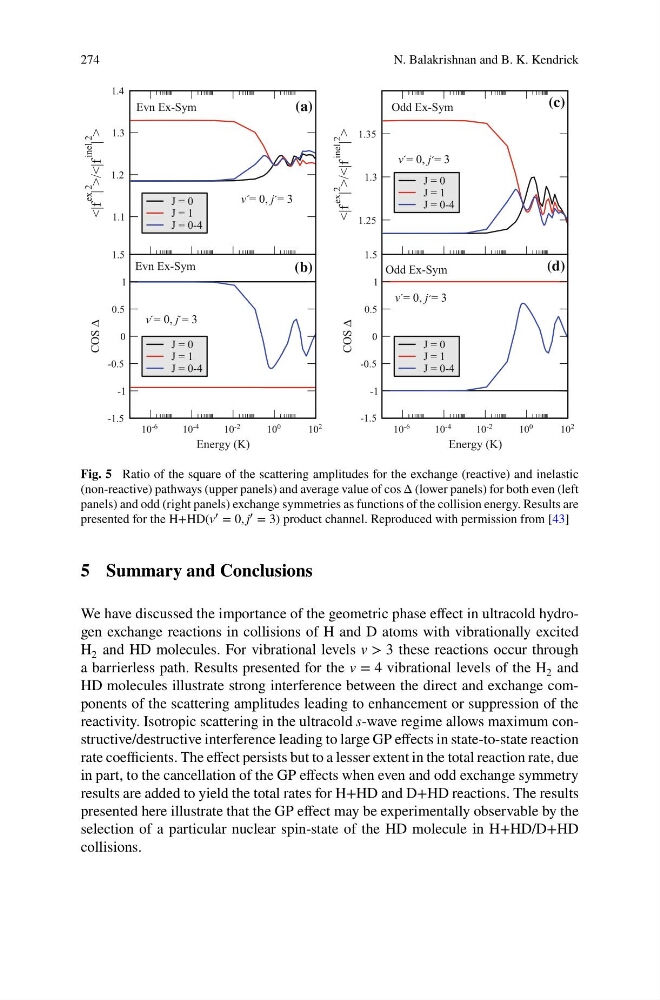
Fig. 5 Ratio of the square of the scattering amplitudes for the exchange (reactive) and inelastic
(non-reactive) pathways (upper panels) and average value of cos Δ (lower panels) for both even (left
panels) and odd (right panels) exchange symmetries as functions of the collision energy. Results are
presented for the H+HD(v
′
= 0, j
′
= 3) product channel. Reproduced with permission from [43]
5 Summary and Conclusions
We have discussed the importance of the geometric phase effect in ultracold hydrogen exchange reactions in collisions of H and D atoms with vibrationally excited
H 2 and HD molecules. For vibrational levels v > 3 these reactions occur through
a barrierless path. Results presented for the v = 4 vibrational levels of the H 2 and
HD molecules illustrate strong interference between the direct and exchange components of the scattering amplitudes leading to enhancement or suppression of the
reactivity. Isotropic scattering in the ultracold s-wave regime allows maximum constructive/destructive interference leading to large GP effects in state-to-state reaction
rate coefficients. The effect persists but to a lesser extent in the total reaction rate, due
in part, to the cancellation of the GP effects when even and odd exchange symmetry
results are added to yield the total rates for H+HD and D+HD reactions. The results
presented here illustrate that the GP effect may be experimentally observable by the
selection of a particular nuclear spin-state of the HD molecule in H+HD/D+HD
collisions.
N. Balakrishnan and B. K. Kendrick
1.1
1.2
1.3
1.4
J = 0
J = 1
J = 0-4
1.25
1.3
1.35
J = 0
J = 1
J = 0-4
10
-6
10
-4
10
-2
10
0
10
2
Energy (K)
-1.5
-1
-0.5
0
0.5
1
1.5
COS
Δ
J = 0
J = 1
J = 0-4
10
-6
10
-4
10
-2
10
0
10
2
Energy (K)
-1.5
-1
-0.5
0
0.5
1
1.5
COS
Δ
J = 0
J = 1
J = 0-4
Evn Ex-Sym
v = 0, j = 3
(a)
(b)
Evn Ex-Sym
v = 0, j = 3
`
`
`
`
(c)
Odd Ex-Sym
v = 0, j = 3
`
`
(d)
Odd Ex-Sym
v = 0, j = 3
`
`
Fig. 5 Ratio of the square of the scattering amplitudes for the exchange (reactive) and inelastic
(non-reactive) pathways (upper panels) and average value of cos Δ (lower panels) for both even (left
panels) and odd (right panels) exchange symmetries as functions of the collision energy. Results are
presented for the H+HD(v
′
= 0, j
′
= 3) product channel. Reproduced with permission from [43]
5 Summary and Conclusions
We have discussed the importance of the geometric phase effect in ultracold hydrogen exchange reactions in collisions of H and D atoms with vibrationally excited
H 2 and HD molecules. For vibrational levels v > 3 these reactions occur through
a barrierless path. Results presented for the v = 4 vibrational levels of the H 2 and
HD molecules illustrate strong interference between the direct and exchange components of the scattering amplitudes leading to enhancement or suppression of the
reactivity. Isotropic scattering in the ultracold s-wave regime allows maximum constructive/destructive interference leading to large GP effects in state-to-state reaction
rate coefficients. The effect persists but to a lesser extent in the total reaction rate, due
in part, to the cancellation of the GP effects when even and odd exchange symmetry
results are added to yield the total rates for H+HD and D+HD reactions. The results
presented here illustrate that the GP effect may be experimentally observable by the
selection of a particular nuclear spin-state of the HD molecule in H+HD/D+HD
collisions.