

Geometric Phase and Interference Effects in Ultracold Chemical Reactions
275
log(DCS)
sc a tt e ri n g a n g le (d e g )
log (Ec ) K
2
log(DCS)
cm
/Sr
20
60
100
140
180
NGP
GP
v’ = 3 , j’ = 0
Even Ex-Sym
log(DCS)
sc a tt e ri n g a n g le (d e g )
20
60
100
140
180
log (Ec ) K
NGP
GP
2
log(DCS)
cm
/Sr
v’ = 3 , j’ = 0
Odd Ex-Sym
(a)
(b)
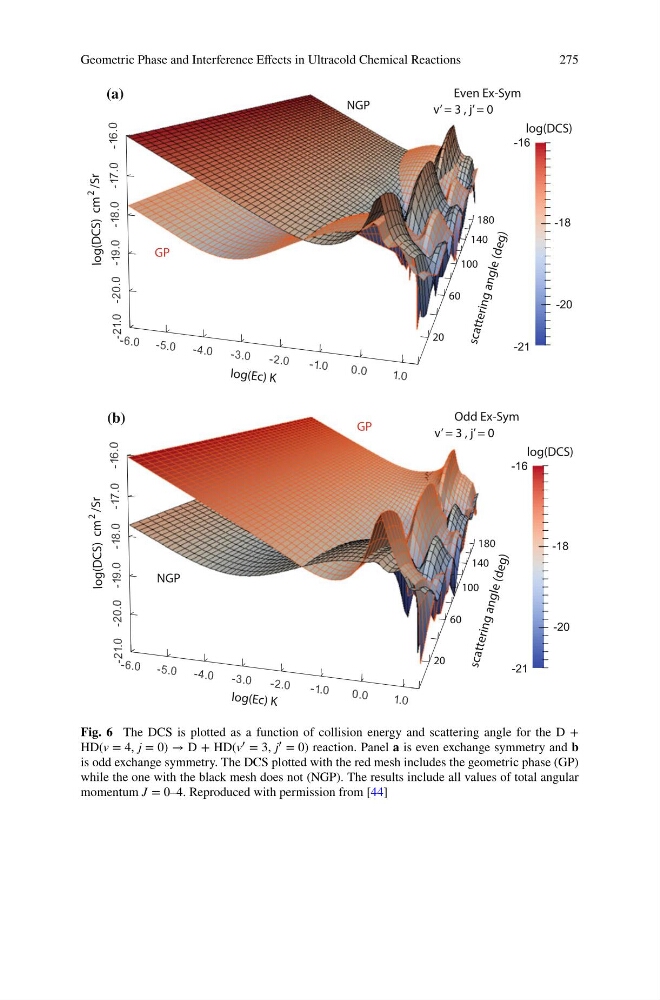
Fig. 6 The DCS is plotted as a function of collision energy and scattering angle for the D +
HD(v = 4, j = 0) → D + HD(v
′
= 3, j
′
= 0) reaction. Panel a is even exchange symmetry and b
is odd exchange symmetry. The DCS plotted with the red mesh includes the geometric phase (GP)
while the one with the black mesh does not (NGP). The results include all values of total angular
momentum J = 0–4. Reproduced with permission from [44]
275
log(DCS)
sc a tt e ri n g a n g le (d e g )
log (Ec ) K
2
log(DCS)
cm
/Sr
20
60
100
140
180
NGP
GP
v’ = 3 , j’ = 0
Even Ex-Sym
log(DCS)
sc a tt e ri n g a n g le (d e g )
20
60
100
140
180
log (Ec ) K
NGP
GP
2
log(DCS)
cm
/Sr
v’ = 3 , j’ = 0
Odd Ex-Sym
(a)
(b)
Fig. 6 The DCS is plotted as a function of collision energy and scattering angle for the D +
HD(v = 4, j = 0) → D + HD(v
′
= 3, j
′
= 0) reaction. Panel a is even exchange symmetry and b
is odd exchange symmetry. The DCS plotted with the red mesh includes the geometric phase (GP)
while the one with the black mesh does not (NGP). The results include all values of total angular
momentum J = 0–4. Reproduced with permission from [44]