

272
N. Balakrishnan and B. K. Kendrick
10 -16
10 -15
10 -14
10 -13
10 -16
10 -15
10 -14
10 -13
10 -16
10 -14
10 -12
Rate Coefficient (cm 3
/s)
10 -16
10 -14
10 -12
Rate Coefficient (cm 3
/s)
10 -6
10 -4
10 -2
10 0
10 2
Energy (K)
10 -16
10 -15
10 -14
10 -13
10
-12
10 -6
10 -4
10 -2
10 0
10 2
Energy (K)
10 -16
10 -15
10 -14
10 -13
10 -12
(a)
(b)
(c)
(d)
(e)
(f)
Evn Ex-Sym
Evn Ex-Sym
Evn Ex-Sym
v = 0, j = 3
v = 1, j = 2
v = 3, j = 2
v = 3, j = 2
v = 1, j = 2
v = 0, j = 3
Odd Ex-Sym
Odd Ex-Sym
Odd Ex-Sym
`
`
`
`
`
`
`
`
`
`
`
`
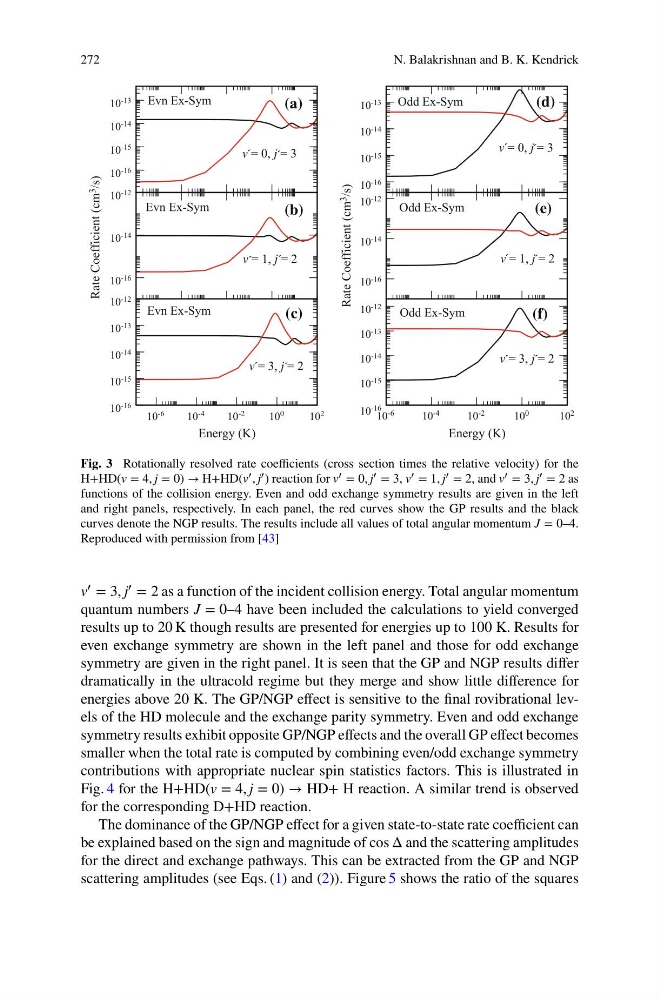
Fig. 3 Rotationally resolved rate coefficients (cross section times the relative velocity) for the
H+HD(v = 4, j = 0) → H+HD(v ′ , j ′ ) reaction for v ′ = 0, j ′ = 3, v ′ = 1, j ′ = 2, and v ′ = 3, j ′ = 2 as
functions of the collision energy. Even and odd exchange symmetry results are given in the left
and right panels, respectively. In each panel, the red curves show the GP results and the black
curves denote the NGP results. The results include all values of total angular momentum J = 0–4.
Reproduced with permission from [43]
v
′
= 3, j
′
= 2 as a function of the incident collision energy. Total angular momentum
quantum numbers J = 0–4 have been included the calculations to yield converged
results up to 20 K though results are presented for energies up to 100 K. Results for
even exchange symmetry are shown in the left panel and those for odd exchange
symmetry are given in the right panel. It is seen that the GP and NGP results differ
dramatically in the ultracold regime but they merge and show little difference for
energies above 20 K. The GP/NGP effect is sensitive to the final rovibrational levels of the HD molecule and the exchange parity symmetry. Even and odd exchange
symmetry results exhibit opposite GP/NGP effects and the overall GP effect becomes
smaller when the total rate is computed by combining even/odd exchange symmetry
contributions with appropriate nuclear spin statistics factors. This is illustrated in
Fig. 4 for the H+HD(v = 4, j = 0) → HD+ H reaction. A similar trend is observed
for the corresponding D+HD reaction.
The dominance of the GP/NGP effect for a given state-to-state rate coefficient can
be explained based on the sign and magnitude of cos Δ and the scattering amplitudes
for the direct and exchange pathways. This can be extracted from the GP and NGP
scattering amplitudes (see Eqs. (1) and (2)). Figure 5 shows the ratio of the squares
N. Balakrishnan and B. K. Kendrick
10 -16
10 -15
10 -14
10 -13
10 -16
10 -15
10 -14
10 -13
10 -16
10 -14
10 -12
Rate Coefficient (cm 3
/s)
10 -16
10 -14
10 -12
Rate Coefficient (cm 3
/s)
10 -6
10 -4
10 -2
10 0
10 2
Energy (K)
10 -16
10 -15
10 -14
10 -13
10
-12
10 -6
10 -4
10 -2
10 0
10 2
Energy (K)
10 -16
10 -15
10 -14
10 -13
10 -12
(a)
(b)
(c)
(d)
(e)
(f)
Evn Ex-Sym
Evn Ex-Sym
Evn Ex-Sym
v = 0, j = 3
v = 1, j = 2
v = 3, j = 2
v = 3, j = 2
v = 1, j = 2
v = 0, j = 3
Odd Ex-Sym
Odd Ex-Sym
Odd Ex-Sym
`
`
`
`
`
`
`
`
`
`
`
`
Fig. 3 Rotationally resolved rate coefficients (cross section times the relative velocity) for the
H+HD(v = 4, j = 0) → H+HD(v ′ , j ′ ) reaction for v ′ = 0, j ′ = 3, v ′ = 1, j ′ = 2, and v ′ = 3, j ′ = 2 as
functions of the collision energy. Even and odd exchange symmetry results are given in the left
and right panels, respectively. In each panel, the red curves show the GP results and the black
curves denote the NGP results. The results include all values of total angular momentum J = 0–4.
Reproduced with permission from [43]
v
′
= 3, j
′
= 2 as a function of the incident collision energy. Total angular momentum
quantum numbers J = 0–4 have been included the calculations to yield converged
results up to 20 K though results are presented for energies up to 100 K. Results for
even exchange symmetry are shown in the left panel and those for odd exchange
symmetry are given in the right panel. It is seen that the GP and NGP results differ
dramatically in the ultracold regime but they merge and show little difference for
energies above 20 K. The GP/NGP effect is sensitive to the final rovibrational levels of the HD molecule and the exchange parity symmetry. Even and odd exchange
symmetry results exhibit opposite GP/NGP effects and the overall GP effect becomes
smaller when the total rate is computed by combining even/odd exchange symmetry
contributions with appropriate nuclear spin statistics factors. This is illustrated in
Fig. 4 for the H+HD(v = 4, j = 0) → HD+ H reaction. A similar trend is observed
for the corresponding D+HD reaction.
The dominance of the GP/NGP effect for a given state-to-state rate coefficient can
be explained based on the sign and magnitude of cos Δ and the scattering amplitudes
for the direct and exchange pathways. This can be extracted from the GP and NGP
scattering amplitudes (see Eqs. (1) and (2)). Figure 5 shows the ratio of the squares