

ψ MO1 He − H
+
ð
Þ= 0.13 ϕ Hð1s ′ Þ + 0.12 ϕ Hð1s ′′ Þ + 0.35 ϕ Heð1s ′ Þ + 0.45 ϕ Heð1s ′′ Þ + 0.16 ϕ Heð1s ′′′ Þ
There is orbital overlap between helium 1s orbital and hydrogen 1s orbital. From
chemical bonding rule, it is concluded that helium forms covalent bonding with
hydrogen. Mulliken charge densities of helium and hydrogen are 0.315 and 0.685,
respectively.
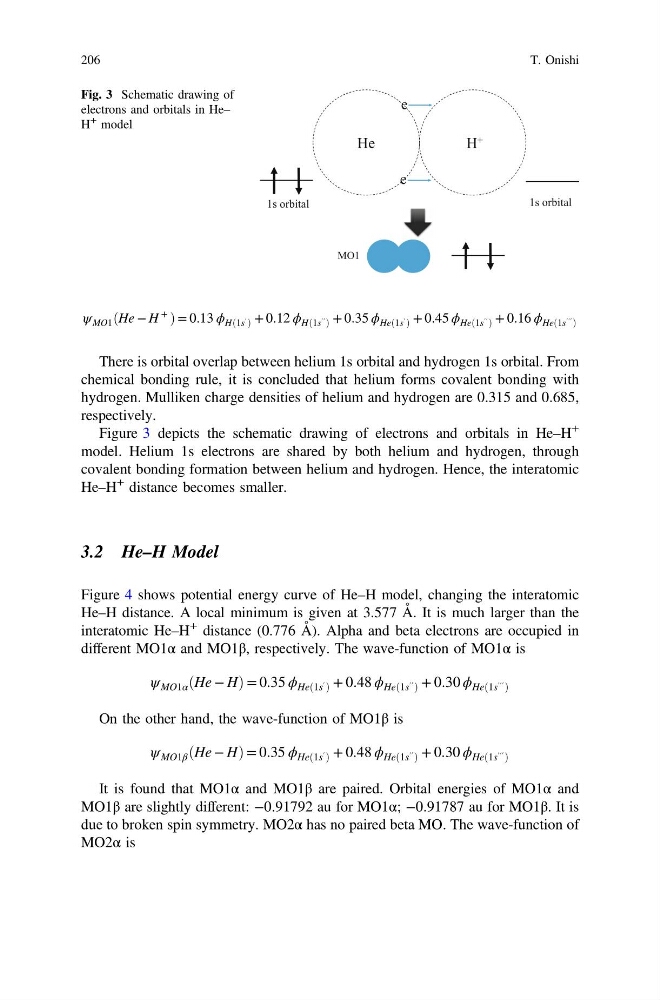
Figure 3 depicts the schematic drawing of electrons and orbitals in He–H
+
model. Helium 1s electrons are shared by both helium and hydrogen, through
covalent bonding formation between helium and hydrogen. Hence, the interatomic
He–H
+ distance becomes smaller.
3.2 He–H Model
Figure 4 shows potential energy curve of He–H model, changing the interatomic
He–H distance. A local minimum is given at 3.577 Å. It is much larger than the
interatomic He–H
+ distance (0.776 Å). Alpha and beta electrons are occupied in
different MO1α and MO1β, respectively. The wave-function of MO1α is
ψ MO1α He − H
ð
Þ= 0.35 ϕ Heð1s ′ Þ + 0.48 ϕ Heð1s ′′ Þ + 0.30 ϕ Heð1s ′′′ Þ
On the other hand, the wave-function of MO1β is
ψ MO1β He − H
ð
Þ= 0.35 ϕ Heð1s ′ Þ + 0.48 ϕ Heð1s ′′ Þ + 0.30 ϕ Heð1s ′′′ Þ
It is found that MO1α and MO1β are paired. Orbital energies of MO1α and
MO1β are slightly different: −0.91792 au for MO1α; −0.91787 au for MO1β. It is
due to broken spin symmetry. MO2α has no paired beta MO. The wave-function of
MO2α is
He
H +
e
e
1s orbital
1s orbital
MO1
Fig. 3 Schematic drawing of
electrons and orbitals in He–
H
+ model
206
T. Onishi
+
ð
Þ= 0.13 ϕ Hð1s ′ Þ + 0.12 ϕ Hð1s ′′ Þ + 0.35 ϕ Heð1s ′ Þ + 0.45 ϕ Heð1s ′′ Þ + 0.16 ϕ Heð1s ′′′ Þ
There is orbital overlap between helium 1s orbital and hydrogen 1s orbital. From
chemical bonding rule, it is concluded that helium forms covalent bonding with
hydrogen. Mulliken charge densities of helium and hydrogen are 0.315 and 0.685,
respectively.
Figure 3 depicts the schematic drawing of electrons and orbitals in He–H
+
model. Helium 1s electrons are shared by both helium and hydrogen, through
covalent bonding formation between helium and hydrogen. Hence, the interatomic
He–H
+ distance becomes smaller.
3.2 He–H Model
Figure 4 shows potential energy curve of He–H model, changing the interatomic
He–H distance. A local minimum is given at 3.577 Å. It is much larger than the
interatomic He–H
+ distance (0.776 Å). Alpha and beta electrons are occupied in
different MO1α and MO1β, respectively. The wave-function of MO1α is
ψ MO1α He − H
ð
Þ= 0.35 ϕ Heð1s ′ Þ + 0.48 ϕ Heð1s ′′ Þ + 0.30 ϕ Heð1s ′′′ Þ
On the other hand, the wave-function of MO1β is
ψ MO1β He − H
ð
Þ= 0.35 ϕ Heð1s ′ Þ + 0.48 ϕ Heð1s ′′ Þ + 0.30 ϕ Heð1s ′′′ Þ
It is found that MO1α and MO1β are paired. Orbital energies of MO1α and
MO1β are slightly different: −0.91792 au for MO1α; −0.91787 au for MO1β. It is
due to broken spin symmetry. MO2α has no paired beta MO. The wave-function of
MO2α is
He
H +
e
e
1s orbital
1s orbital
MO1
Fig. 3 Schematic drawing of
electrons and orbitals in He–
H
+ model
206
T. Onishi