

be broken during mixing, remain intact physically and chemically during and after
mixing, be brittle enough to release its content during crack formation, not negatively affect the structural and physical properties of the concrete structure, be cheap,
and be readily available.
As shown in Table 1, there are different microbial activities or physiological
processes that can precipitate calcite. However, not all calcite precipitating processes
are equally applicable in making self-healing concrete, and hence only some of them
have been considered. The studies made so far on developing microbial-based selfhealing concrete can be categorized into three systems based on the physiological
process that mediate the calcite precipitation: ureolytic, oxidation and denitrification.
3.3.1 Ureolytic-Based Self-Healing System
The ureolytic process of calcite precipitation is one of the most studied applications
of microbes in concrete. This process releases NH 4
+ and CO 3
2À from urea in the
presence of water as shown in Fig. 4. The NH 4
+ contributes to alkalinity, while the
CO 3
2À interacts with Ca
2+ to form calcite. Most published studies on the use of
microbes as agents for manual concrete crack repair, protective surface biodeposition,
and self-healing are based on this system. The ureolytic Bacillus and Sporosarcina
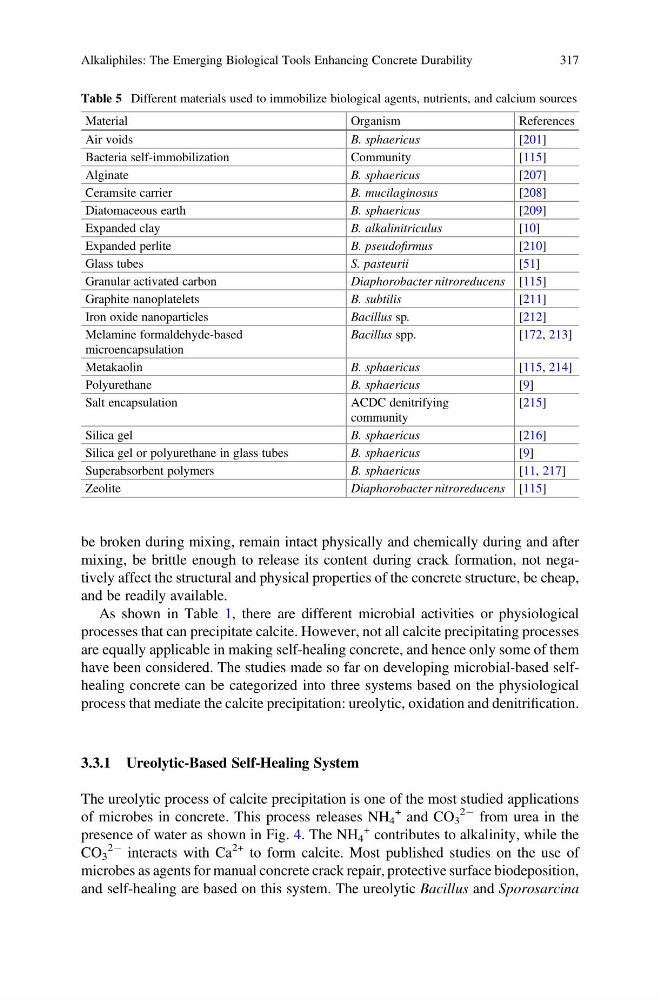
Table 5 Different materials used to immobilize biological agents, nutrients, and calcium sources
Material
Organism
References
Air voids
B. sphaericus
[201]
Bacteria self-immobilization
Community
[115]
Alginate
B. sphaericus
[207]
Ceramsite carrier
B. mucilaginosus
[208]
Diatomaceous earth
B. sphaericus
[209]
Expanded clay
B. alkalinitriculus
[10]
Expanded perlite
B. pseudofirmus
[210]
Glass tubes
S. pasteurii
[51]
Granular activated carbon
Diaphorobacter nitroreducens [115]
Graphite nanoplatelets
B. subtilis
[211]
Iron oxide nanoparticles
Bacillus sp.
[212]
Melamine formaldehyde-based
microencapsulation
Bacillus spp.
[172, 213]
Metakaolin
B. sphaericus
[115, 214]
Polyurethane
B. sphaericus
[9]
Salt encapsulation
ACDC denitrifying
community
[215]
Silica gel
B. sphaericus
[216]
Silica gel or polyurethane in glass tubes
B. sphaericus
[9]
Superabsorbent polymers
B. sphaericus
[11, 217]
Zeolite
Diaphorobacter nitroreducens [115]
Alkaliphiles: The Emerging Biological Tools Enhancing Concrete Durability
317
mixing, be brittle enough to release its content during crack formation, not negatively affect the structural and physical properties of the concrete structure, be cheap,
and be readily available.
As shown in Table 1, there are different microbial activities or physiological
processes that can precipitate calcite. However, not all calcite precipitating processes
are equally applicable in making self-healing concrete, and hence only some of them
have been considered. The studies made so far on developing microbial-based selfhealing concrete can be categorized into three systems based on the physiological
process that mediate the calcite precipitation: ureolytic, oxidation and denitrification.
3.3.1 Ureolytic-Based Self-Healing System
The ureolytic process of calcite precipitation is one of the most studied applications
of microbes in concrete. This process releases NH 4
+ and CO 3
2À from urea in the
presence of water as shown in Fig. 4. The NH 4
+ contributes to alkalinity, while the
CO 3
2À interacts with Ca
2+ to form calcite. Most published studies on the use of
microbes as agents for manual concrete crack repair, protective surface biodeposition,
and self-healing are based on this system. The ureolytic Bacillus and Sporosarcina
Table 5 Different materials used to immobilize biological agents, nutrients, and calcium sources
Material
Organism
References
Air voids
B. sphaericus
[201]
Bacteria self-immobilization
Community
[115]
Alginate
B. sphaericus
[207]
Ceramsite carrier
B. mucilaginosus
[208]
Diatomaceous earth
B. sphaericus
[209]
Expanded clay
B. alkalinitriculus
[10]
Expanded perlite
B. pseudofirmus
[210]
Glass tubes
S. pasteurii
[51]
Granular activated carbon
Diaphorobacter nitroreducens [115]
Graphite nanoplatelets
B. subtilis
[211]
Iron oxide nanoparticles
Bacillus sp.
[212]
Melamine formaldehyde-based
microencapsulation
Bacillus spp.
[172, 213]
Metakaolin
B. sphaericus
[115, 214]
Polyurethane
B. sphaericus
[9]
Salt encapsulation
ACDC denitrifying
community
[215]
Silica gel
B. sphaericus
[216]
Silica gel or polyurethane in glass tubes
B. sphaericus
[9]
Superabsorbent polymers
B. sphaericus
[11, 217]
Zeolite
Diaphorobacter nitroreducens [115]
Alkaliphiles: The Emerging Biological Tools Enhancing Concrete Durability
317