

Theor Chem Acc (2016) 135:13
1 3
(Fig. 3 , right). Both focusing on the carbon with the C–BH 2
or on the one with the C–H bond, the corresponding correlations are very similar and they show a good agreement
with the expected selectivity. It is worth noting that the
CHelpG charge scheme [ 27 ] performs much more consistently than the Mulliken charge scheme, as expected. The
seemingly contradicting atomic charge results between the
two schemes can be attributed to the basis set size. CHelpG
charges proved to be consistent across smaller (6-31G) and
larger (cc-pVTZ) basis sets for F6 (data not shown). On the
other hand, Mulliken charges fl uctuated and showed great
variations depending on basis set size. In particular, atomic
charges of the carbons for A4 are unphysically polarized using diffuse orbitals with the 6-31+G or 6-31+G*
basis sets, and the polarization of the BH 3 molecule is the
opposite of the expected bond polarity using 6-31+G* or
cc-pVTZ basis sets (Table S3). The low electronegativity of boron results in the attached hydrogens being more
electronegative, allowing the boron to preferentially bond
to the most negative conjugated carbon and the hydrogen
to bond to the most positive carbon. Interestingly, slightly
better correlation is found when considering the positivity
of the carbon that forms the new C–H bond for B6 molecule (Fig. 3 , right); however, the most reactive double
bond is also the most polarized bond for all three asymmetric cases (B6, D6, and E6). The correlation with the reactant’s atomic charges is less strong considering the prediction for the highest energy transition states, indicating that
for the high-energy transition states additional contributing
factors are present. None of the highest energy transition
states corresponded to the least negative carbon (or least
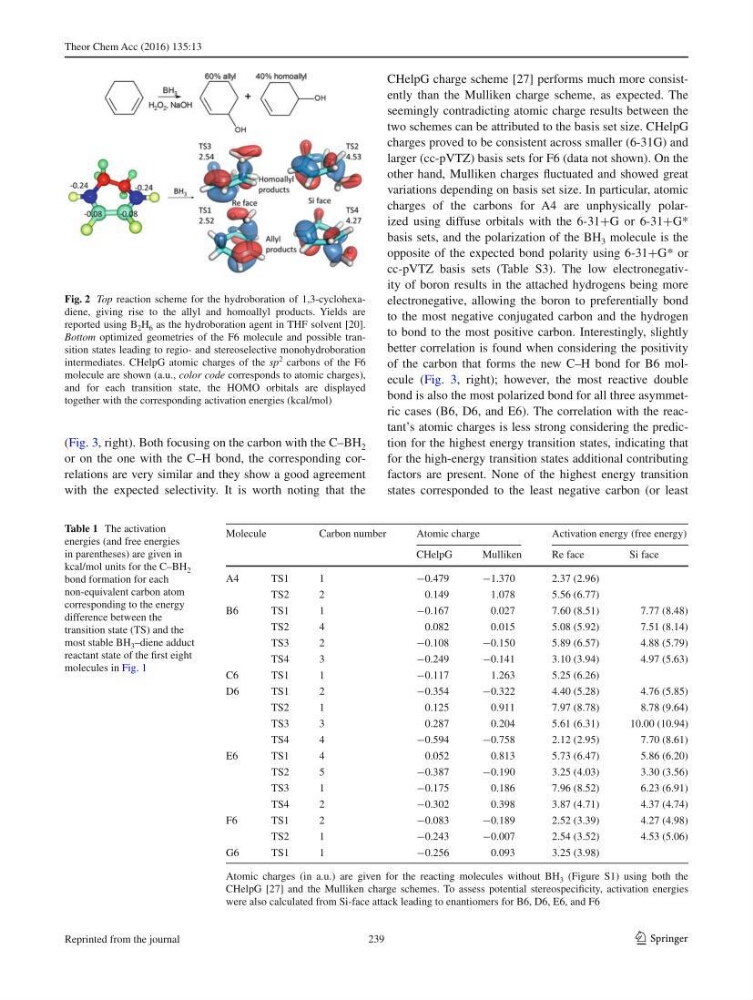
Fig. 2 Top reaction scheme for the hydroboration of 1,3-cyclohexadiene, giving rise to the allyl and homoallyl products. Yields are
reported using B 2 H 6 as the hydroboration agent in THF solvent [ 20 ].
Bottom optimized geometries of the F6 molecule and possible transition states leading to regio- and stereoselective monohydroboration
intermediates. CHelpG atomic charges of the sp
2 carbons of the F6
molecule are shown (a.u., color code corresponds to atomic charges),
and for each transition state, the HOMO orbitals are displayed
together with the corresponding activation energies (kcal/mol)
Table 1 The activation
energies (and free energies
in parentheses) are given in
kcal/mol units for the C–BH 2
bond formation for each
non-equivalent carbon atom
corresponding to the energy
difference between the
transition state (TS) and the
most stable BH 3 –diene adduct
reactant state of the fi rst eight
molecules in Fig. 1
Atomic charges (in a.u.) are given for the reacting molecules without BH 3 (Figure S1) using both the
CHelpG [ 27 ] and the Mulliken charge schemes. To assess potential stereospecifi city, activation energies
were also calculated from Si-face attack leading to enantiomers for B6, D6, E6, and F6
Molecule
Carbon number
Atomic charge
Activation energy (free energy)
CHelpG
Mulliken
Re face
Si face
A4
TS1
1
−0.479
−1.370
2.37 (2.96)
TS2
2
0.149
1.078
5.56 (6.77)
B6
TS1
1
−0.167
0.027
7.60 (8.51)
7.77 (8.48)
TS2
4
0.082
0.015
5.08 (5.92)
7.51 (8.14)
TS3
2
−0.108
−0.150
5.89 (6.57)
4.88 (5.79)
TS4
3
−0.249
−0.141
3.10 (3.94)
4.97 (5.63)
C6
TS1
1
−0.117
1.263
5.25 (6.26)
D6
TS1
2
−0.354
−0.322
4.40 (5.28)
4.76 (5.85)
TS2
1
0.125
0.911
7.97 (8.78)
8.78 (9.64)
TS3
3
0.287
0.204
5.61 (6.31)
10.00 (10.94)
TS4
4
−0.594
−0.758
2.12 (2.95)
7.70 (8.61)
E6
TS1
4
0.052
0.813
5.73 (6.47)
5.86 (6.20)
TS2
5
−0.387
−0.190
3.25 (4.03)
3.30 (3.56)
TS3
1
−0.175
0.186
7.96 (8.52)
6.23 (6.91)
TS4
2
−0.302
0.398
3.87 (4.71)
4.37 (4.74)
F6
TS1
2
−0.083
−0.189
2.52 (3.39)
4.27 (4.98)
TS2
1
−0.243
−0.007
2.54 (3.52)
4.53 (5.06)
G6
TS1
1
−0.256
0.093
3.25 (3.98)
239
Reprinted from the journal
1 3
(Fig. 3 , right). Both focusing on the carbon with the C–BH 2
or on the one with the C–H bond, the corresponding correlations are very similar and they show a good agreement
with the expected selectivity. It is worth noting that the
CHelpG charge scheme [ 27 ] performs much more consistently than the Mulliken charge scheme, as expected. The
seemingly contradicting atomic charge results between the
two schemes can be attributed to the basis set size. CHelpG
charges proved to be consistent across smaller (6-31G) and
larger (cc-pVTZ) basis sets for F6 (data not shown). On the
other hand, Mulliken charges fl uctuated and showed great
variations depending on basis set size. In particular, atomic
charges of the carbons for A4 are unphysically polarized using diffuse orbitals with the 6-31+G or 6-31+G*
basis sets, and the polarization of the BH 3 molecule is the
opposite of the expected bond polarity using 6-31+G* or
cc-pVTZ basis sets (Table S3). The low electronegativity of boron results in the attached hydrogens being more
electronegative, allowing the boron to preferentially bond
to the most negative conjugated carbon and the hydrogen
to bond to the most positive carbon. Interestingly, slightly
better correlation is found when considering the positivity
of the carbon that forms the new C–H bond for B6 molecule (Fig. 3 , right); however, the most reactive double
bond is also the most polarized bond for all three asymmetric cases (B6, D6, and E6). The correlation with the reactant’s atomic charges is less strong considering the prediction for the highest energy transition states, indicating that
for the high-energy transition states additional contributing
factors are present. None of the highest energy transition
states corresponded to the least negative carbon (or least
Fig. 2 Top reaction scheme for the hydroboration of 1,3-cyclohexadiene, giving rise to the allyl and homoallyl products. Yields are
reported using B 2 H 6 as the hydroboration agent in THF solvent [ 20 ].
Bottom optimized geometries of the F6 molecule and possible transition states leading to regio- and stereoselective monohydroboration
intermediates. CHelpG atomic charges of the sp
2 carbons of the F6
molecule are shown (a.u., color code corresponds to atomic charges),
and for each transition state, the HOMO orbitals are displayed
together with the corresponding activation energies (kcal/mol)
Table 1 The activation
energies (and free energies
in parentheses) are given in
kcal/mol units for the C–BH 2
bond formation for each
non-equivalent carbon atom
corresponding to the energy
difference between the
transition state (TS) and the
most stable BH 3 –diene adduct
reactant state of the fi rst eight
molecules in Fig. 1
Atomic charges (in a.u.) are given for the reacting molecules without BH 3 (Figure S1) using both the
CHelpG [ 27 ] and the Mulliken charge schemes. To assess potential stereospecifi city, activation energies
were also calculated from Si-face attack leading to enantiomers for B6, D6, E6, and F6
Molecule
Carbon number
Atomic charge
Activation energy (free energy)
CHelpG
Mulliken
Re face
Si face
A4
TS1
1
−0.479
−1.370
2.37 (2.96)
TS2
2
0.149
1.078
5.56 (6.77)
B6
TS1
1
−0.167
0.027
7.60 (8.51)
7.77 (8.48)
TS2
4
0.082
0.015
5.08 (5.92)
7.51 (8.14)
TS3
2
−0.108
−0.150
5.89 (6.57)
4.88 (5.79)
TS4
3
−0.249
−0.141
3.10 (3.94)
4.97 (5.63)
C6
TS1
1
−0.117
1.263
5.25 (6.26)
D6
TS1
2
−0.354
−0.322
4.40 (5.28)
4.76 (5.85)
TS2
1
0.125
0.911
7.97 (8.78)
8.78 (9.64)
TS3
3
0.287
0.204
5.61 (6.31)
10.00 (10.94)
TS4
4
−0.594
−0.758
2.12 (2.95)
7.70 (8.61)
E6
TS1
4
0.052
0.813
5.73 (6.47)
5.86 (6.20)
TS2
5
−0.387
−0.190
3.25 (4.03)
3.30 (3.56)
TS3
1
−0.175
0.186
7.96 (8.52)
6.23 (6.91)
TS4
2
−0.302
0.398
3.87 (4.71)
4.37 (4.74)
F6
TS1
2
−0.083
−0.189
2.52 (3.39)
4.27 (4.98)
TS2
1
−0.243
−0.007
2.54 (3.52)
4.53 (5.06)
G6
TS1
1
−0.256
0.093
3.25 (3.98)
239
Reprinted from the journal