

234
PETROLEUM TECHNOLOGY, ECONOMICS, AND POLITICS
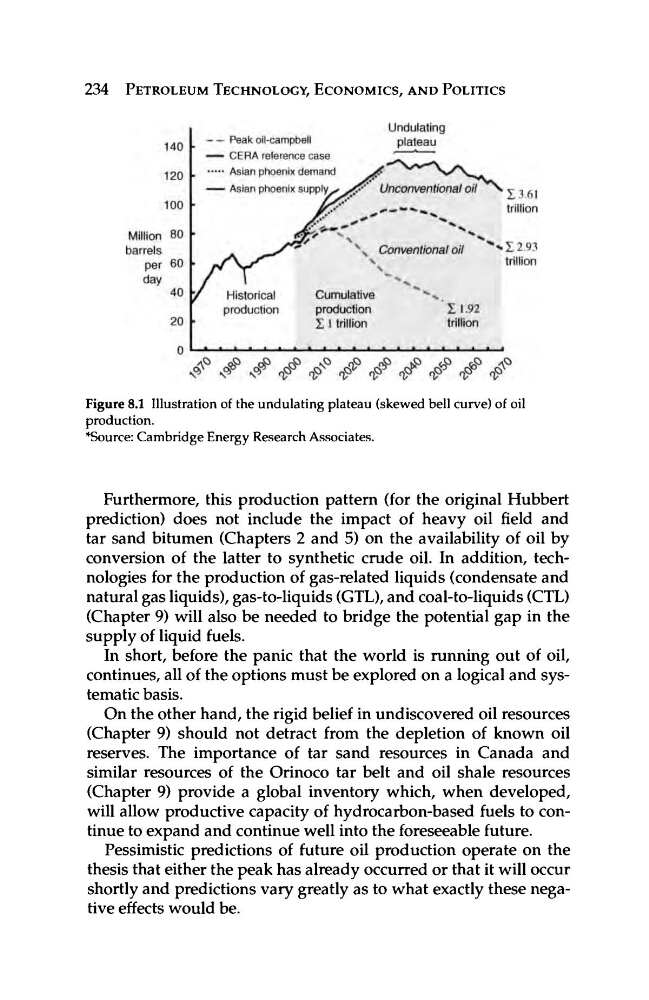
Figure 8.1 Illustration of the undulating plateau (skewed bell curve) of oil
production.
*Source: Cambridge Energy Research Associates.
Furthermore, this production pattern (for the original Hubbert
prediction) does not include the impact of heavy oil field and
tar sand bitumen (Chapters 2 and 5) on the availability of oil by
conversion of the latter to synthetic crude oil. In addition, technologies for the production of gas-related liquids (condensate and
natural gas liquids), gas-to-liquids (GTL), and coal-to-liquids (CTL)
(Chapter 9) will also be needed to bridge the potential gap in the
supply of liquid fuels.
In short, before the panic that the world is running out of oil,
continues, all of the options must be explored on a logical and systematic basis.
On the other hand, the rigid belief in undiscovered oil resources
(Chapter 9) should not detract from the depletion of known oil
reserves. The importance of tar sand resources in Canada and
similar resources of the Orinoco tar belt and oil shale resources
(Chapter 9) provide a global inventory which, when developed,
will allow productive capacity of hydrocarbon-based fuels to continue to expand and continue well into the foreseeable future.
Pessimistic predictions of future oil production operate on the
thesis that either the peak has already occurred or that it will occur
shortly and predictions vary greatly as to what exactly these negative effects would be.
PETROLEUM TECHNOLOGY, ECONOMICS, AND POLITICS
Figure 8.1 Illustration of the undulating plateau (skewed bell curve) of oil
production.
*Source: Cambridge Energy Research Associates.
Furthermore, this production pattern (for the original Hubbert
prediction) does not include the impact of heavy oil field and
tar sand bitumen (Chapters 2 and 5) on the availability of oil by
conversion of the latter to synthetic crude oil. In addition, technologies for the production of gas-related liquids (condensate and
natural gas liquids), gas-to-liquids (GTL), and coal-to-liquids (CTL)
(Chapter 9) will also be needed to bridge the potential gap in the
supply of liquid fuels.
In short, before the panic that the world is running out of oil,
continues, all of the options must be explored on a logical and systematic basis.
On the other hand, the rigid belief in undiscovered oil resources
(Chapter 9) should not detract from the depletion of known oil
reserves. The importance of tar sand resources in Canada and
similar resources of the Orinoco tar belt and oil shale resources
(Chapter 9) provide a global inventory which, when developed,
will allow productive capacity of hydrocarbon-based fuels to continue to expand and continue well into the foreseeable future.
Pessimistic predictions of future oil production operate on the
thesis that either the peak has already occurred or that it will occur
shortly and predictions vary greatly as to what exactly these negative effects would be.