

2.1 Oxidative Addition/Reductive Elimination
Several mechanisms can be envisaged for the oxidative addition or reductive
elimination in binuclear systems, which may depend on the nature of the substrate
and the metallic core. Intuitively, the mechanism for the oxidative addition of
molecular hydrogen and its microscopic reverse reaction may be proposed to
occur by a concerted symmetric mechanism (least-motion pathway; Scheme 3a).
However, theoretical calculations have revealed that this pathway is spin forbidden
and leads to prohibitive activation energies [39]. The most generally accepted
mechanism (non-least-motion pathway; Scheme 3b) entails (i) initial coordination
of molecular hydrogen to one of the metal centers, followed by (ii) oxidative
addition of H 2 to give M 2 (μ-H)(H), and, finally, (iii) migration of the bridging
hydride over the other metal center.
Step (ii) could take place by two different routes (Scheme 4): the oxidative
addition may happen over one of the metal centers, as it would be expected to occur
for a mononuclear complex, or in a cooperative fashion, i.e., aided by the second
metal. The resulting mixed-valent complex features a dative metal–metal bond,
where the metal in a lower formal oxidation state donates electron density to the
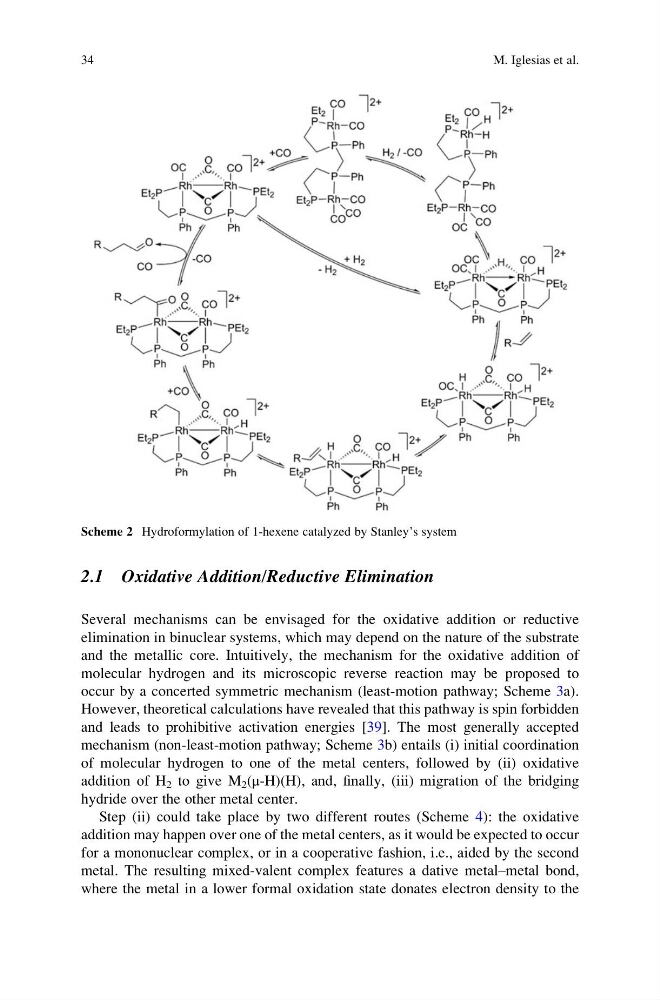
Scheme 2 Hydroformylation of 1-hexene catalyzed by Stanley’s system
34
M. Iglesias et al.
Several mechanisms can be envisaged for the oxidative addition or reductive
elimination in binuclear systems, which may depend on the nature of the substrate
and the metallic core. Intuitively, the mechanism for the oxidative addition of
molecular hydrogen and its microscopic reverse reaction may be proposed to
occur by a concerted symmetric mechanism (least-motion pathway; Scheme 3a).
However, theoretical calculations have revealed that this pathway is spin forbidden
and leads to prohibitive activation energies [39]. The most generally accepted
mechanism (non-least-motion pathway; Scheme 3b) entails (i) initial coordination
of molecular hydrogen to one of the metal centers, followed by (ii) oxidative
addition of H 2 to give M 2 (μ-H)(H), and, finally, (iii) migration of the bridging
hydride over the other metal center.
Step (ii) could take place by two different routes (Scheme 4): the oxidative
addition may happen over one of the metal centers, as it would be expected to occur
for a mononuclear complex, or in a cooperative fashion, i.e., aided by the second
metal. The resulting mixed-valent complex features a dative metal–metal bond,
where the metal in a lower formal oxidation state donates electron density to the
Scheme 2 Hydroformylation of 1-hexene catalyzed by Stanley’s system
34
M. Iglesias et al.