

selectivity compared to its mononuclear analogue has been attributed to (i) the
intramolecular hydride transfer, which facilitates the reductive elimination of the
aldehyde, thus improving the reactivity, and (ii) the rigid structure of the bimetallic
core, which directs the selectivity of the process (Scheme 2).
2 Elementary Steps in Binuclear Catalysis
Elementary steps in binuclear catalysis can differ significantly from those described
for mononuclear complexes due to the proximity of a second metal center. A brief
description of binuclear oxidative addition, reductive elimination, ligand migration,
and migratory insertion will be made in order to facilitate the understanding of the
mechanisms discussed in this chapter.
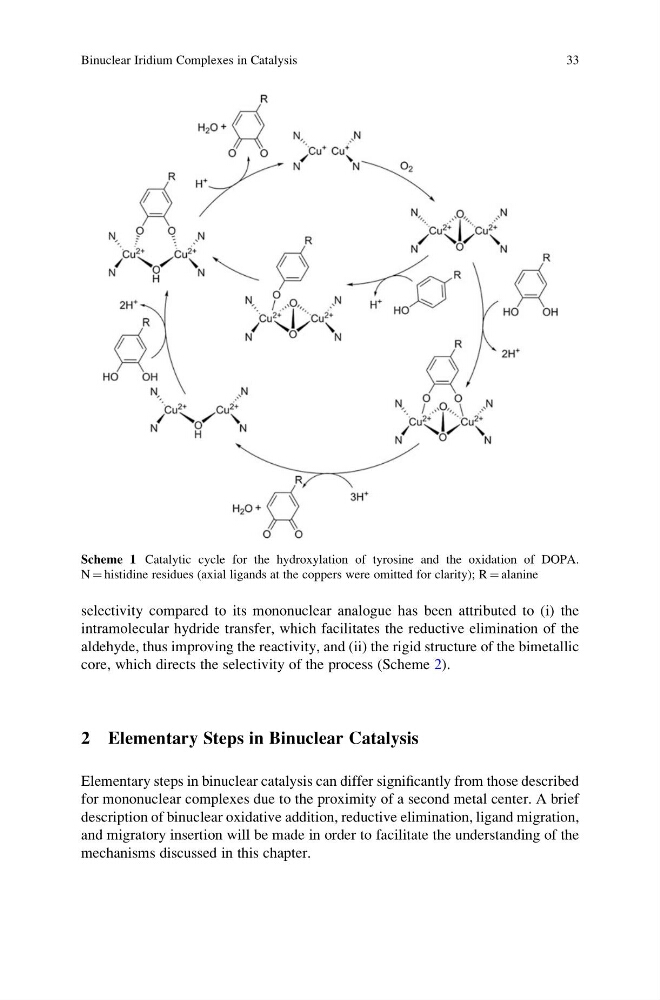
Scheme 1 Catalytic cycle for the hydroxylation of tyrosine and the oxidation of DOPA.
N ¼ histidine residues (axial ligands at the coppers were omitted for clarity); R ¼ alanine
Binuclear Iridium Complexes in Catalysis
33
intramolecular hydride transfer, which facilitates the reductive elimination of the
aldehyde, thus improving the reactivity, and (ii) the rigid structure of the bimetallic
core, which directs the selectivity of the process (Scheme 2).
2 Elementary Steps in Binuclear Catalysis
Elementary steps in binuclear catalysis can differ significantly from those described
for mononuclear complexes due to the proximity of a second metal center. A brief
description of binuclear oxidative addition, reductive elimination, ligand migration,
and migratory insertion will be made in order to facilitate the understanding of the
mechanisms discussed in this chapter.
Scheme 1 Catalytic cycle for the hydroxylation of tyrosine and the oxidation of DOPA.
N ¼ histidine residues (axial ligands at the coppers were omitted for clarity); R ¼ alanine
Binuclear Iridium Complexes in Catalysis
33