

2.5 Increased Synthetic Efficiency
In the day-to-day practice of performing reactions, experimentalists make repeated
use of some basic definitions and guidelines. In terms of definitions, conversion of
substrate, selectivity to a specific product and yield of the target molecule are the
most common and essential for quantifying the syntheses. In terms of guidelines,
simple reaction design considerations are used to decide (a) what order to add
reagents and (b) how to add organic reagents, i.e. dropwise, or all at one time. On a
more advanced level and focused on catalytic syntheses, two definitions are frequently used:
1. The definition of turnover number TON (moles product/mole metal)
2. The definition of atom economy [80]
The existence of non-linear catalytic mechanisms provides the opportunity to
expand on the concepts associated with synthetic efficiency. The well-defined cases
of quadratic, bilinear, linear–quadratic and linear–bilinear kinetics rates with
respect to intermediates, illustrated in Sects. 2.3.1 and 2.3.2, suggest that new
possibilities for extending the scope of increased synthetic efficiency exist.
Assume that there are five different mechanisms for the same overall syntheses
and that these mechanisms are unicyclic, quadratic, bilinear, linear–quadratic and
linear–bilinear. Furthermore, assume that at a concentration of 1 mmol/L metal
loading, each system has the same rate, namely, 1 mmol/min. Holding the amount
of metal at a constant 1 mmol, these five systems are expected to show rates similar
to that in Fig. 11a as a function of volume. In other words, simply by changing the
volume, the metals in the non-linear systems are being utilized in a far more
efficient manner. In the real world, there will be limits due to transport control
and formation of higher nuclear species as the volume decreases, and there will be
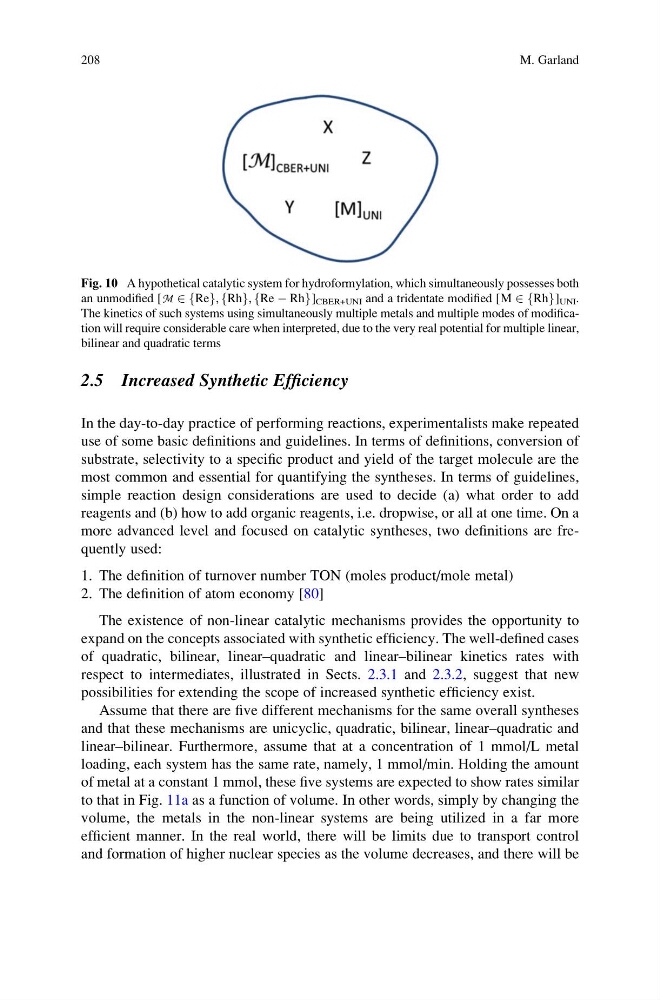
Fig. 10 A hypothetical catalytic system for hydroformylation, which simultaneously possesses both
an unmodified [M 2 Re
f g, Rh
f g, Re À Rh
f
g ] CBER+UNI and a tridentate modified [M 2 Rh
f g] UNI .
The kinetics of such systems using simultaneously multiple metals and multiple modes of modification will require considerable care when interpreted, due to the very real potential for multiple linear,
bilinear and quadratic terms
208
M. Garland
In the day-to-day practice of performing reactions, experimentalists make repeated
use of some basic definitions and guidelines. In terms of definitions, conversion of
substrate, selectivity to a specific product and yield of the target molecule are the
most common and essential for quantifying the syntheses. In terms of guidelines,
simple reaction design considerations are used to decide (a) what order to add
reagents and (b) how to add organic reagents, i.e. dropwise, or all at one time. On a
more advanced level and focused on catalytic syntheses, two definitions are frequently used:
1. The definition of turnover number TON (moles product/mole metal)
2. The definition of atom economy [80]
The existence of non-linear catalytic mechanisms provides the opportunity to
expand on the concepts associated with synthetic efficiency. The well-defined cases
of quadratic, bilinear, linear–quadratic and linear–bilinear kinetics rates with
respect to intermediates, illustrated in Sects. 2.3.1 and 2.3.2, suggest that new
possibilities for extending the scope of increased synthetic efficiency exist.
Assume that there are five different mechanisms for the same overall syntheses
and that these mechanisms are unicyclic, quadratic, bilinear, linear–quadratic and
linear–bilinear. Furthermore, assume that at a concentration of 1 mmol/L metal
loading, each system has the same rate, namely, 1 mmol/min. Holding the amount
of metal at a constant 1 mmol, these five systems are expected to show rates similar
to that in Fig. 11a as a function of volume. In other words, simply by changing the
volume, the metals in the non-linear systems are being utilized in a far more
efficient manner. In the real world, there will be limits due to transport control
and formation of higher nuclear species as the volume decreases, and there will be
Fig. 10 A hypothetical catalytic system for hydroformylation, which simultaneously possesses both
an unmodified [M 2 Re
f g, Rh
f g, Re À Rh
f
g ] CBER+UNI and a tridentate modified [M 2 Rh
f g] UNI .
The kinetics of such systems using simultaneously multiple metals and multiple modes of modification will require considerable care when interpreted, due to the very real potential for multiple linear,
bilinear and quadratic terms
208
M. Garland