

3 “Early–Late” Heterobimetallic Catalysis
The combination of hard oxophilic early transition metals and soft nucleophilic late
transition metals with opposite functionalities, provided they do not inhibit one
another, is a priori ideal for promoting cooperative effect. A proof of concept can be
found in the stoichiometric reactivity of “early–late” heterobimetallic complexes
featuring a metal–metal bond [76]. It has been shown that such complexes are good
candidates to realize the heterolytic cleavage of a bond in polar and apolar substrates. An illustrative example by Bergman et al. is the reaction of the Zr–Ir
complex 20 with carbon dioxide which leads to the rupture of the metal–metal
bond (Scheme 18) [77]. The CO 2 insertion occurs in the expected fashion with the
CO 2 bridging the two metals, the carbon atom coordinated to iridium, and the
oxygen atom on the zirconium center.
Since the early 1970s, the enthusiasm for this field has never subsided, and a
great variety of early–late heterobimetallic complexes has been described over the
years allowing a continuous growth in the understanding of the reactivity of these
species and of the possible interactions between the two metals [4, 5, 78, 79].
A large panel of “early–late” bimetallic combinations has been tested in catalysis,
and several reactions have been thus improved.
3.1 Group 8/Group 4–5 Heterobimetallic Complexes
3.1.1 Fe/Ti and Fe/Zr
M. L. H. Green has shown that the ansa-zirconocene complex 22 with an indenyl
moiety connected to a cyclopentadienyl unit by a CMe 2 bridge is a suitable
compound for synthesizing a variety of homo- and heterobimetallic complexes
(Scheme 19) [80]. Some of these complexes have been used as cocatalysts for
ethylene and propylene polymerization. The early–late hetero-trinuclear Fe/Zr
complex 23 revealed among the best catalysts giving activities close to
[Cp 2 ZrCl 2 ]. The role that could play Fe on the activity of Zr was not discussed by
the authors.
Ir
Br
O
+ PhB(OH)2 + PhCH 2 OH
O
Ph
86% yield
cat. 19 (2 mol%)
Cs 2 CO 3 , THF,
100°C, 20h
O
[Pd]
[Ir]
N
N
N
Cl
Cl
Pd
N
Cl
Cl
19
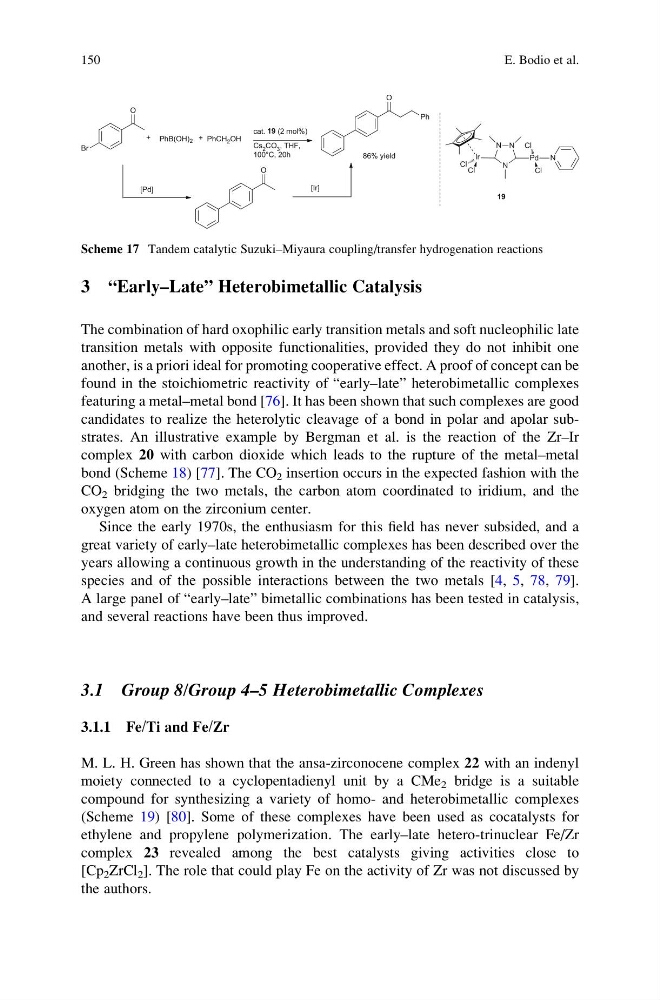
Scheme 17 Tandem catalytic Suzuki–Miyaura coupling/transfer hydrogenation reactions
150
E. Bodio et al.
The combination of hard oxophilic early transition metals and soft nucleophilic late
transition metals with opposite functionalities, provided they do not inhibit one
another, is a priori ideal for promoting cooperative effect. A proof of concept can be
found in the stoichiometric reactivity of “early–late” heterobimetallic complexes
featuring a metal–metal bond [76]. It has been shown that such complexes are good
candidates to realize the heterolytic cleavage of a bond in polar and apolar substrates. An illustrative example by Bergman et al. is the reaction of the Zr–Ir
complex 20 with carbon dioxide which leads to the rupture of the metal–metal
bond (Scheme 18) [77]. The CO 2 insertion occurs in the expected fashion with the
CO 2 bridging the two metals, the carbon atom coordinated to iridium, and the
oxygen atom on the zirconium center.
Since the early 1970s, the enthusiasm for this field has never subsided, and a
great variety of early–late heterobimetallic complexes has been described over the
years allowing a continuous growth in the understanding of the reactivity of these
species and of the possible interactions between the two metals [4, 5, 78, 79].
A large panel of “early–late” bimetallic combinations has been tested in catalysis,
and several reactions have been thus improved.
3.1 Group 8/Group 4–5 Heterobimetallic Complexes
3.1.1 Fe/Ti and Fe/Zr
M. L. H. Green has shown that the ansa-zirconocene complex 22 with an indenyl
moiety connected to a cyclopentadienyl unit by a CMe 2 bridge is a suitable
compound for synthesizing a variety of homo- and heterobimetallic complexes
(Scheme 19) [80]. Some of these complexes have been used as cocatalysts for
ethylene and propylene polymerization. The early–late hetero-trinuclear Fe/Zr
complex 23 revealed among the best catalysts giving activities close to
[Cp 2 ZrCl 2 ]. The role that could play Fe on the activity of Zr was not discussed by
the authors.
Ir
Br
O
+ PhB(OH)2 + PhCH 2 OH
O
Ph
86% yield
cat. 19 (2 mol%)
Cs 2 CO 3 , THF,
100°C, 20h
O
[Pd]
[Ir]
N
N
N
Cl
Cl
Pd
N
Cl
Cl
19
Scheme 17 Tandem catalytic Suzuki–Miyaura coupling/transfer hydrogenation reactions
150
E. Bodio et al.