

values are in between the corresponding values observed for mononuclear Ru
VI
N
complexes [248–252] (Ru–N ~ 1.60 Å, νRu–N ~ 1,000–1,100 cm
À1
) and triply
bridging nitrogen bound on the metal surface (Ru–N ~ 1.93 Å, νRu–N ~ 480–
580 cm
À1 ) [253–255]. This indicates that the nature of bond between Ru and N
in [Ru 2 (dPhf) 4 N] is intermediate and resembles more of a double-bond character.
It is worth elaborating the bonding of the [Ru–Ru]N system [256]. The [Ru 2 ]
7+
core provides nine valence electrons, and nitride unit gives six electrons (three lone
pairs, one σ and two π). The formal electron configuration is σ
2
π
4
δ
2
σ(nb)
2
π(nb)
4
δ*
1
which corresponds to s = 1/2 ground spin state. The [Ru–Ru] bond order is 3.5
comprising of one σ, two π, and half δ bond. The Ru–N bond order is 3.0. However,
because of electron delocalization (3c/4e bond in σ and π framework), the [Ru–Ru]
and Ru–N distances are quite long. In fact, [Ru–Ru]–N three-center four-electron
bond not only increases the Ru–N distance; the electrophilicity of the nitrogen is
also enhanced. A 3c/4e σ bond necessarily makes the Ru–N multiple bond weak.
Further, the electron delocalization renders the LUMOs with large N p-orbital
character highly susceptible to nucleophilic attack.
As a consequence, the nitride bound to dimetal is more reactive than a nitride
bound to a single metal. Indeed, when Ru 2 [d(3,5Cl 2 )Phf]N 3 (104) is heated under
vacuum in the solid state, N 2 is lost but the corresponding nitride complex could not
be identified. Instead, the isolated product reveals insertion of N into one of the aryl
C–H bond of the bridging tetramidate ligand [257, 258] (Scheme 54). This reaction
also proceeds photolytically. Differential scanning calorimetry (DSC) measurement reveals two distinct steps, suggesting the involvement of [Ru–Ru]N species
in the reaction. What is most intriguing is the nitrogen transfer mechanism. Several
mononuclear nitride complexes are reported to insert N atom into alkyl C–H bond
via radical-type reactions [259–263]. Detailed experimental and computational
results suggest an electrophilic aromatic substitution mechanism where nitrogen
atom is the electrophilic center [264] (Scheme 55). Clearly, the second metal
enhances the reactivity of the axial nitride.
11 C–H Amination at Axial Site of a [Ru–Ru]
5+ Platform
Higher oxidation potential of diruthenium(II,III) system allows the introduction of
strong donor ligands such as amidinate on the diruthenium core [265]. But such
complexes have found limited application in catalysis. Du Bois’ group has
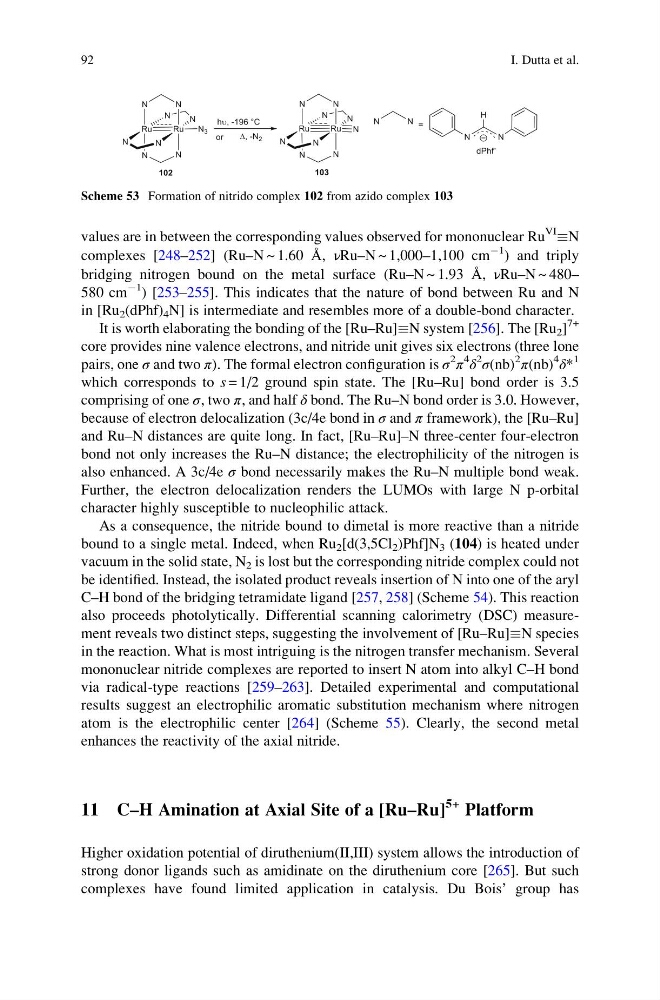
Scheme 53 Formation of nitrido complex 102 from azido complex 103
92
I. Dutta et al.
VI
N
complexes [248–252] (Ru–N ~ 1.60 Å, νRu–N ~ 1,000–1,100 cm
À1
) and triply
bridging nitrogen bound on the metal surface (Ru–N ~ 1.93 Å, νRu–N ~ 480–
580 cm
À1 ) [253–255]. This indicates that the nature of bond between Ru and N
in [Ru 2 (dPhf) 4 N] is intermediate and resembles more of a double-bond character.
It is worth elaborating the bonding of the [Ru–Ru]N system [256]. The [Ru 2 ]
7+
core provides nine valence electrons, and nitride unit gives six electrons (three lone
pairs, one σ and two π). The formal electron configuration is σ
2
π
4
δ
2
σ(nb)
2
π(nb)
4
δ*
1
which corresponds to s = 1/2 ground spin state. The [Ru–Ru] bond order is 3.5
comprising of one σ, two π, and half δ bond. The Ru–N bond order is 3.0. However,
because of electron delocalization (3c/4e bond in σ and π framework), the [Ru–Ru]
and Ru–N distances are quite long. In fact, [Ru–Ru]–N three-center four-electron
bond not only increases the Ru–N distance; the electrophilicity of the nitrogen is
also enhanced. A 3c/4e σ bond necessarily makes the Ru–N multiple bond weak.
Further, the electron delocalization renders the LUMOs with large N p-orbital
character highly susceptible to nucleophilic attack.
As a consequence, the nitride bound to dimetal is more reactive than a nitride
bound to a single metal. Indeed, when Ru 2 [d(3,5Cl 2 )Phf]N 3 (104) is heated under
vacuum in the solid state, N 2 is lost but the corresponding nitride complex could not
be identified. Instead, the isolated product reveals insertion of N into one of the aryl
C–H bond of the bridging tetramidate ligand [257, 258] (Scheme 54). This reaction
also proceeds photolytically. Differential scanning calorimetry (DSC) measurement reveals two distinct steps, suggesting the involvement of [Ru–Ru]N species
in the reaction. What is most intriguing is the nitrogen transfer mechanism. Several
mononuclear nitride complexes are reported to insert N atom into alkyl C–H bond
via radical-type reactions [259–263]. Detailed experimental and computational
results suggest an electrophilic aromatic substitution mechanism where nitrogen
atom is the electrophilic center [264] (Scheme 55). Clearly, the second metal
enhances the reactivity of the axial nitride.
11 C–H Amination at Axial Site of a [Ru–Ru]
5+ Platform
Higher oxidation potential of diruthenium(II,III) system allows the introduction of
strong donor ligands such as amidinate on the diruthenium core [265]. But such
complexes have found limited application in catalysis. Du Bois’ group has
Scheme 53 Formation of nitrido complex 102 from azido complex 103
92
I. Dutta et al.