

electron-withdrawing substituent at the diazo group making this even less nucleophilic than α-diazoacetamides. Although diruthenium(I,I) catalysts are less reactive
compared to dirhodium catalysts, they were still able to generate reactive carbene
intermediate during the course of the reaction and catalyze the C–H insertion.
Different diazoacetoacetamides (83–86) are used, and the results are depicted in
Scheme 45. The diruthenium catalysts (1, 71, 60, 63) show relatively lower yields
compared to the two rhodium catalysts (37, 73). But they exhibited similar
regioselectivity (formation of β- vs γ-lactam) [225, 230–232], except in the case
of diethylamide 83. Here, the dirhodium catalysts show more γ-selectivity. For
substrates 85 and 86, only β-lactams are formed. The β-lactams in all these cases
show complete trans selectivity similar to 37. Contrary to this when the methoxycarbonyl-substituted diazocarboxamides 87 (Scheme 46) was employed, a mixture
of cis and trans products are formed, where cis/trans ratio depends strongly on
nature of catalyst and catalyst concentration.
9 Vinylogous Reactivity
Compounds 2–9 were also tested for vinylogous reactivity [69]. Use of vinyldiazoacetates in presence of methanol can give rise to two different types of products
arising from nucleophilic attack of methanol at the carbenoid carbon or at the
terminal vinyl carbon (Scheme 47). Dirhodium catalysts gave products that result
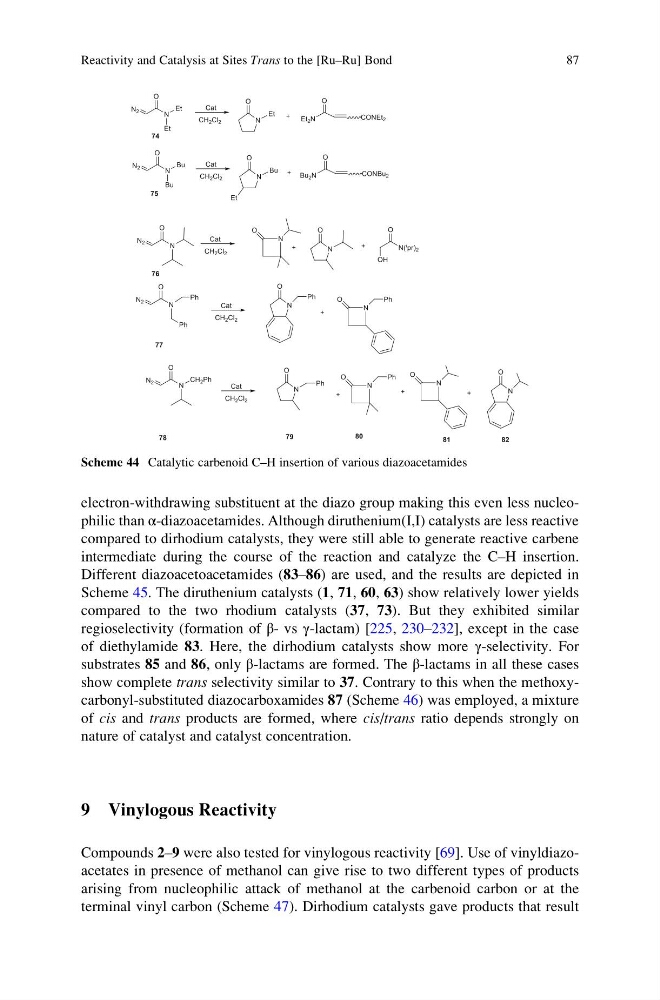
Scheme 44 Catalytic carbenoid C–H insertion of various diazoacetamides
Reactivity and Catalysis at Sites Trans to the [Ru–Ru] Bond
87
compared to dirhodium catalysts, they were still able to generate reactive carbene
intermediate during the course of the reaction and catalyze the C–H insertion.
Different diazoacetoacetamides (83–86) are used, and the results are depicted in
Scheme 45. The diruthenium catalysts (1, 71, 60, 63) show relatively lower yields
compared to the two rhodium catalysts (37, 73). But they exhibited similar
regioselectivity (formation of β- vs γ-lactam) [225, 230–232], except in the case
of diethylamide 83. Here, the dirhodium catalysts show more γ-selectivity. For
substrates 85 and 86, only β-lactams are formed. The β-lactams in all these cases
show complete trans selectivity similar to 37. Contrary to this when the methoxycarbonyl-substituted diazocarboxamides 87 (Scheme 46) was employed, a mixture
of cis and trans products are formed, where cis/trans ratio depends strongly on
nature of catalyst and catalyst concentration.
9 Vinylogous Reactivity
Compounds 2–9 were also tested for vinylogous reactivity [69]. Use of vinyldiazoacetates in presence of methanol can give rise to two different types of products
arising from nucleophilic attack of methanol at the carbenoid carbon or at the
terminal vinyl carbon (Scheme 47). Dirhodium catalysts gave products that result
Scheme 44 Catalytic carbenoid C–H insertion of various diazoacetamides
Reactivity and Catalysis at Sites Trans to the [Ru–Ru] Bond
87