

pq
rs
À
Á ¼
ð
ψ
*
p 1
ð Þψ
*
r 2
ð Þ
1
r 12
1 À P 12
ð
Þ ψ q 1
ð Þψ s 2
ð Þd1d2:
ð57Þ
9. To determine the number of loops and hence the overall sign of a diagram in
which electron repulsion integrals are expanded as dots, write each dot as a
dotted line (it does not matter which one of the two in Fig. 8 is chosen) and
apply rule 1. The order of indices in each integral rs
pq
À
Á
should correspond to
the expanded diagrams. (When Goldstone diagrams are interpreted in this way,
we call them Brandow diagrams.)
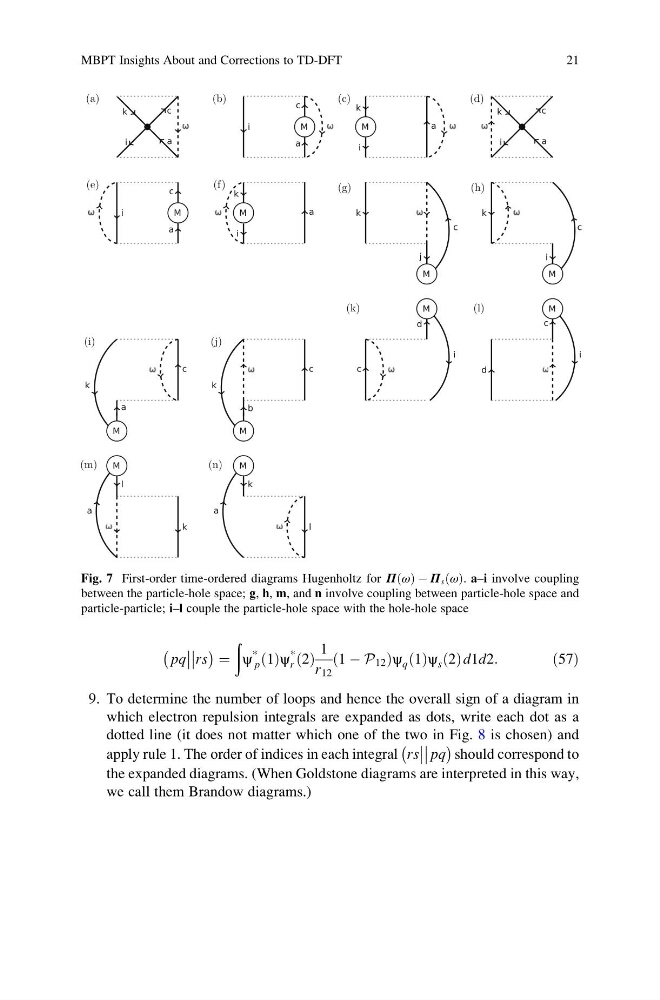
Fig. 7 First-order time-ordered diagrams Hugenholtz for Π ω
ð Þ À Π s ω
ð Þ. a–i involve coupling
between the particle-hole space; g, h, m, and n involve coupling between particle-hole space and
particle-particle; i–l couple the particle-hole space with the hole-hole space
MBPT Insights About and Corrections to TD-DFT
21
rs
À
Á ¼
ð
ψ
*
p 1
ð Þψ
*
r 2
ð Þ
1
r 12
1 À P 12
ð
Þ ψ q 1
ð Þψ s 2
ð Þd1d2:
ð57Þ
9. To determine the number of loops and hence the overall sign of a diagram in
which electron repulsion integrals are expanded as dots, write each dot as a
dotted line (it does not matter which one of the two in Fig. 8 is chosen) and
apply rule 1. The order of indices in each integral rs
pq
À
Á
should correspond to
the expanded diagrams. (When Goldstone diagrams are interpreted in this way,
we call them Brandow diagrams.)
Fig. 7 First-order time-ordered diagrams Hugenholtz for Π ω
ð Þ À Π s ω
ð Þ. a–i involve coupling
between the particle-hole space; g, h, m, and n involve coupling between particle-hole space and
particle-particle; i–l couple the particle-hole space with the hole-hole space
MBPT Insights About and Corrections to TD-DFT
21