

5 TDDFT for Excitons in Solids
5.1 Why Are Excitons a Difficult Problem?
Until a few years ago, common wisdom held that TDDFT may be good for
molecular excitations but fails for excitons in solids. We now know better, as we
see in this section. However, let us first discuss why excitons are such a hard
problem for TDDFT.
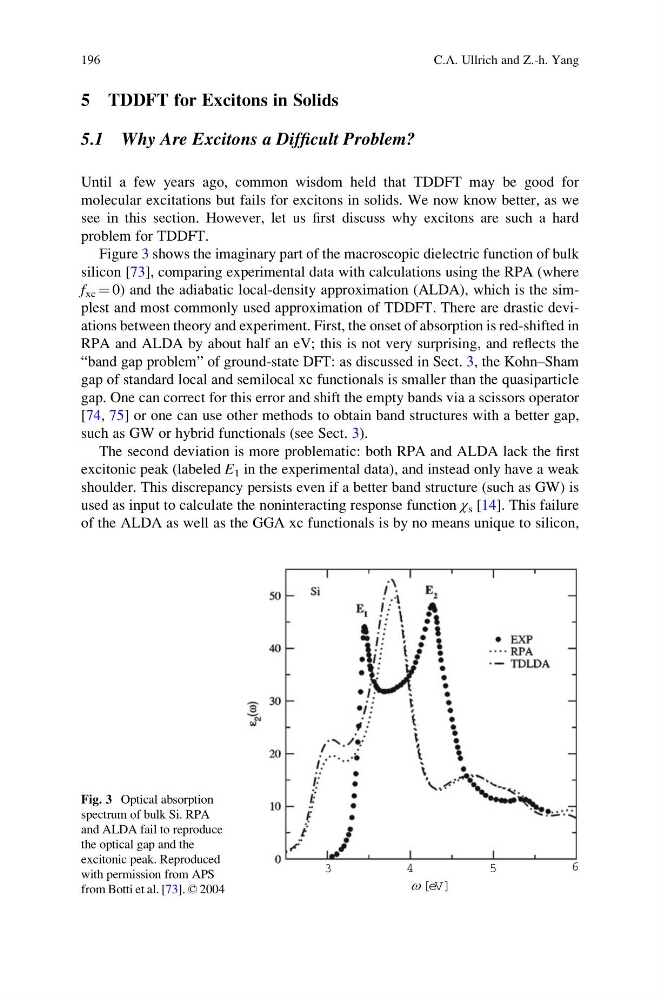
Figure 3 shows the imaginary part of the macroscopic dielectric function of bulk
silicon [73], comparing experimental data with calculations using the RPA (where
f xc ¼ 0) and the adiabatic local-density approximation (ALDA), which is the simplest and most commonly used approximation of TDDFT. There are drastic deviations between theory and experiment. First, the onset of absorption is red-shifted in
RPA and ALDA by about half an eV; this is not very surprising, and reflects the
“band gap problem” of ground-state DFT: as discussed in Sect. 3, the Kohn–Sham
gap of standard local and semilocal xc functionals is smaller than the quasiparticle
gap. One can correct for this error and shift the empty bands via a scissors operator
[74, 75] or one can use other methods to obtain band structures with a better gap,
such as GW or hybrid functionals (see Sect. 3).
The second deviation is more problematic: both RPA and ALDA lack the first
excitonic peak (labeled E 1 in the experimental data), and instead only have a weak
shoulder. This discrepancy persists even if a better band structure (such as GW) is
used as input to calculate the noninteracting response function χ s [14]. This failure
of the ALDA as well as the GGA xc functionals is by no means unique to silicon,
3
4
5
6
[eV]
Fig. 3 Optical absorption
spectrum of bulk Si. RPA
and ALDA fail to reproduce
the optical gap and the
excitonic peak. Reproduced
with permission from APS
from Botti et al. [73]. © 2004
196
C.A. Ullrich and Z.-h. Yang
5.1 Why Are Excitons a Difficult Problem?
Until a few years ago, common wisdom held that TDDFT may be good for
molecular excitations but fails for excitons in solids. We now know better, as we
see in this section. However, let us first discuss why excitons are such a hard
problem for TDDFT.
Figure 3 shows the imaginary part of the macroscopic dielectric function of bulk
silicon [73], comparing experimental data with calculations using the RPA (where
f xc ¼ 0) and the adiabatic local-density approximation (ALDA), which is the simplest and most commonly used approximation of TDDFT. There are drastic deviations between theory and experiment. First, the onset of absorption is red-shifted in
RPA and ALDA by about half an eV; this is not very surprising, and reflects the
“band gap problem” of ground-state DFT: as discussed in Sect. 3, the Kohn–Sham
gap of standard local and semilocal xc functionals is smaller than the quasiparticle
gap. One can correct for this error and shift the empty bands via a scissors operator
[74, 75] or one can use other methods to obtain band structures with a better gap,
such as GW or hybrid functionals (see Sect. 3).
The second deviation is more problematic: both RPA and ALDA lack the first
excitonic peak (labeled E 1 in the experimental data), and instead only have a weak
shoulder. This discrepancy persists even if a better band structure (such as GW) is
used as input to calculate the noninteracting response function χ s [14]. This failure
of the ALDA as well as the GGA xc functionals is by no means unique to silicon,
3
4
5
6
[eV]
Fig. 3 Optical absorption
spectrum of bulk Si. RPA
and ALDA fail to reproduce
the optical gap and the
excitonic peak. Reproduced
with permission from APS
from Botti et al. [73]. © 2004
196
C.A. Ullrich and Z.-h. Yang