

In this regard, a small circulation of extremely hot catalyst may not be as
effective as a large circulation of cooler catalyst. It has been found that there is a
specific catalyst temperature range that is desirable for a given feed and catalyst
system. A unique dense phase catalyst cooling system provides a technique through
which the best temperature and heat balance relationship can be maintained.
Consider the enthalpy requirements for an FCC reactor given in Table 4.
It can be seen from this table that 69 % of the enthalpy contained in the heat input
to the reactor is required just to heat and vaporize the feed. The remainder is
essentially available for conversion. To improve conversion, it would be very
desirable to allow more of the heat available to be used for conversion. The only
variable that can be changed to achieve this requirement is the feed inlet enthalpy,
•
•
•
•
•
•
15
14
13
COMPLETE COMBUSTION
2% OXYGEN IN
FLUE GAS
COMPLETE COMBUSTION
NO OXYGEN IN
FLUE GAS
12
AIR/COKE (WT RATIO)
11
10
1.0
2.0
3.0
4.0
CO 2 /CO RATIO (MOL)
6.0
7.0
5.0
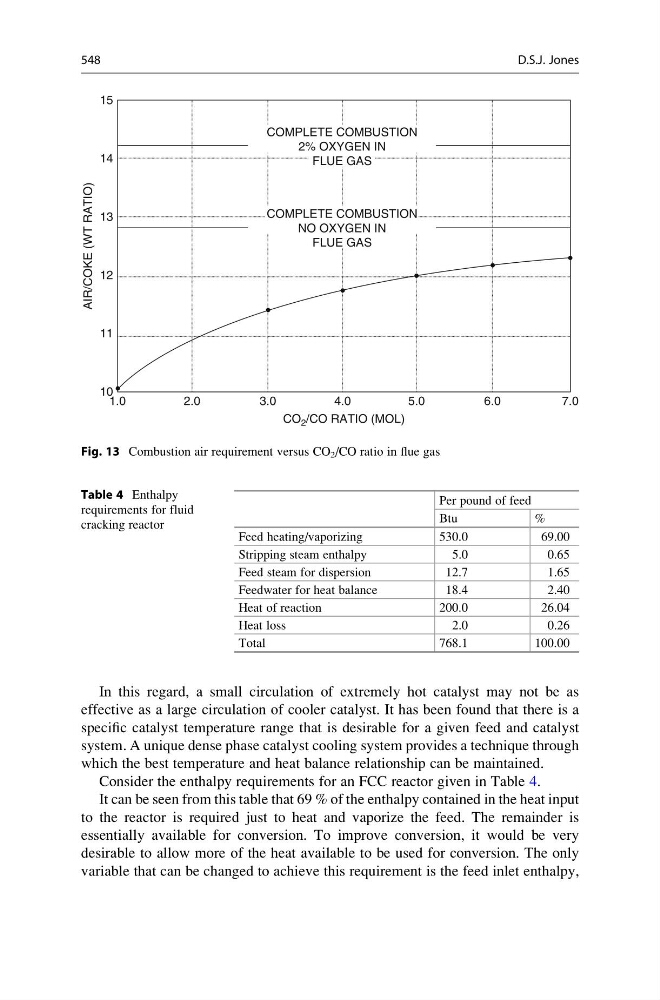
Fig. 13 Combustion air requirement versus CO 2 /CO ratio in flue gas
Table 4 Enthalpy
requirements for fluid
cracking reactor
Per pound of feed
Btu
%
Feed heating/vaporizing
530.0
69.00
Stripping steam enthalpy
5.0
0.65
Feed steam for dispersion
12.7
1.65
Feedwater for heat balance
18.4
2.40
Heat of reaction
200.0
26.04
Heat loss
2.0
0.26
Total
768.1
100.00
548
D.S.J. Jones
effective as a large circulation of cooler catalyst. It has been found that there is a
specific catalyst temperature range that is desirable for a given feed and catalyst
system. A unique dense phase catalyst cooling system provides a technique through
which the best temperature and heat balance relationship can be maintained.
Consider the enthalpy requirements for an FCC reactor given in Table 4.
It can be seen from this table that 69 % of the enthalpy contained in the heat input
to the reactor is required just to heat and vaporize the feed. The remainder is
essentially available for conversion. To improve conversion, it would be very
desirable to allow more of the heat available to be used for conversion. The only
variable that can be changed to achieve this requirement is the feed inlet enthalpy,
•
•
•
•
•
•
15
14
13
COMPLETE COMBUSTION
2% OXYGEN IN
FLUE GAS
COMPLETE COMBUSTION
NO OXYGEN IN
FLUE GAS
12
AIR/COKE (WT RATIO)
11
10
1.0
2.0
3.0
4.0
CO 2 /CO RATIO (MOL)
6.0
7.0
5.0
Fig. 13 Combustion air requirement versus CO 2 /CO ratio in flue gas
Table 4 Enthalpy
requirements for fluid
cracking reactor
Per pound of feed
Btu
%
Feed heating/vaporizing
530.0
69.00
Stripping steam enthalpy
5.0
0.65
Feed steam for dispersion
12.7
1.65
Feedwater for heat balance
18.4
2.40
Heat of reaction
200.0
26.04
Heat loss
2.0
0.26
Total
768.1
100.00
548
D.S.J. Jones