

• The presence of high concentrations of polar molecules such as polycyclic
aromatics and nitrogen compounds. These are absorbed into the catalyst’s active
area causing instant (but temporary) deactivation.
• Heavy metals that poison the catalyst and affect the selectivity of the cracking
process.
• High concentrations of polynaphthenes that dealkylate slowly.
In FCCUs that process conventional feedstocks, cracking temperature is controlled by the circulation of hot regenerated catalyst. With the heavier feedstocks,
with an increase in Conradson carbon, there will be a larger coke formation. This in
turn produces a high regenerated catalyst temperature and heat load. To maintain
heat balance, therefore, catalyst circulation can be reduced, this leads to poor or
unsatisfactory performance. Catalyst cooling or feed cooling is used to overcome
this high catalyst heat load and to maintain proper circulation.
The extended boiling range of the feed, as in the case of residues, tends to cause
an uneven cracking severity. The lighter molecules in the feed are instantly
vaporized on contact with the hot catalyst, and cracking occurs. In the case of the
heavier molecules, vaporization is not achieved so easily. This contributes to a
higher coke deposition with a higher rate of catalyst deactivation. Ideally, the whole
feed should be instantly vaporized so that uniform cracking mechanism can commence. The mix temperature (which is defined as the theoretical equilibrium temperature between the uncracked vaporized feed and the regenerated catalyst) should be
12.0
Distillate Feed
is a 622°F to 1022°F cut
Gas Oil to 662°F cut point
Naphtha to 390°F cut point
Gas.
10.0
8.0
6.0
4.0
Percent Weight on Distillate Feed
2.0
0.14
0.12
0.10
0.08
0.06
Soaking Volume Factor
0.04
0.02
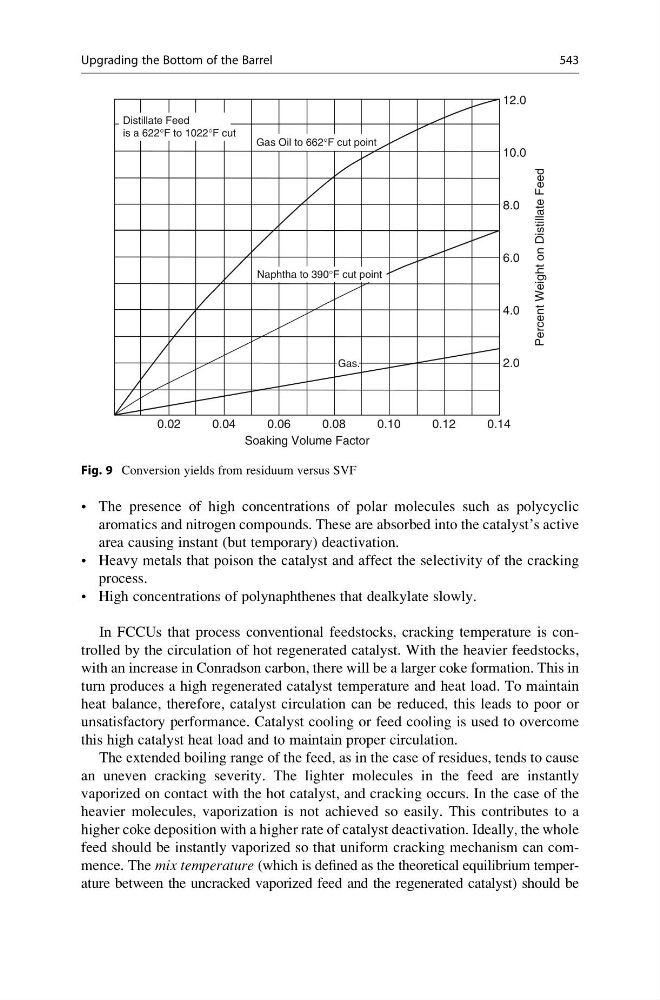
Fig. 9 Conversion yields from residuum versus SVF
Upgrading the Bottom of the Barrel
543
aromatics and nitrogen compounds. These are absorbed into the catalyst’s active
area causing instant (but temporary) deactivation.
• Heavy metals that poison the catalyst and affect the selectivity of the cracking
process.
• High concentrations of polynaphthenes that dealkylate slowly.
In FCCUs that process conventional feedstocks, cracking temperature is controlled by the circulation of hot regenerated catalyst. With the heavier feedstocks,
with an increase in Conradson carbon, there will be a larger coke formation. This in
turn produces a high regenerated catalyst temperature and heat load. To maintain
heat balance, therefore, catalyst circulation can be reduced, this leads to poor or
unsatisfactory performance. Catalyst cooling or feed cooling is used to overcome
this high catalyst heat load and to maintain proper circulation.
The extended boiling range of the feed, as in the case of residues, tends to cause
an uneven cracking severity. The lighter molecules in the feed are instantly
vaporized on contact with the hot catalyst, and cracking occurs. In the case of the
heavier molecules, vaporization is not achieved so easily. This contributes to a
higher coke deposition with a higher rate of catalyst deactivation. Ideally, the whole
feed should be instantly vaporized so that uniform cracking mechanism can commence. The mix temperature (which is defined as the theoretical equilibrium temperature between the uncracked vaporized feed and the regenerated catalyst) should be
12.0
Distillate Feed
is a 622°F to 1022°F cut
Gas Oil to 662°F cut point
Naphtha to 390°F cut point
Gas.
10.0
8.0
6.0
4.0
Percent Weight on Distillate Feed
2.0
0.14
0.12
0.10
0.08
0.06
Soaking Volume Factor
0.04
0.02
Fig. 9 Conversion yields from residuum versus SVF
Upgrading the Bottom of the Barrel
543