

“Deep Oil” Fluid Catalytic Cracking
Up to the late 1980s, feedstocks to FCCU were limited by characteristics such as
high Conradson carbon and metals. This excluded the processing of the “bottom of
the barrel” residues. Indeed, even the processing of vacuum gas oil feeds was
limited to:
Conradson carbon < 10 wt%
Hydrogen content > 11:2 wt%
Metals Ni þ V < 50 ppmn
During the late 1980s, significant research and development breakthroughs
produced a catalytic process that can handle residuum feed.
Feedstocks heavier than vacuum gas oil, when used in a conventional fluid
catalytic cracking unit (FCCU), tend to increase the production of coke and this
in turn deactivates the catalyst. This is mainly the result of:
• A high portion of the feed that does not vaporize. The unvaporized portion
quickly cokes on the catalyst, choking its active area.
24.0
20.0
16.0
Residue Feed
is a +1022°F cut
Gas Oil to 662°F Cut point
Naphtha to 390°F Cut Point
12.0
8.0
Percent Weight on Residue Feed
4.0
0.14
0.12
0.10
0.08
Soaking Volume Factor
0.06
0.04
0.02
0
Gas.
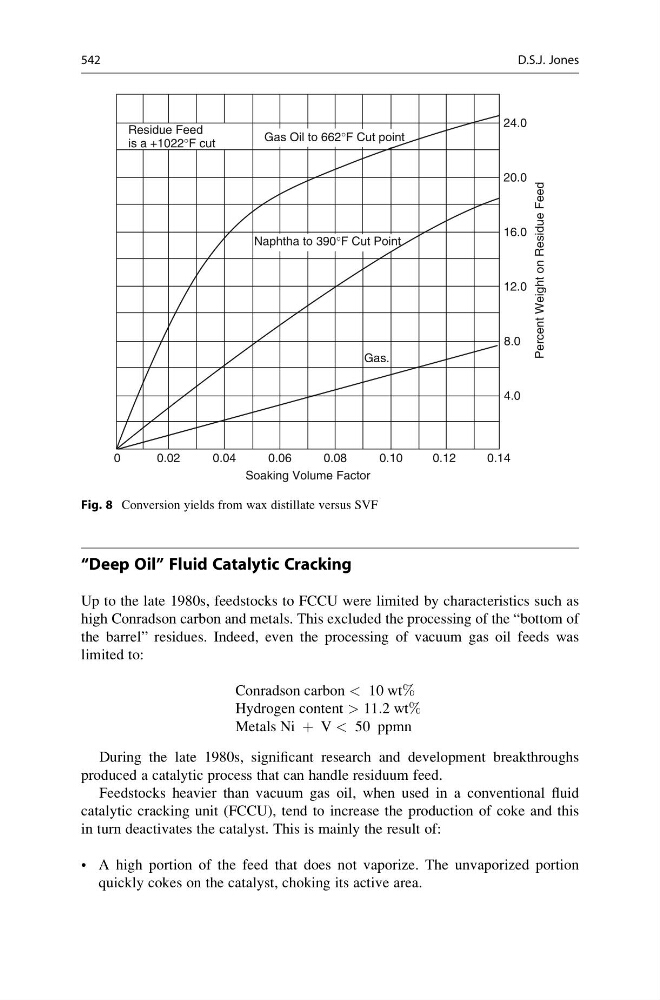
Fig. 8 Conversion yields from wax distillate versus SVF
542
D.S.J. Jones
Up to the late 1980s, feedstocks to FCCU were limited by characteristics such as
high Conradson carbon and metals. This excluded the processing of the “bottom of
the barrel” residues. Indeed, even the processing of vacuum gas oil feeds was
limited to:
Conradson carbon < 10 wt%
Hydrogen content > 11:2 wt%
Metals Ni þ V < 50 ppmn
During the late 1980s, significant research and development breakthroughs
produced a catalytic process that can handle residuum feed.
Feedstocks heavier than vacuum gas oil, when used in a conventional fluid
catalytic cracking unit (FCCU), tend to increase the production of coke and this
in turn deactivates the catalyst. This is mainly the result of:
• A high portion of the feed that does not vaporize. The unvaporized portion
quickly cokes on the catalyst, choking its active area.
24.0
20.0
16.0
Residue Feed
is a +1022°F cut
Gas Oil to 662°F Cut point
Naphtha to 390°F Cut Point
12.0
8.0
Percent Weight on Residue Feed
4.0
0.14
0.12
0.10
0.08
Soaking Volume Factor
0.06
0.04
0.02
0
Gas.
Fig. 8 Conversion yields from wax distillate versus SVF
542
D.S.J. Jones