

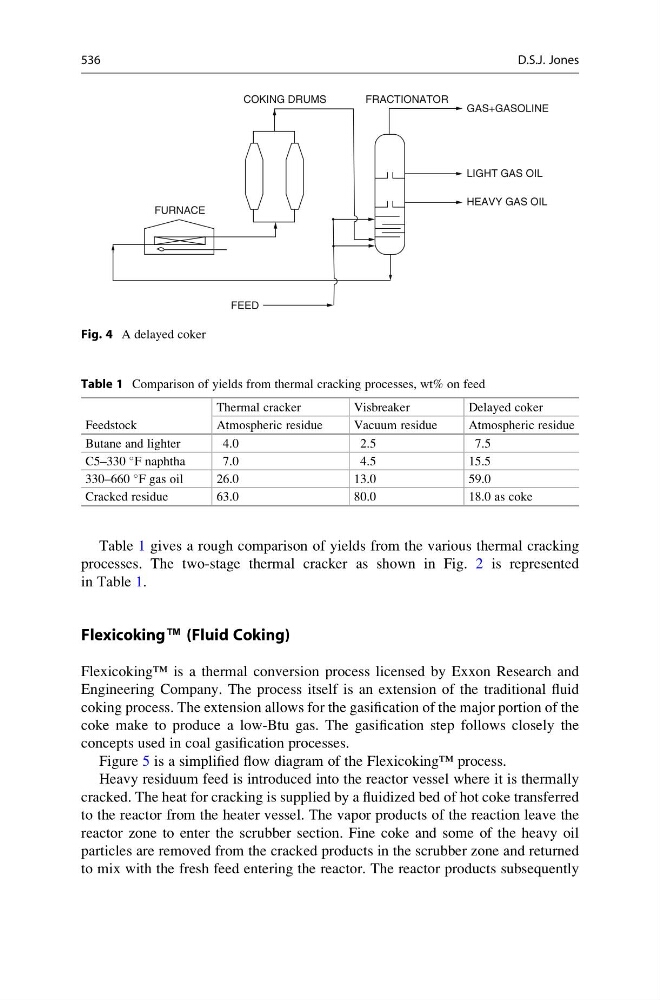
Table 1 gives a rough comparison of yields from the various thermal cracking
processes. The two-stage thermal cracker as shown in Fig. 2 is represented
in Table 1.
Flexicoking™ (Fluid Coking)
Flexicoking™ is a thermal conversion process licensed by Exxon Research and
Engineering Company. The process itself is an extension of the traditional fluid
coking process. The extension allows for the gasification of the major portion of the
coke make to produce a low-Btu gas. The gasification step follows closely the
concepts used in coal gasification processes.
Figure 5 is a simplified flow diagram of the Flexicoking™ process.
Heavy residuum feed is introduced into the reactor vessel where it is thermally
cracked. The heat for cracking is supplied by a fluidized bed of hot coke transferred
to the reactor from the heater vessel. The vapor products of the reaction leave the
reactor zone to enter the scrubber section. Fine coke and some of the heavy oil
particles are removed from the cracked products in the scrubber zone and returned
to mix with the fresh feed entering the reactor. The reactor products subsequently
Table 1 Comparison of yields from thermal cracking processes, wt% on feed
Feedstock
Thermal cracker
Visbreaker
Delayed coker
Atmospheric residue
Vacuum residue
Atmospheric residue
Butane and lighter
4.0
2.5
7.5
C5–330
F naphtha
7.0
4.5
15.5
330–660
F gas oil
26.0
13.0
59.0
Cracked residue
63.0
80.0
18.0 as coke
FURNACE
FRACTIONATOR
COKING DRUMS
GAS+GASOLINE
LIGHT GAS OIL
HEAVY GAS OIL
FEED
Fig. 4 A delayed coker
536
D.S.J. Jones
processes. The two-stage thermal cracker as shown in Fig. 2 is represented
in Table 1.
Flexicoking™ (Fluid Coking)
Flexicoking™ is a thermal conversion process licensed by Exxon Research and
Engineering Company. The process itself is an extension of the traditional fluid
coking process. The extension allows for the gasification of the major portion of the
coke make to produce a low-Btu gas. The gasification step follows closely the
concepts used in coal gasification processes.
Figure 5 is a simplified flow diagram of the Flexicoking™ process.
Heavy residuum feed is introduced into the reactor vessel where it is thermally
cracked. The heat for cracking is supplied by a fluidized bed of hot coke transferred
to the reactor from the heater vessel. The vapor products of the reaction leave the
reactor zone to enter the scrubber section. Fine coke and some of the heavy oil
particles are removed from the cracked products in the scrubber zone and returned
to mix with the fresh feed entering the reactor. The reactor products subsequently
Table 1 Comparison of yields from thermal cracking processes, wt% on feed
Feedstock
Thermal cracker
Visbreaker
Delayed coker
Atmospheric residue
Vacuum residue
Atmospheric residue
Butane and lighter
4.0
2.5
7.5
C5–330
F naphtha
7.0
4.5
15.5
330–660
F gas oil
26.0
13.0
59.0
Cracked residue
63.0
80.0
18.0 as coke
FURNACE
FRACTIONATOR
COKING DRUMS
GAS+GASOLINE
LIGHT GAS OIL
HEAVY GAS OIL
FEED
Fig. 4 A delayed coker
536
D.S.J. Jones