

Isomerization Process Economics
The performance and economics of typical Penex and Par-Isom processes, with and
without a DIH column and hydrocarbon recycle, are compared in Table 4. The case
study is for a 10,000 BPD unit with a 10 X-factor feed, which is considered a light
feed. X-factor is a measure of C 7 + hydrocarbons, C 6 naphthenes, and benzene.
This case study shows that a 10,000 BPD unit can produce 83.4 RON and 81,040
octane barrels with either process technology in a hydrocarbon once-through
configuration (e.g., OT). C 5 + yields are well above 95 % in both cases. There
will, however, be differences in quantity of catalyst required, space velocity,
hydrogen to hydrocarbon ratio, and other parameters. It can be noted from the
table that the total investment costs (US Gulf Coast basis) for a Penex-type unit are
about 10 % higher than Par-Isom in this configuration and requires almost twice the
utilities. Utilities included steam, electricity, and hydrogen for both units and
chloriding agent (PERC) and caustic in the Penex unit.
Table 4 also contains comparative data for the same feed type and capacity case,
except with the addition of a DIH column and hydrocarbon recycle. The DIH
increases the RON by almost five numbers, from 83.4 to 88.0, and the total octane
barrels by 4 %. The C 5 + yields are approximately 95 %. Utilities also increase,
approximately one-third more for the Par-Isom unit, and 80 % more for the Penex
unit with the recycle flow scheme. CAPEX increases from about $36M USD to
$57M USD for adding a DIH to the Penex unit, whereas the CAPEX increases from
$33M USD to $47M USD for the Par-Isom technology. The investment costs are
less in both cases, in favor of the Par-Isom process for a given configuration.
Chlorided alumina-type catalysts have lower density (approximately half) and
typically cost less from a total investment perspective, but also require added
Heavy
Naphtha
Feed
Reforming
Reactors
Charge
Heater
Light
Naphtha
Feed
Par-Isom
Reactor
Product
Separator
Recycle
Compressor
Net
Hydrogen
Stabilizer
Offgas
Stabilizer
Column
Stabilizer
Bottoms
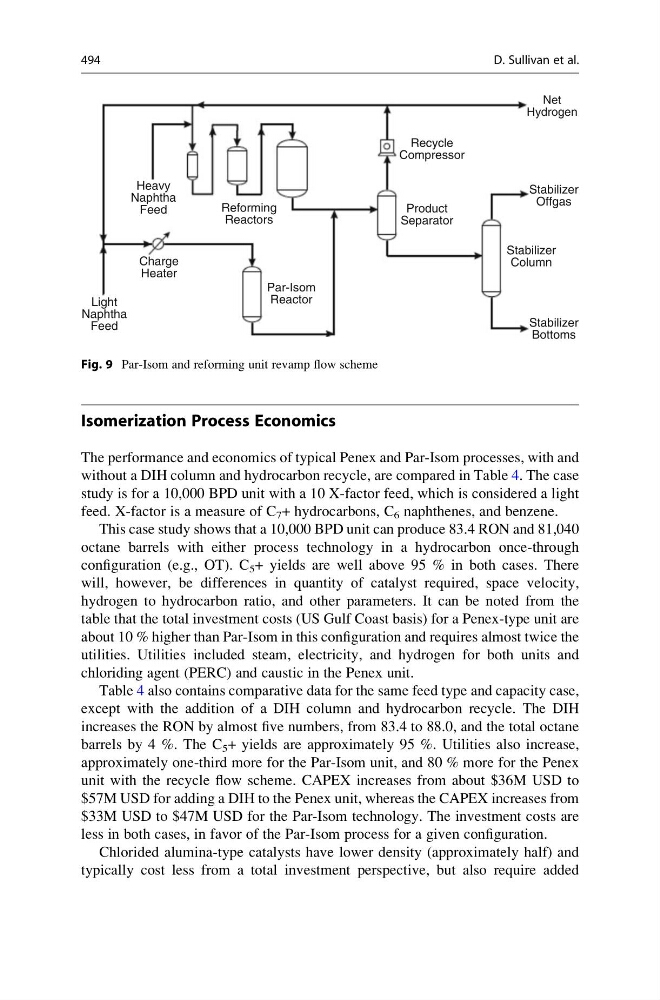
Fig. 9 Par-Isom and reforming unit revamp flow scheme
494
D. Sullivan et al.
The performance and economics of typical Penex and Par-Isom processes, with and
without a DIH column and hydrocarbon recycle, are compared in Table 4. The case
study is for a 10,000 BPD unit with a 10 X-factor feed, which is considered a light
feed. X-factor is a measure of C 7 + hydrocarbons, C 6 naphthenes, and benzene.
This case study shows that a 10,000 BPD unit can produce 83.4 RON and 81,040
octane barrels with either process technology in a hydrocarbon once-through
configuration (e.g., OT). C 5 + yields are well above 95 % in both cases. There
will, however, be differences in quantity of catalyst required, space velocity,
hydrogen to hydrocarbon ratio, and other parameters. It can be noted from the
table that the total investment costs (US Gulf Coast basis) for a Penex-type unit are
about 10 % higher than Par-Isom in this configuration and requires almost twice the
utilities. Utilities included steam, electricity, and hydrogen for both units and
chloriding agent (PERC) and caustic in the Penex unit.
Table 4 also contains comparative data for the same feed type and capacity case,
except with the addition of a DIH column and hydrocarbon recycle. The DIH
increases the RON by almost five numbers, from 83.4 to 88.0, and the total octane
barrels by 4 %. The C 5 + yields are approximately 95 %. Utilities also increase,
approximately one-third more for the Par-Isom unit, and 80 % more for the Penex
unit with the recycle flow scheme. CAPEX increases from about $36M USD to
$57M USD for adding a DIH to the Penex unit, whereas the CAPEX increases from
$33M USD to $47M USD for the Par-Isom technology. The investment costs are
less in both cases, in favor of the Par-Isom process for a given configuration.
Chlorided alumina-type catalysts have lower density (approximately half) and
typically cost less from a total investment perspective, but also require added
Heavy
Naphtha
Feed
Reforming
Reactors
Charge
Heater
Light
Naphtha
Feed
Par-Isom
Reactor
Product
Separator
Recycle
Compressor
Net
Hydrogen
Stabilizer
Offgas
Stabilizer
Column
Stabilizer
Bottoms
Fig. 9 Par-Isom and reforming unit revamp flow scheme
494
D. Sullivan et al.