

hydrocarbon flow schemes previously developed for naphtha isomerization use
either molecular sieve separation, such as in a TIP unit, or fractionation, such as a
deisohexanizer (DIH) column.
The process flow scheme shown in Fig. 8 is similar to conventional once-through
hydrocarbon Penex and zeolitic isomerization units. The fresh C 5 –C 6 feed is
combined with makeup and recycle hydrogen and directed to the charge heat
exchanger, where the reactants are heated to the reaction temperature. A fired
heater is not required in the Par-Isom process, because of the much lower reaction
temperature needed with the PI-244 catalyst than with zeolitic catalysts. Hot oil or
steam can be used as the heat source in this exchanger. The heated combined feed is
then sent to the isomerization reactor.
Either one or two reactors can be used in series, depending on the specific
application. Two reactors obtain the best performance from the process but at a
higher capital and additional catalyst inventory costs. In a two-reactor system, the
first reactor is operated at higher temperature (200–220
C) to improve the reaction
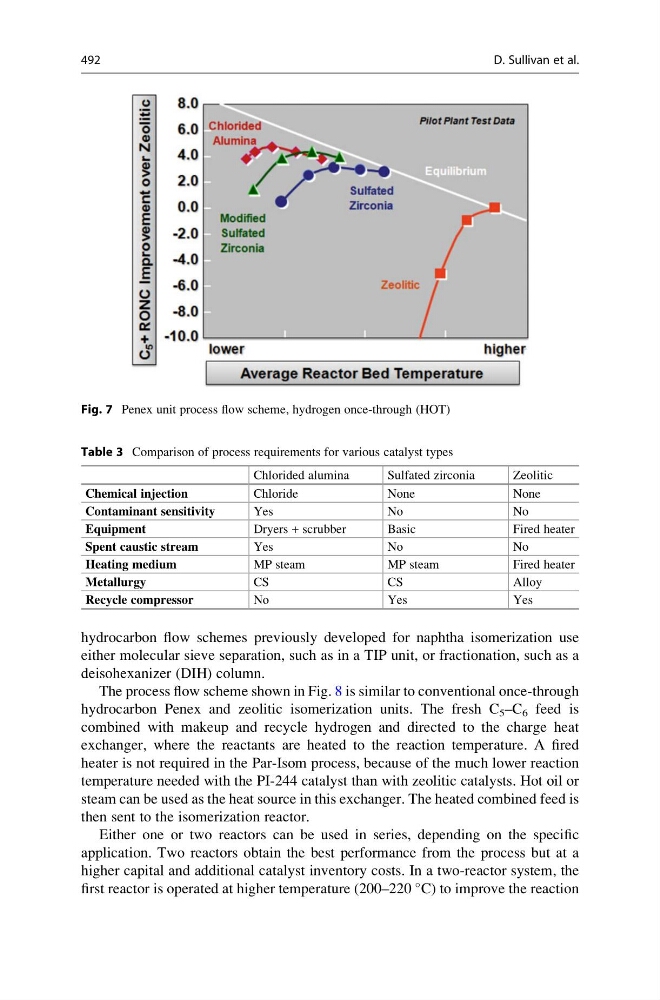
Fig. 7 Penex unit process flow scheme, hydrogen once-through (HOT)
Table 3 Comparison of process requirements for various catalyst types
Chlorided alumina
Sulfated zirconia
Zeolitic
Chemical injection
Chloride
None
None
Contaminant sensitivity
Yes
No
No
Equipment
Dryers + scrubber
Basic
Fired heater
Spent caustic stream
Yes
No
No
Heating medium
MP steam
MP steam
Fired heater
Metallurgy
CS
CS
Alloy
Recycle compressor
No
Yes
Yes
492
D. Sullivan et al.
either molecular sieve separation, such as in a TIP unit, or fractionation, such as a
deisohexanizer (DIH) column.
The process flow scheme shown in Fig. 8 is similar to conventional once-through
hydrocarbon Penex and zeolitic isomerization units. The fresh C 5 –C 6 feed is
combined with makeup and recycle hydrogen and directed to the charge heat
exchanger, where the reactants are heated to the reaction temperature. A fired
heater is not required in the Par-Isom process, because of the much lower reaction
temperature needed with the PI-244 catalyst than with zeolitic catalysts. Hot oil or
steam can be used as the heat source in this exchanger. The heated combined feed is
then sent to the isomerization reactor.
Either one or two reactors can be used in series, depending on the specific
application. Two reactors obtain the best performance from the process but at a
higher capital and additional catalyst inventory costs. In a two-reactor system, the
first reactor is operated at higher temperature (200–220
C) to improve the reaction
Fig. 7 Penex unit process flow scheme, hydrogen once-through (HOT)
Table 3 Comparison of process requirements for various catalyst types
Chlorided alumina
Sulfated zirconia
Zeolitic
Chemical injection
Chloride
None
None
Contaminant sensitivity
Yes
No
No
Equipment
Dryers + scrubber
Basic
Fired heater
Spent caustic stream
Yes
No
No
Heating medium
MP steam
MP steam
Fired heater
Metallurgy
CS
CS
Alloy
Recycle compressor
No
Yes
Yes
492
D. Sullivan et al.