

composition. Olefinic SPA InAlk C 6 + RON values are higher than the values shown
above for hydrogenated product.
The InAlk process is flexible with respect to feed olefin type. Though the process
is typically applied to a C 4 = source feed, operation with a C 5 = or mixed C 4 –C 5
feeds also achieves similar high product quality.
Catalytic Condensation Process as a Source of Diesel Fuels
The catalytic condensation process can also produce fuels in the diesel boiling
range, although because of their relatively high degree of branching, they all have
fairly poor cetane characteristics, even after hydrogenation.
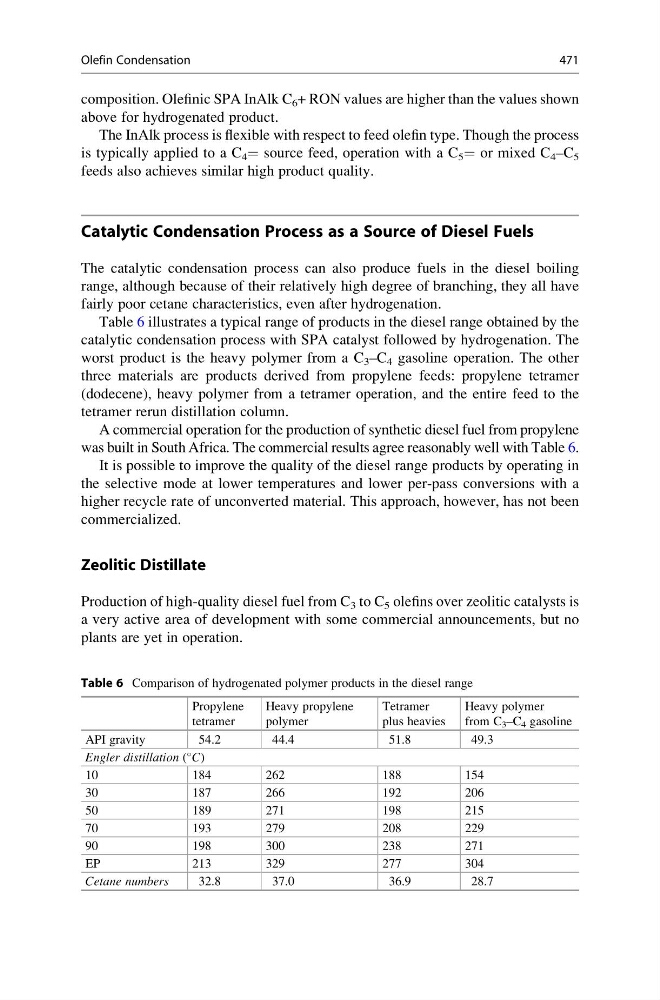
Table 6 illustrates a typical range of products in the diesel range obtained by the
catalytic condensation process with SPA catalyst followed by hydrogenation. The
worst product is the heavy polymer from a C 3 –C 4 gasoline operation. The other
three materials are products derived from propylene feeds: propylene tetramer
(dodecene), heavy polymer from a tetramer operation, and the entire feed to the
tetramer rerun distillation column.
A commercial operation for the production of synthetic diesel fuel from propylene
was built in South Africa. The commercial results agree reasonably well with Table 6.
It is possible to improve the quality of the diesel range products by operating in
the selective mode at lower temperatures and lower per-pass conversions with a
higher recycle rate of unconverted material. This approach, however, has not been
commercialized.
Zeolitic Distillate
Production of high-quality diesel fuel from C 3 to C 5 olefins over zeolitic catalysts is
a very active area of development with some commercial announcements, but no
plants are yet in operation.
Table 6 Comparison of hydrogenated polymer products in the diesel range
Propylene
tetramer
Heavy propylene
polymer
Tetramer
plus heavies
Heavy polymer
from C 3 –C 4 gasoline
API gravity
54.2
44.4
51.8
49.3
Engler distillation (
C)
10
184
262
188
154
30
187
266
192
206
50
189
271
198
215
70
193
279
208
229
90
198
300
238
271
EP
213
329
277
304
Cetane numbers
32.8
37.0
36.9
28.7
Olefin Condensation
471
above for hydrogenated product.
The InAlk process is flexible with respect to feed olefin type. Though the process
is typically applied to a C 4 = source feed, operation with a C 5 = or mixed C 4 –C 5
feeds also achieves similar high product quality.
Catalytic Condensation Process as a Source of Diesel Fuels
The catalytic condensation process can also produce fuels in the diesel boiling
range, although because of their relatively high degree of branching, they all have
fairly poor cetane characteristics, even after hydrogenation.
Table 6 illustrates a typical range of products in the diesel range obtained by the
catalytic condensation process with SPA catalyst followed by hydrogenation. The
worst product is the heavy polymer from a C 3 –C 4 gasoline operation. The other
three materials are products derived from propylene feeds: propylene tetramer
(dodecene), heavy polymer from a tetramer operation, and the entire feed to the
tetramer rerun distillation column.
A commercial operation for the production of synthetic diesel fuel from propylene
was built in South Africa. The commercial results agree reasonably well with Table 6.
It is possible to improve the quality of the diesel range products by operating in
the selective mode at lower temperatures and lower per-pass conversions with a
higher recycle rate of unconverted material. This approach, however, has not been
commercialized.
Zeolitic Distillate
Production of high-quality diesel fuel from C 3 to C 5 olefins over zeolitic catalysts is
a very active area of development with some commercial announcements, but no
plants are yet in operation.
Table 6 Comparison of hydrogenated polymer products in the diesel range
Propylene
tetramer
Heavy propylene
polymer
Tetramer
plus heavies
Heavy polymer
from C 3 –C 4 gasoline
API gravity
54.2
44.4
51.8
49.3
Engler distillation (
C)
10
184
262
188
154
30
187
266
192
206
50
189
271
198
215
70
193
279
208
229
90
198
300
238
271
EP
213
329
277
304
Cetane numbers
32.8
37.0
36.9
28.7
Olefin Condensation
471