

Hydrogenated Versus Non-hydrogenated Polymer Gasolines
from the Catalytic Condensation Process
Polymer gasoline is almost totally olefinic and is easily hydrogenated. Historically,
except for aviation fuel, it usually has been blended into gasoline without further
processing because the relatively high RON of olefins blended synergistically with
paraffins. Recently, with restrictions on olefin levels in present gasolines, such as
Euro V, and MTBE phaseout, hydrogenation has received increased attention.
Polymer gasolines from SPA catalysts are much more highly branched than
predicted from thermodynamic equilibrium, it is important to select hydrogenation
catalysts and conditions that minimize isomerization for preservation of octane.
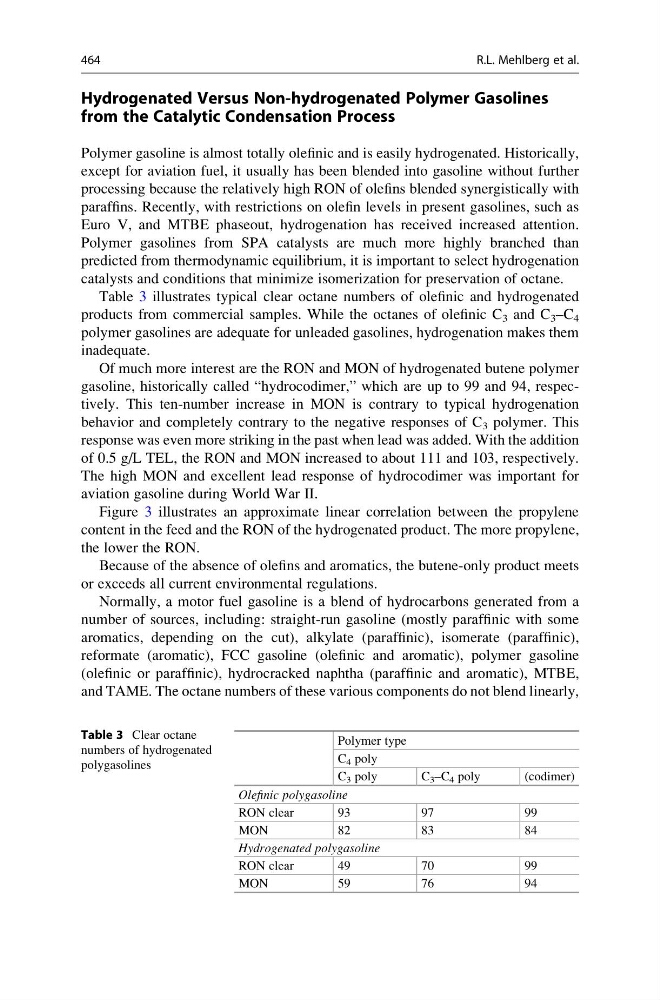
Table 3 illustrates typical clear octane numbers of olefinic and hydrogenated
products from commercial samples. While the octanes of olefinic C 3 and C 3 –C 4
polymer gasolines are adequate for unleaded gasolines, hydrogenation makes them
inadequate.
Of much more interest are the RON and MON of hydrogenated butene polymer
gasoline, historically called “hydrocodimer,” which are up to 99 and 94, respectively. This ten-number increase in MON is contrary to typical hydrogenation
behavior and completely contrary to the negative responses of C 3 polymer. This
response was even more striking in the past when lead was added. With the addition
of 0.5 g/L TEL, the RON and MON increased to about 111 and 103, respectively.
The high MON and excellent lead response of hydrocodimer was important for
aviation gasoline during World War II.
Figure 3 illustrates an approximate linear correlation between the propylene
content in the feed and the RON of the hydrogenated product. The more propylene,
the lower the RON.
Because of the absence of olefins and aromatics, the butene-only product meets
or exceeds all current environmental regulations.
Normally, a motor fuel gasoline is a blend of hydrocarbons generated from a
number of sources, including: straight-run gasoline (mostly paraffinic with some
aromatics, depending on the cut), alkylate (paraffinic), isomerate (paraffinic),
reformate (aromatic), FCC gasoline (olefinic and aromatic), polymer gasoline
(olefinic or paraffinic), hydrocracked naphtha (paraffinic and aromatic), MTBE,
and TAME. The octane numbers of these various components do not blend linearly,
Table 3 Clear octane
numbers of hydrogenated
polygasolines
Polymer type
C 4 poly
C 3 poly
C 3 –C 4 poly
(codimer)
Olefinic polygasoline
RON clear
93
97
99
MON
82
83
84
Hydrogenated polygasoline
RON clear
49
70
99
MON
59
76
94
464
R.L. Mehlberg et al.
from the Catalytic Condensation Process
Polymer gasoline is almost totally olefinic and is easily hydrogenated. Historically,
except for aviation fuel, it usually has been blended into gasoline without further
processing because the relatively high RON of olefins blended synergistically with
paraffins. Recently, with restrictions on olefin levels in present gasolines, such as
Euro V, and MTBE phaseout, hydrogenation has received increased attention.
Polymer gasolines from SPA catalysts are much more highly branched than
predicted from thermodynamic equilibrium, it is important to select hydrogenation
catalysts and conditions that minimize isomerization for preservation of octane.
Table 3 illustrates typical clear octane numbers of olefinic and hydrogenated
products from commercial samples. While the octanes of olefinic C 3 and C 3 –C 4
polymer gasolines are adequate for unleaded gasolines, hydrogenation makes them
inadequate.
Of much more interest are the RON and MON of hydrogenated butene polymer
gasoline, historically called “hydrocodimer,” which are up to 99 and 94, respectively. This ten-number increase in MON is contrary to typical hydrogenation
behavior and completely contrary to the negative responses of C 3 polymer. This
response was even more striking in the past when lead was added. With the addition
of 0.5 g/L TEL, the RON and MON increased to about 111 and 103, respectively.
The high MON and excellent lead response of hydrocodimer was important for
aviation gasoline during World War II.
Figure 3 illustrates an approximate linear correlation between the propylene
content in the feed and the RON of the hydrogenated product. The more propylene,
the lower the RON.
Because of the absence of olefins and aromatics, the butene-only product meets
or exceeds all current environmental regulations.
Normally, a motor fuel gasoline is a blend of hydrocarbons generated from a
number of sources, including: straight-run gasoline (mostly paraffinic with some
aromatics, depending on the cut), alkylate (paraffinic), isomerate (paraffinic),
reformate (aromatic), FCC gasoline (olefinic and aromatic), polymer gasoline
(olefinic or paraffinic), hydrocracked naphtha (paraffinic and aromatic), MTBE,
and TAME. The octane numbers of these various components do not blend linearly,
Table 3 Clear octane
numbers of hydrogenated
polygasolines
Polymer type
C 4 poly
C 3 poly
C 3 –C 4 poly
(codimer)
Olefinic polygasoline
RON clear
93
97
99
MON
82
83
84
Hydrogenated polygasoline
RON clear
49
70
99
MON
59
76
94
464
R.L. Mehlberg et al.