

pool requirements. This means that the end product may also contain some
pentenes and butenes if the higher vapor pressure is acceptable for blending into
the gasoline pool.
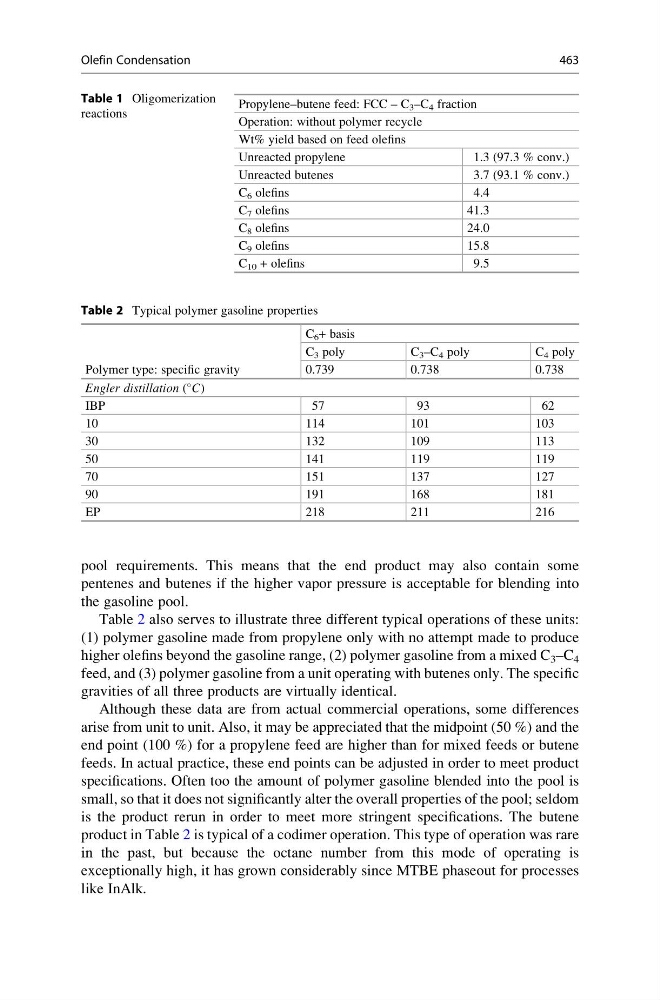
Table 2 also serves to illustrate three different typical operations of these units:
(1) polymer gasoline made from propylene only with no attempt made to produce
higher olefins beyond the gasoline range, (2) polymer gasoline from a mixed C 3 –C 4
feed, and (3) polymer gasoline from a unit operating with butenes only. The specific
gravities of all three products are virtually identical.
Although these data are from actual commercial operations, some differences
arise from unit to unit. Also, it may be appreciated that the midpoint (50 %) and the
end point (100 %) for a propylene feed are higher than for mixed feeds or butene
feeds. In actual practice, these end points can be adjusted in order to meet product
specifications. Often too the amount of polymer gasoline blended into the pool is
small, so that it does not significantly alter the overall properties of the pool; seldom
is the product rerun in order to meet more stringent specifications. The butene
product in Table 2 is typical of a codimer operation. This type of operation was rare
in the past, but because the octane number from this mode of operating is
exceptionally high, it has grown considerably since MTBE phaseout for processes
like InAlk.
Table 1 Oligomerization
reactions
Propylene–butene feed: FCC – C 3 –C 4 fraction
Operation: without polymer recycle
Wt% yield based on feed olefins
Unreacted propylene
1.3 (97.3 % conv.)
Unreacted butenes
3.7 (93.1 % conv.)
C 6 olefins
4.4
C 7 olefins
41.3
C 8 olefins
24.0
C 9 olefins
15.8
C 10 + olefins
9.5
Table 2 Typical polymer gasoline properties
Polymer type: specific gravity
C 6 + basis
C 3 poly
C 3 –C 4 poly
C 4 poly
0.739
0.738
0.738
Engler distillation (
C)
IBP
57
93
62
10
114
101
103
30
132
109
113
50
141
119
119
70
151
137
127
90
191
168
181
EP
218
211
216
Olefin Condensation
463
pentenes and butenes if the higher vapor pressure is acceptable for blending into
the gasoline pool.
Table 2 also serves to illustrate three different typical operations of these units:
(1) polymer gasoline made from propylene only with no attempt made to produce
higher olefins beyond the gasoline range, (2) polymer gasoline from a mixed C 3 –C 4
feed, and (3) polymer gasoline from a unit operating with butenes only. The specific
gravities of all three products are virtually identical.
Although these data are from actual commercial operations, some differences
arise from unit to unit. Also, it may be appreciated that the midpoint (50 %) and the
end point (100 %) for a propylene feed are higher than for mixed feeds or butene
feeds. In actual practice, these end points can be adjusted in order to meet product
specifications. Often too the amount of polymer gasoline blended into the pool is
small, so that it does not significantly alter the overall properties of the pool; seldom
is the product rerun in order to meet more stringent specifications. The butene
product in Table 2 is typical of a codimer operation. This type of operation was rare
in the past, but because the octane number from this mode of operating is
exceptionally high, it has grown considerably since MTBE phaseout for processes
like InAlk.
Table 1 Oligomerization
reactions
Propylene–butene feed: FCC – C 3 –C 4 fraction
Operation: without polymer recycle
Wt% yield based on feed olefins
Unreacted propylene
1.3 (97.3 % conv.)
Unreacted butenes
3.7 (93.1 % conv.)
C 6 olefins
4.4
C 7 olefins
41.3
C 8 olefins
24.0
C 9 olefins
15.8
C 10 + olefins
9.5
Table 2 Typical polymer gasoline properties
Polymer type: specific gravity
C 6 + basis
C 3 poly
C 3 –C 4 poly
C 4 poly
0.739
0.738
0.738
Engler distillation (
C)
IBP
57
93
62
10
114
101
103
30
132
109
113
50
141
119
119
70
151
137
127
90
191
168
181
EP
218
211
216
Olefin Condensation
463