

Hydrotreating catalysts are typically manufactured by several methods:
• Dry (incipient wetness) or wet impregnation
• Co-mulling
• Hot soaking/dip impregnation
Forming of the Support
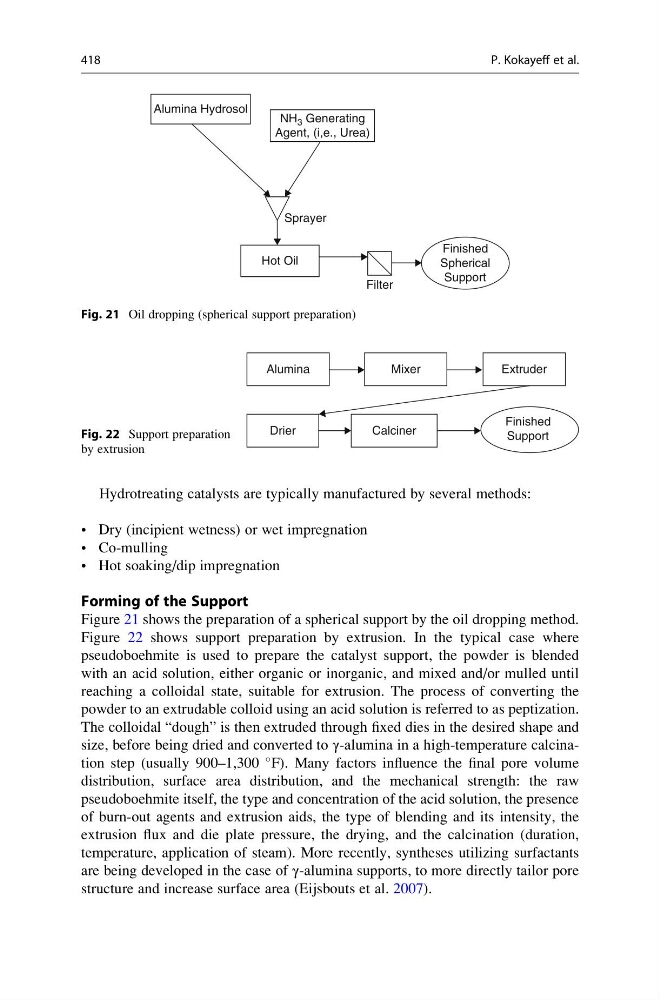
Figure 21 shows the preparation of a spherical support by the oil dropping method.
Figure 22 shows support preparation by extrusion. In the typical case where
pseudoboehmite is used to prepare the catalyst support, the powder is blended
with an acid solution, either organic or inorganic, and mixed and/or mulled until
reaching a colloidal state, suitable for extrusion. The process of converting the
powder to an extrudable colloid using an acid solution is referred to as peptization.
The colloidal “dough” is then extruded through fixed dies in the desired shape and
size, before being dried and converted to γ-alumina in a high-temperature calcination step (usually 900–1,300
F). Many factors influence the final pore volume
distribution, surface area distribution, and the mechanical strength: the raw
pseudoboehmite itself, the type and concentration of the acid solution, the presence
of burn-out agents and extrusion aids, the type of blending and its intensity, the
extrusion flux and die plate pressure, the drying, and the calcination (duration,
temperature, application of steam). More recently, syntheses utilizing surfactants
are being developed in the case of γ-alumina supports, to more directly tailor pore
structure and increase surface area (Eijsbouts et al. 2007).
Alumina Hydrosol
NH 3 Generating
Agent, (i,e., Urea)
Sprayer
Hot Oil
Filter
Finished
Spherical
Support
Fig. 21 Oil dropping (spherical support preparation)
Alumina
Drier
Calciner
Mixer
Extruder
Finished
Support
Fig. 22 Support preparation
by extrusion
418
P. Kokayeff et al.
• Dry (incipient wetness) or wet impregnation
• Co-mulling
• Hot soaking/dip impregnation
Forming of the Support
Figure 21 shows the preparation of a spherical support by the oil dropping method.
Figure 22 shows support preparation by extrusion. In the typical case where
pseudoboehmite is used to prepare the catalyst support, the powder is blended
with an acid solution, either organic or inorganic, and mixed and/or mulled until
reaching a colloidal state, suitable for extrusion. The process of converting the
powder to an extrudable colloid using an acid solution is referred to as peptization.
The colloidal “dough” is then extruded through fixed dies in the desired shape and
size, before being dried and converted to γ-alumina in a high-temperature calcination step (usually 900–1,300
F). Many factors influence the final pore volume
distribution, surface area distribution, and the mechanical strength: the raw
pseudoboehmite itself, the type and concentration of the acid solution, the presence
of burn-out agents and extrusion aids, the type of blending and its intensity, the
extrusion flux and die plate pressure, the drying, and the calcination (duration,
temperature, application of steam). More recently, syntheses utilizing surfactants
are being developed in the case of γ-alumina supports, to more directly tailor pore
structure and increase surface area (Eijsbouts et al. 2007).
Alumina Hydrosol
NH 3 Generating
Agent, (i,e., Urea)
Sprayer
Hot Oil
Filter
Finished
Spherical
Support
Fig. 21 Oil dropping (spherical support preparation)
Alumina
Drier
Calciner
Mixer
Extruder
Finished
Support
Fig. 22 Support preparation
by extrusion
418
P. Kokayeff et al.