

characterized by selectivity rather than activity considerations. Specifically, it is
desired to reduce the sulfur level to the required specification while minimizing the
saturation of olefins and subsequent octane loss.
Composition of FCC Gasoline
FCC gasoline is composed of n-paraffins, i-paraffins, n-olefins, i-olefins, cyclic
olefins, naphthenes, and aromatics. The desirable, high-octane, components are
olefins and aromatics and, to a lesser extent, i-paraffins.
Sulfur compounds present in FCC gasoline include mercaptans, sulfides,
and thiophenes as well as benzothiophenes. While these compounds do have
differences in reactivity, i.e., some undergo desulfurization more easily than
others, the differences in reactivity are not nearly as pronounced as observed
for sulfur compounds present in distillates. The most difficult sulfur compounds
to desulfurize in FCC gasoline are thiophenes with substituent groups in the
2- position, e.g., 2-thiophene, 2-ethylthiophene. 2,5-dimethyl thiophene, and
2-ethyl-5-methyl thiophene. While these compounds may be more difficult to
desulfurize than the sulfides and mercaptans, the greatest complicating factor in
the desulfurization of FCC gasoline is recombination, i.e., the formation of
mercaptans from the olefins present in the feed and the H 2 S formed during
desulfurization.
Separator
Recycle Gas
Compressor
Make-up
Hydrogen
RG
Scrubber
Main
Hydrotreating
Reactor
Diolefin
Reactor
Feed
Stripper
Post Treat
Reactor
Amine
Liquid Recycle
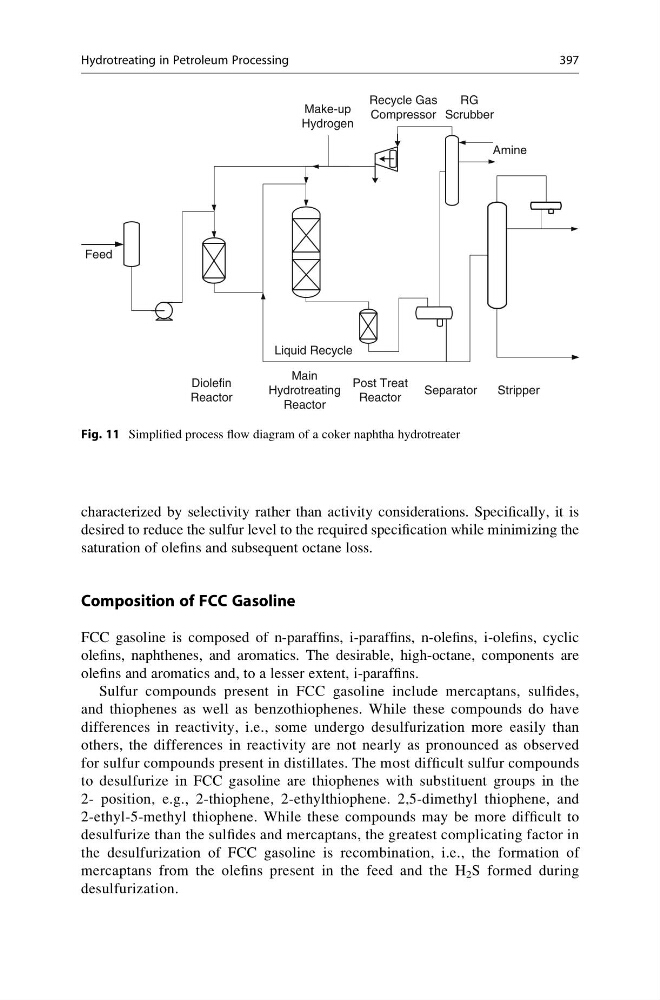
Fig. 11 Simplified process flow diagram of a coker naphtha hydrotreater
Hydrotreating in Petroleum Processing
397
desired to reduce the sulfur level to the required specification while minimizing the
saturation of olefins and subsequent octane loss.
Composition of FCC Gasoline
FCC gasoline is composed of n-paraffins, i-paraffins, n-olefins, i-olefins, cyclic
olefins, naphthenes, and aromatics. The desirable, high-octane, components are
olefins and aromatics and, to a lesser extent, i-paraffins.
Sulfur compounds present in FCC gasoline include mercaptans, sulfides,
and thiophenes as well as benzothiophenes. While these compounds do have
differences in reactivity, i.e., some undergo desulfurization more easily than
others, the differences in reactivity are not nearly as pronounced as observed
for sulfur compounds present in distillates. The most difficult sulfur compounds
to desulfurize in FCC gasoline are thiophenes with substituent groups in the
2- position, e.g., 2-thiophene, 2-ethylthiophene. 2,5-dimethyl thiophene, and
2-ethyl-5-methyl thiophene. While these compounds may be more difficult to
desulfurize than the sulfides and mercaptans, the greatest complicating factor in
the desulfurization of FCC gasoline is recombination, i.e., the formation of
mercaptans from the olefins present in the feed and the H 2 S formed during
desulfurization.
Separator
Recycle Gas
Compressor
Make-up
Hydrogen
RG
Scrubber
Main
Hydrotreating
Reactor
Diolefin
Reactor
Feed
Stripper
Post Treat
Reactor
Amine
Liquid Recycle
Fig. 11 Simplified process flow diagram of a coker naphtha hydrotreater
Hydrotreating in Petroleum Processing
397