

ions. Other molecular species such as alkyl naphthenes, alkyl aromatics, and so on
react via similar mechanisms, e.g., via the carbenium ion mechanism.
In summary, hydrocracking occurs through a bifunctional mechanism that
involves olefin dehydrogenation-hydrogenation reactions on a metal site,
carbenium ion formation on an acid site, and isomerization and cracking of the
carbenium ion. The hydrocracking reactions tend to favor conversion of large
molecules because the equilibrium for olefin formation is more favorable for
large molecules and because the relative strength of adsorption is greater for
large molecules. In hydrocracking, the products are highly isomerized, C 1 and C 3
formation is low, and single rings are relatively stable.
In addition to treating and hydrocracking, several other important reactions take
place in hydrocrackers. These are aromatic saturation, polynuclear aromatics
(PNA) formation, and coke formation. Some aromatic saturation occurs in the
treating section and some in the cracking section. Aromatic saturation is the only
reaction in hydrocracking that is equilibrium limited at the higher temperatures
reached toward the end of the catalyst cycle life. Because of this equilibrium
limitation, complete aromatic saturation is not when reactor temperature is
increased to make up for the activity loss due to coke formation and deposition.
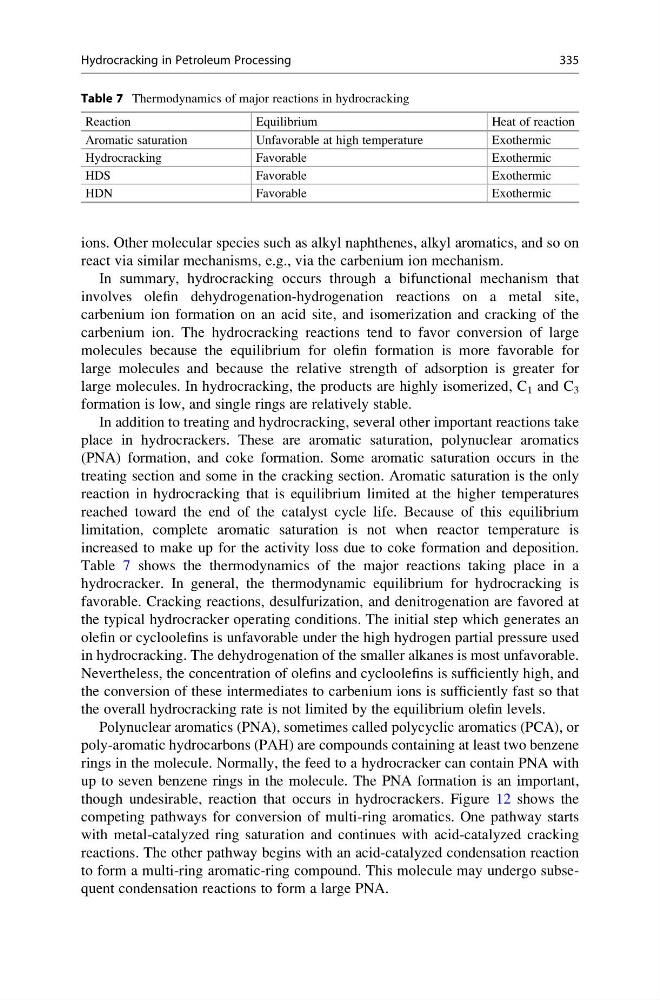
Table 7 shows the thermodynamics of the major reactions taking place in a
hydrocracker. In general, the thermodynamic equilibrium for hydrocracking is
favorable. Cracking reactions, desulfurization, and denitrogenation are favored at
the typical hydrocracker operating conditions. The initial step which generates an
olefin or cycloolefins is unfavorable under the high hydrogen partial pressure used
in hydrocracking. The dehydrogenation of the smaller alkanes is most unfavorable.
Nevertheless, the concentration of olefins and cycloolefins is sufficiently high, and
the conversion of these intermediates to carbenium ions is sufficiently fast so that
the overall hydrocracking rate is not limited by the equilibrium olefin levels.
Polynuclear aromatics (PNA), sometimes called polycyclic aromatics (PCA), or
poly-aromatic hydrocarbons (PAH) are compounds containing at least two benzene
rings in the molecule. Normally, the feed to a hydrocracker can contain PNA with
up to seven benzene rings in the molecule. The PNA formation is an important,
though undesirable, reaction that occurs in hydrocrackers. Figure 12 shows the
competing pathways for conversion of multi-ring aromatics. One pathway starts
with metal-catalyzed ring saturation and continues with acid-catalyzed cracking
reactions. The other pathway begins with an acid-catalyzed condensation reaction
to form a multi-ring aromatic-ring compound. This molecule may undergo subsequent condensation reactions to form a large PNA.
Table 7 Thermodynamics of major reactions in hydrocracking
Reaction
Equilibrium
Heat of reaction
Aromatic saturation
Unfavorable at high temperature
Exothermic
Hydrocracking
Favorable
Exothermic
HDS
Favorable
Exothermic
HDN
Favorable
Exothermic
Hydrocracking in Petroleum Processing
335
react via similar mechanisms, e.g., via the carbenium ion mechanism.
In summary, hydrocracking occurs through a bifunctional mechanism that
involves olefin dehydrogenation-hydrogenation reactions on a metal site,
carbenium ion formation on an acid site, and isomerization and cracking of the
carbenium ion. The hydrocracking reactions tend to favor conversion of large
molecules because the equilibrium for olefin formation is more favorable for
large molecules and because the relative strength of adsorption is greater for
large molecules. In hydrocracking, the products are highly isomerized, C 1 and C 3
formation is low, and single rings are relatively stable.
In addition to treating and hydrocracking, several other important reactions take
place in hydrocrackers. These are aromatic saturation, polynuclear aromatics
(PNA) formation, and coke formation. Some aromatic saturation occurs in the
treating section and some in the cracking section. Aromatic saturation is the only
reaction in hydrocracking that is equilibrium limited at the higher temperatures
reached toward the end of the catalyst cycle life. Because of this equilibrium
limitation, complete aromatic saturation is not when reactor temperature is
increased to make up for the activity loss due to coke formation and deposition.
Table 7 shows the thermodynamics of the major reactions taking place in a
hydrocracker. In general, the thermodynamic equilibrium for hydrocracking is
favorable. Cracking reactions, desulfurization, and denitrogenation are favored at
the typical hydrocracker operating conditions. The initial step which generates an
olefin or cycloolefins is unfavorable under the high hydrogen partial pressure used
in hydrocracking. The dehydrogenation of the smaller alkanes is most unfavorable.
Nevertheless, the concentration of olefins and cycloolefins is sufficiently high, and
the conversion of these intermediates to carbenium ions is sufficiently fast so that
the overall hydrocracking rate is not limited by the equilibrium olefin levels.
Polynuclear aromatics (PNA), sometimes called polycyclic aromatics (PCA), or
poly-aromatic hydrocarbons (PAH) are compounds containing at least two benzene
rings in the molecule. Normally, the feed to a hydrocracker can contain PNA with
up to seven benzene rings in the molecule. The PNA formation is an important,
though undesirable, reaction that occurs in hydrocrackers. Figure 12 shows the
competing pathways for conversion of multi-ring aromatics. One pathway starts
with metal-catalyzed ring saturation and continues with acid-catalyzed cracking
reactions. The other pathway begins with an acid-catalyzed condensation reaction
to form a multi-ring aromatic-ring compound. This molecule may undergo subsequent condensation reactions to form a large PNA.
Table 7 Thermodynamics of major reactions in hydrocracking
Reaction
Equilibrium
Heat of reaction
Aromatic saturation
Unfavorable at high temperature
Exothermic
Hydrocracking
Favorable
Exothermic
HDS
Favorable
Exothermic
HDN
Favorable
Exothermic
Hydrocracking in Petroleum Processing
335