

The overall heat balance equation for any cracking unit is:
wt% coke ¼ delta coke  catalyst=oil ratio:
(7)
The dependent variable is the catalyst/oil ratio, which needs to be high enough to give
the desired conversion. Weight percent coke is strictly a function of the operating
variables (i.e., fresh feed and recycle rates, feed temperature, reactor temperature,
steam rates, heat of cracking, air rates, and carbon burning mode). Since higher delta
cokes are caused by heavier feeds, the resulting catalyst/oil ratio becomes too low for
medium to high conversion levels. The coke make must be increased to raise the
catalyst/oil ratio, and this can be done by any of the means shown in Table 12. For the
heaviest feeds, a catalyst cooler will be required.
In Figs. 18, 19, 20, 21, and 22, the commercially offered resid FCC units are
pictured.
Much of the reactor-stripper design is the same for resid crackers as it is for gas
oil designs. However, there are feed injectors designed specifically to process
residual feeds that require more dispersion steam than the normal gas oil models.
On the regenerator side, the two approaches are to use a single-stage regenerator
and add a catalyst cooler or split the regenerator into two stages and make the
catalyst coolers optional. The two-stage designs offered differ in the sequence of
catalyst flow and how the air is introduced and utilized.
The Ashland/UOP design has the first regenerator on top of the second. Spent
catalyst flows into regenerator one, is partially regenerated, and flows to the second
regenerator where the carbon burn is completed. Air is introduced into both
regenerators, but the flue gas from number two passes up through arms into
regenerator one. Entrained catalyst is carried with the flue gas. All of the
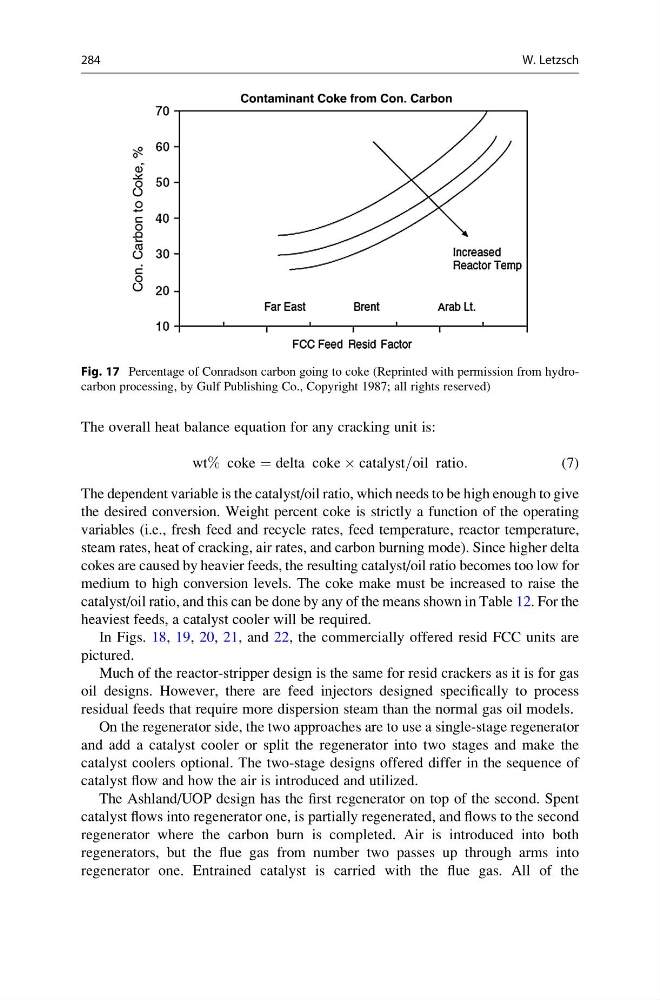
Fig. 17 Percentage of Conradson carbon going to coke (Reprinted with permission from hydrocarbon processing, by Gulf Publishing Co., Copyright 1987; all rights reserved)
284
W. Letzsch
wt% coke ¼ delta coke  catalyst=oil ratio:
(7)
The dependent variable is the catalyst/oil ratio, which needs to be high enough to give
the desired conversion. Weight percent coke is strictly a function of the operating
variables (i.e., fresh feed and recycle rates, feed temperature, reactor temperature,
steam rates, heat of cracking, air rates, and carbon burning mode). Since higher delta
cokes are caused by heavier feeds, the resulting catalyst/oil ratio becomes too low for
medium to high conversion levels. The coke make must be increased to raise the
catalyst/oil ratio, and this can be done by any of the means shown in Table 12. For the
heaviest feeds, a catalyst cooler will be required.
In Figs. 18, 19, 20, 21, and 22, the commercially offered resid FCC units are
pictured.
Much of the reactor-stripper design is the same for resid crackers as it is for gas
oil designs. However, there are feed injectors designed specifically to process
residual feeds that require more dispersion steam than the normal gas oil models.
On the regenerator side, the two approaches are to use a single-stage regenerator
and add a catalyst cooler or split the regenerator into two stages and make the
catalyst coolers optional. The two-stage designs offered differ in the sequence of
catalyst flow and how the air is introduced and utilized.
The Ashland/UOP design has the first regenerator on top of the second. Spent
catalyst flows into regenerator one, is partially regenerated, and flows to the second
regenerator where the carbon burn is completed. Air is introduced into both
regenerators, but the flue gas from number two passes up through arms into
regenerator one. Entrained catalyst is carried with the flue gas. All of the
Fig. 17 Percentage of Conradson carbon going to coke (Reprinted with permission from hydrocarbon processing, by Gulf Publishing Co., Copyright 1987; all rights reserved)
284
W. Letzsch