

referencing that can only by compensated for by
including all facts from many different geological
disciplines. The facts available at any time and new
perceptions of reality can only be corrected by drilling.
Efficient exploration of an area requires frontier,
growth and mature exploration drilling to be carried
out in parallel. Due to the size of the discoveries the
frontier exploration concepts will be the most cost efficient over time (Fig. 26.4). A linear approach where one
play type or area at a time is explored can easily abort an
exploration process prematurely due to self-fulfilling
prophecies. In general 1/3 of the drilling activity efforts
should be spent on frontier prospects, 1/3 on growth
prospects and 1/3 on mature/delineation drilling.
Successful breakthroughs become rapidly obvious.
Hence, for companies to harvest on their own
breakthroughs the potential follow-up acreage should
be secured prior to start of exploration drilling activities.
Securing acreage in clusters can also lower the reserve
threshold needed for commercial development by
enabling several discoveries to constitute a larger field.
Individual companies need to have prospects
related to various play types in their portfolio, and a
Fig. 26.1 Oil dripping out of a core from the Volgian reservoir
in Johan Sverdrup Field. The reservoir is marine sand with
multi-Darcy permeability
14
180
200
MMboe
No wells
160
140
120
100
80
60
40
20
0
0.5
Alvheim
2003
Volund
2004
2005
2006
E. Grieg
2007
Gaupe
2008
Viper/Kneler
2009
Bøyla
Luno S
Luno 2
Tellus
Salina
Apollo
Caterpillar
J. Sverdrup
2010
Skalle
2011
Albert
2012
Gohta
2013
0.5
0.5
0.5
0.38
0.6
0.67
0.75
1
12
10
8
6
4
2
0
16
Reserve growth from ExplWells
# Wildcat Wells
# New Discoveries
# Appraisal Wells
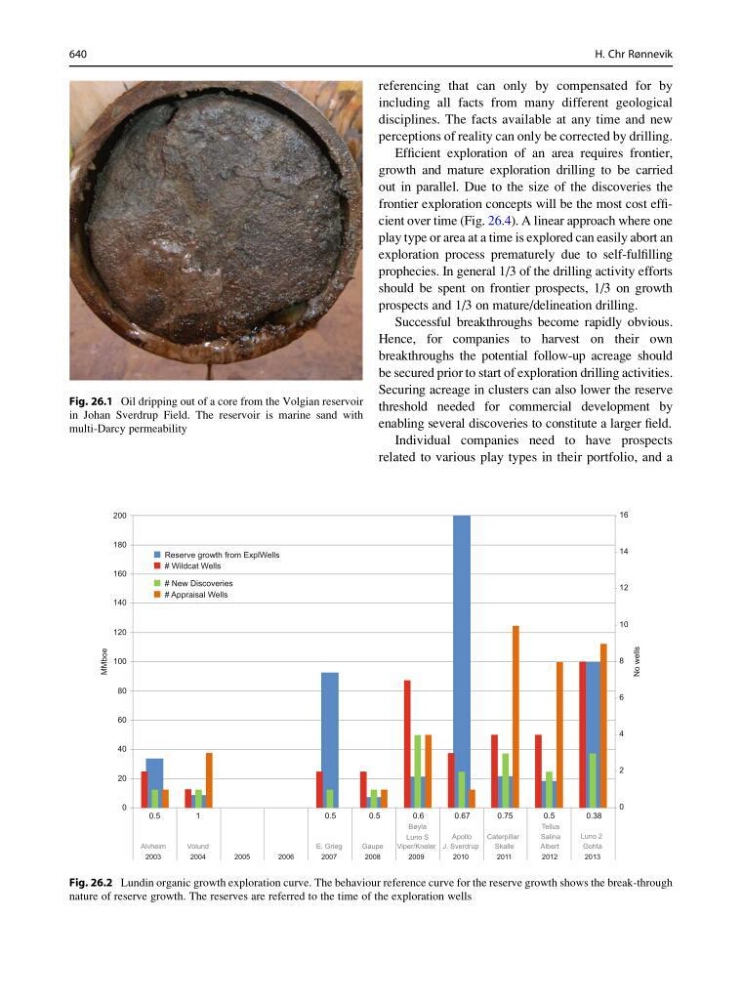
Fig. 26.2 Lundin organic growth exploration curve. The behaviour reference curve for the reserve growth shows the break-through
nature of reserve growth. The reserves are referred to the time of the exploration wells
640
H. Chr Rønnevik