

fields on the shelf were found between 1979 and 1984
(see Sect. 25.2.3 for more details on the North Sea
exploration history).
Following the exploration success in Norwegian
waters south of 62
N, the areas to the north were
opened for exploration in 1979. Results and experience gained from the North Sea were utilised when
areas further north were opened, and areas with a
similar geological setting to the northern North Sea
were tested first (Haltenbanken offshore Mid-Norway
and Tromsøflaket in the southwestern Barents Sea).
The exploration histories of the areas north of 62
N
are more complex, and even today important aspects
of the petroleum geology remains enigmatic – partly
due to geological complexities.
Large parts of the Norwegian continental shelf
are now well explored. Better knowledge of the
geology and advances in technology lead to a higher
discovery rate, but the finds have mostly been small.
Consequently, the growth in resources has been relatively low for the last 20 years. The largest discovery made in this period was Ormen Lange in the
Norwegian Sea in 1997. Recent discoveries in the
North Sea (Edvard Grieg and Johan Sverdrup) and
Late Cretaceous -
Palaeocene
Late Jurassic -
Early Cretaceous
Late Palaeozoic
–5 °
0°
5°
10°
15°
20°
Eurasia
Basin
JMMC
Denmark
Sweden
Finland
54 °
56 °
58 °
60 °
62 °
64 °
66 °
68 °
7 0 °
7 2 °
7 4 °
7 6 °
7 8 °
8 0 °
UK
Svalbard
Barents
Sea
North
Sea
NorwegianGreenland
Sea
Greenland
Norway
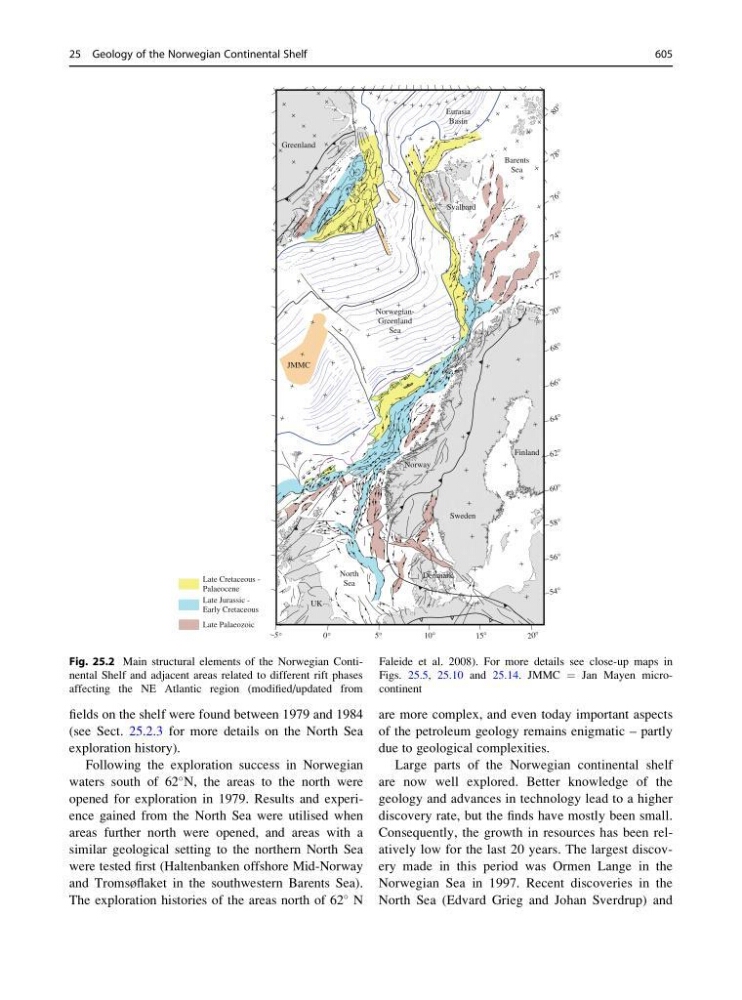
Fig. 25.2 Main structural elements of the Norwegian Continental Shelf and adjacent areas related to different rift phases
affecting the NE Atlantic region (modified/updated from
Faleide et al. 2008). For more details see close-up maps in
Figs. 25.5, 25.10 and 25.14. JMMC ¼ Jan Mayen microcontinent
25 Geology of the Norwegian Continental Shelf
605
(see Sect. 25.2.3 for more details on the North Sea
exploration history).
Following the exploration success in Norwegian
waters south of 62
N, the areas to the north were
opened for exploration in 1979. Results and experience gained from the North Sea were utilised when
areas further north were opened, and areas with a
similar geological setting to the northern North Sea
were tested first (Haltenbanken offshore Mid-Norway
and Tromsøflaket in the southwestern Barents Sea).
The exploration histories of the areas north of 62
N
are more complex, and even today important aspects
of the petroleum geology remains enigmatic – partly
due to geological complexities.
Large parts of the Norwegian continental shelf
are now well explored. Better knowledge of the
geology and advances in technology lead to a higher
discovery rate, but the finds have mostly been small.
Consequently, the growth in resources has been relatively low for the last 20 years. The largest discovery made in this period was Ormen Lange in the
Norwegian Sea in 1997. Recent discoveries in the
North Sea (Edvard Grieg and Johan Sverdrup) and
Late Cretaceous -
Palaeocene
Late Jurassic -
Early Cretaceous
Late Palaeozoic
–5 °
0°
5°
10°
15°
20°
Eurasia
Basin
JMMC
Denmark
Sweden
Finland
54 °
56 °
58 °
60 °
62 °
64 °
66 °
68 °
7 0 °
7 2 °
7 4 °
7 6 °
7 8 °
8 0 °
UK
Svalbard
Barents
Sea
North
Sea
NorwegianGreenland
Sea
Greenland
Norway
Fig. 25.2 Main structural elements of the Norwegian Continental Shelf and adjacent areas related to different rift phases
affecting the NE Atlantic region (modified/updated from
Faleide et al. 2008). For more details see close-up maps in
Figs. 25.5, 25.10 and 25.14. JMMC ¼ Jan Mayen microcontinent
25 Geology of the Norwegian Continental Shelf
605