

The pH commonly increases from about 3 to 5 in this
reaction (Pham et al. 2011). The rates of feldspar and
clay mineral dissolution are many orders of magnitude
slower than for carbonate dissolution, especially at
low temperatures. These reactions however play
important roles in the immobilisation of CO 2 in the
long term, i.e. mineral trapping of CO 2 . Clay minerals,
such as chlorites, contain divalent metal cations (Me
2+
)
that can react with dissolved CO 2 and form secondary
carbonates (the inverse of reaction 24.4). The most
common secondary Me
2+
-carbonates predicted to
form
during
CO 2
storage
are
ankerites
(CaFe x Mg 1Àx (CO 3 ) 2 , with x 1), siderite (FeCO 3 ),
and in some cases disordered dolomite and magnesite.
The formation of the latter two in numerical simulations
may however be an artifact of the kinetic models being
used overpredicting rates of Mg-carbonate formation
(Hellevang and Aagaard 2013, Hellevang et al. 2013).
Feldspars release Ca
2+ and Na
+
, supporting calcite,
ankerite and dawsonite (NaAl(OH) 2 CO 3 ) formation.
In many quartz-rich reservoirs that are poor in Me
2+
,
both simulations (e.g. Johnson et al. 2004) and natural
observations (e.g. Gao et al. 2009) have suggested that
dawsonite may be the dominant secondary carbonate
that forms and traps CO 2 .
Estimates of the mineral-trapping potential of a
reservoir require prediction of the following: (1) the
amount (volume) of formation water being affected by
the CO 2 injection, which depends on the drainage
pathway; (2) the representative average primary and
secondary mineralogy; and (3) the dissolution rates of
the primary minerals and growth rates of secondary
phases. All these points require a good understanding
of the depositional environment and the diagenetic
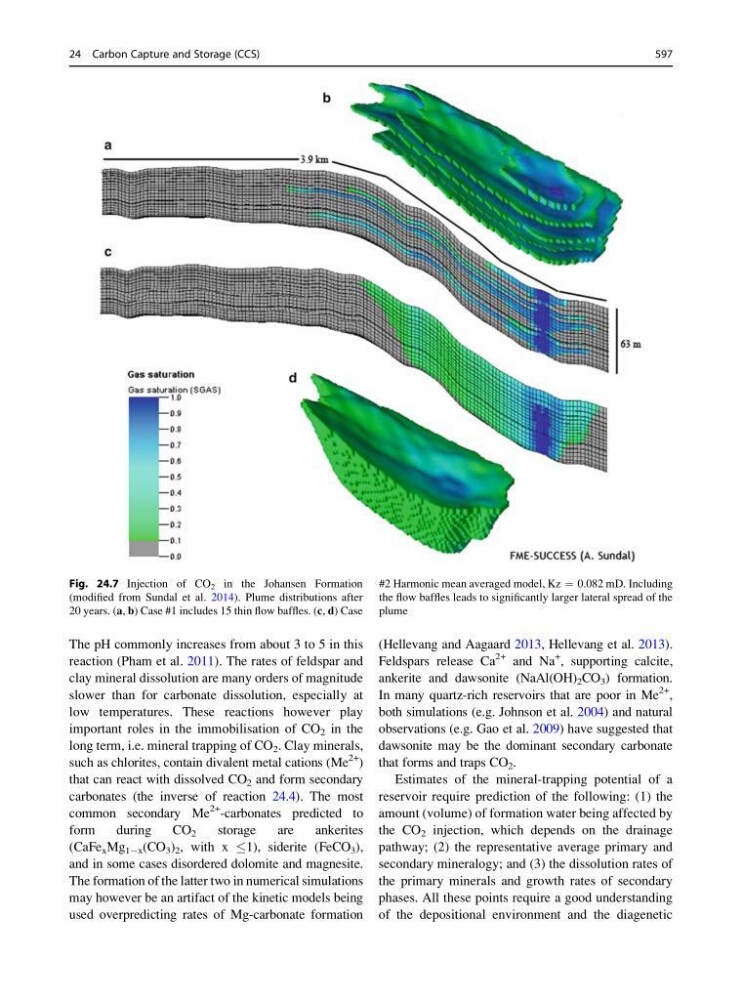
Fig. 24.7 Injection of CO 2 in the Johansen Formation
(modified from Sundal et al. 2014). Plume distributions after
20 years. (a, b) Case #1 includes 15 thin flow baffles. (c, d) Case
#2 Harmonic mean averaged model, Kz ¼ 0.082 mD. Including
the flow baffles leads to significantly larger lateral spread of the
plume
24 Carbon Capture and Storage (CCS)
597
reaction (Pham et al. 2011). The rates of feldspar and
clay mineral dissolution are many orders of magnitude
slower than for carbonate dissolution, especially at
low temperatures. These reactions however play
important roles in the immobilisation of CO 2 in the
long term, i.e. mineral trapping of CO 2 . Clay minerals,
such as chlorites, contain divalent metal cations (Me
2+
)
that can react with dissolved CO 2 and form secondary
carbonates (the inverse of reaction 24.4). The most
common secondary Me
2+
-carbonates predicted to
form
during
CO 2
storage
are
ankerites
(CaFe x Mg 1Àx (CO 3 ) 2 , with x 1), siderite (FeCO 3 ),
and in some cases disordered dolomite and magnesite.
The formation of the latter two in numerical simulations
may however be an artifact of the kinetic models being
used overpredicting rates of Mg-carbonate formation
(Hellevang and Aagaard 2013, Hellevang et al. 2013).
Feldspars release Ca
2+ and Na
+
, supporting calcite,
ankerite and dawsonite (NaAl(OH) 2 CO 3 ) formation.
In many quartz-rich reservoirs that are poor in Me
2+
,
both simulations (e.g. Johnson et al. 2004) and natural
observations (e.g. Gao et al. 2009) have suggested that
dawsonite may be the dominant secondary carbonate
that forms and traps CO 2 .
Estimates of the mineral-trapping potential of a
reservoir require prediction of the following: (1) the
amount (volume) of formation water being affected by
the CO 2 injection, which depends on the drainage
pathway; (2) the representative average primary and
secondary mineralogy; and (3) the dissolution rates of
the primary minerals and growth rates of secondary
phases. All these points require a good understanding
of the depositional environment and the diagenetic
Fig. 24.7 Injection of CO 2 in the Johansen Formation
(modified from Sundal et al. 2014). Plume distributions after
20 years. (a, b) Case #1 includes 15 thin flow baffles. (c, d) Case
#2 Harmonic mean averaged model, Kz ¼ 0.082 mD. Including
the flow baffles leads to significantly larger lateral spread of the
plume
24 Carbon Capture and Storage (CCS)
597