

spot), but CSEM data also played an active role in
evaluation of the prospects. The case example shows
how CSEM data can detect the hydrocarbons in place
and distinguish between the dry well (7219/9-1) and
the discovery wells. It is therefore an excellent case to
be used as a reference for further work in similar play
models in the area.
The CSEM data was acquired in 2008 as a 3D
survey where receivers were placed in a coarse grid
on the seabed with a spacing of 3 km. The source was
towed over each receiver line in a south-north orientation. The coarse receiver grid was used to effectively
scan a large area and is typically used in frontier areas
where limited information is available. Here the acquisition geometry was designed to cover a given area,
and was not based on prospect outlines. Such a coarse
receiver spacing will put some limitations on the target
size that the CSEM data are able to detect. Ideally the
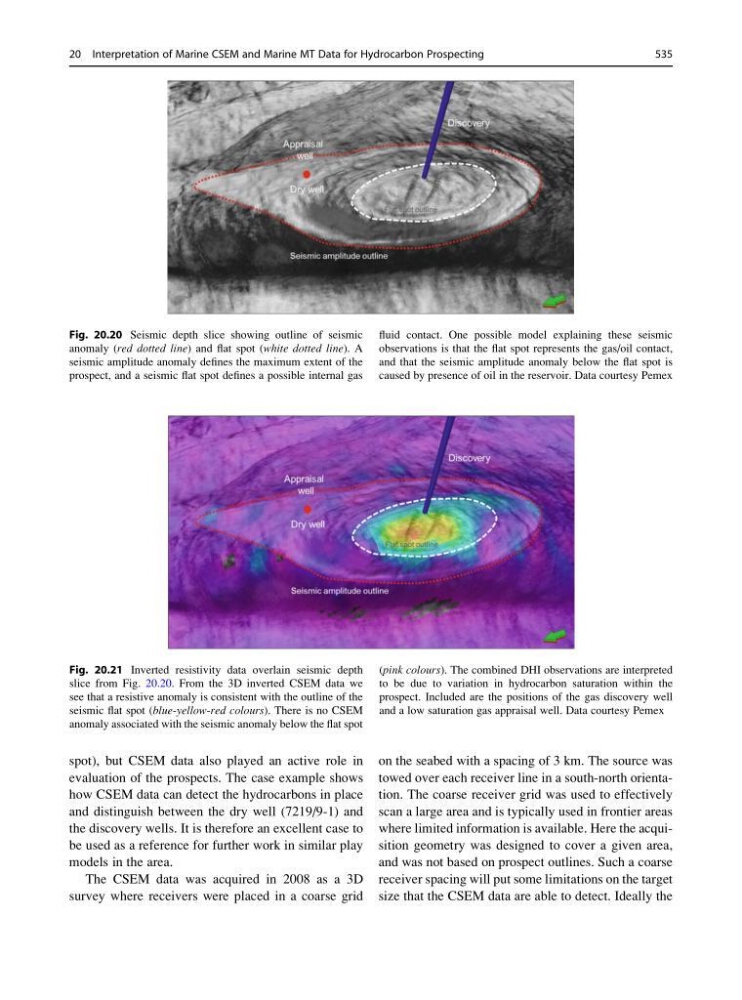
Fig. 20.21 Inverted resistivity data overlain seismic depth
slice from Fig. 20.20. From the 3D inverted CSEM data we
see that a resistive anomaly is consistent with the outline of the
seismic flat spot (blue-yellow-red colours). There is no CSEM
anomaly associated with the seismic anomaly below the flat spot
(pink colours). The combined DHI observations are interpreted
to be due to variation in hydrocarbon saturation within the
prospect. Included are the positions of the gas discovery well
and a low saturation gas appraisal well. Data courtesy Pemex
Fig. 20.20 Seismic depth slice showing outline of seismic
anomaly (red dotted line) and flat spot (white dotted line). A
seismic amplitude anomaly defines the maximum extent of the
prospect, and a seismic flat spot defines a possible internal gas
fluid contact. One possible model explaining these seismic
observations is that the flat spot represents the gas/oil contact,
and that the seismic amplitude anomaly below the flat spot is
caused by presence of oil in the reservoir. Data courtesy Pemex
20 Interpretation of Marine CSEM and Marine MT Data for Hydrocarbon Prospecting
535
evaluation of the prospects. The case example shows
how CSEM data can detect the hydrocarbons in place
and distinguish between the dry well (7219/9-1) and
the discovery wells. It is therefore an excellent case to
be used as a reference for further work in similar play
models in the area.
The CSEM data was acquired in 2008 as a 3D
survey where receivers were placed in a coarse grid
on the seabed with a spacing of 3 km. The source was
towed over each receiver line in a south-north orientation. The coarse receiver grid was used to effectively
scan a large area and is typically used in frontier areas
where limited information is available. Here the acquisition geometry was designed to cover a given area,
and was not based on prospect outlines. Such a coarse
receiver spacing will put some limitations on the target
size that the CSEM data are able to detect. Ideally the
Fig. 20.21 Inverted resistivity data overlain seismic depth
slice from Fig. 20.20. From the 3D inverted CSEM data we
see that a resistive anomaly is consistent with the outline of the
seismic flat spot (blue-yellow-red colours). There is no CSEM
anomaly associated with the seismic anomaly below the flat spot
(pink colours). The combined DHI observations are interpreted
to be due to variation in hydrocarbon saturation within the
prospect. Included are the positions of the gas discovery well
and a low saturation gas appraisal well. Data courtesy Pemex
Fig. 20.20 Seismic depth slice showing outline of seismic
anomaly (red dotted line) and flat spot (white dotted line). A
seismic amplitude anomaly defines the maximum extent of the
prospect, and a seismic flat spot defines a possible internal gas
fluid contact. One possible model explaining these seismic
observations is that the flat spot represents the gas/oil contact,
and that the seismic amplitude anomaly below the flat spot is
caused by presence of oil in the reservoir. Data courtesy Pemex
20 Interpretation of Marine CSEM and Marine MT Data for Hydrocarbon Prospecting
535