

(1) Dual-sensor summation (3C geophone + hydrophone) for the suppression of receiver-side
multiples.
(2) Utilising P–S wave conversions for enhanced
imaging (Fig. 17.14).
(3) Attenuation of free surface multiples when combined with towed streamer recording.
A comparison of the migrated P–S stack versus the
P–P stack is shown in Fig. 17.15. The P–S stack is
produced from OBS converted wave data whereas the
P–P stack is produced from 3D towed streamer Pwave data. From this comparison it is clear that OBS
data can be used to successfully image through a gas
chimney.
17.4.3 Land Acquisition
A complication in land acquisition is that, unlike
marine data, a seismic line is rarely shot in a straight
line because of the presence of natural and man-made
obstructions such as lakes, buildings and roads
(Fig. 17.16). The shot points and the receivers may
be arranged in many ways. Many groups of geophones
are commonly used on a line with shot points at the
end or in the middle of the receiver array. The shot
points are gradually moved along a line of geophones.
The variations in ground elevation in land acquisition
causes sound waves to reach the recording geophones
with different traveltime. The Earth’s near-surface
layer may also vary greatly in composition, from soft
alluvial sediments to hard rocks. This means that the
velocity of sound waves transmitted through this surface layer may be highly variable. Static corrections –
a bulk time shift applied to a seismic trace – are
typically used in seismic processing to compensate
for these differences in elevations of sources and
receivers and near-surface velocity variations
(Ongkiehong and Askin 1988).
17.4.4 Vertical Seismic Profile (VSP)
VSP is another technique of seismic acquisition, used
for correlation with conventional seismic data (land or
marine seismic). The defining characteristic of a VSP
(of which there are many types) is that either the
energy source, or the receivers (or sometimes both)
are in a borehole. In the most common type of VSP,
hydrophones, or more often geophones, in the borehole record reflected seismic energy originating from a
seismic source at the surface (Fig. 17.17).
The VSPs vary in the well configuration, the number and location of sources and geophones, and how
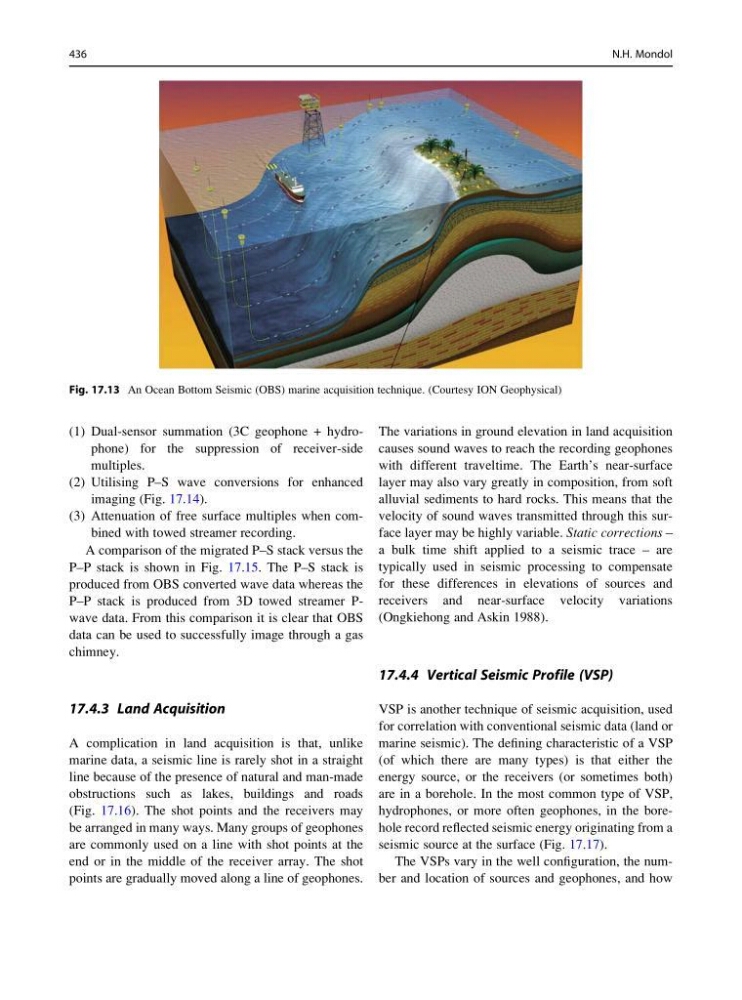
Fig. 17.13 An Ocean Bottom Seismic (OBS) marine acquisition technique. (Courtesy ION Geophysical)
436
N.H. Mondol
multiples.
(2) Utilising P–S wave conversions for enhanced
imaging (Fig. 17.14).
(3) Attenuation of free surface multiples when combined with towed streamer recording.
A comparison of the migrated P–S stack versus the
P–P stack is shown in Fig. 17.15. The P–S stack is
produced from OBS converted wave data whereas the
P–P stack is produced from 3D towed streamer Pwave data. From this comparison it is clear that OBS
data can be used to successfully image through a gas
chimney.
17.4.3 Land Acquisition
A complication in land acquisition is that, unlike
marine data, a seismic line is rarely shot in a straight
line because of the presence of natural and man-made
obstructions such as lakes, buildings and roads
(Fig. 17.16). The shot points and the receivers may
be arranged in many ways. Many groups of geophones
are commonly used on a line with shot points at the
end or in the middle of the receiver array. The shot
points are gradually moved along a line of geophones.
The variations in ground elevation in land acquisition
causes sound waves to reach the recording geophones
with different traveltime. The Earth’s near-surface
layer may also vary greatly in composition, from soft
alluvial sediments to hard rocks. This means that the
velocity of sound waves transmitted through this surface layer may be highly variable. Static corrections –
a bulk time shift applied to a seismic trace – are
typically used in seismic processing to compensate
for these differences in elevations of sources and
receivers and near-surface velocity variations
(Ongkiehong and Askin 1988).
17.4.4 Vertical Seismic Profile (VSP)
VSP is another technique of seismic acquisition, used
for correlation with conventional seismic data (land or
marine seismic). The defining characteristic of a VSP
(of which there are many types) is that either the
energy source, or the receivers (or sometimes both)
are in a borehole. In the most common type of VSP,
hydrophones, or more often geophones, in the borehole record reflected seismic energy originating from a
seismic source at the surface (Fig. 17.17).
The VSPs vary in the well configuration, the number and location of sources and geophones, and how
Fig. 17.13 An Ocean Bottom Seismic (OBS) marine acquisition technique. (Courtesy ION Geophysical)
436
N.H. Mondol