

Table 16.3 lists the main differences between LWD
and conventional wireline logging. LWD tools are
large instrumented drill collars, part of the bottom
hole assembly. The sensors are arranged so that they
can make relatively unimpeded measurements of the
formation. MWD is a type of LWD where tools are
encompassed in a single module in the steering tool of
the drill-string at the end of the drilling apparatus
(bottom hole assembly). Providing wellbore position,
drillbit information and directional data, as well as
real-time drilling information, MWD uses gyroscopes,
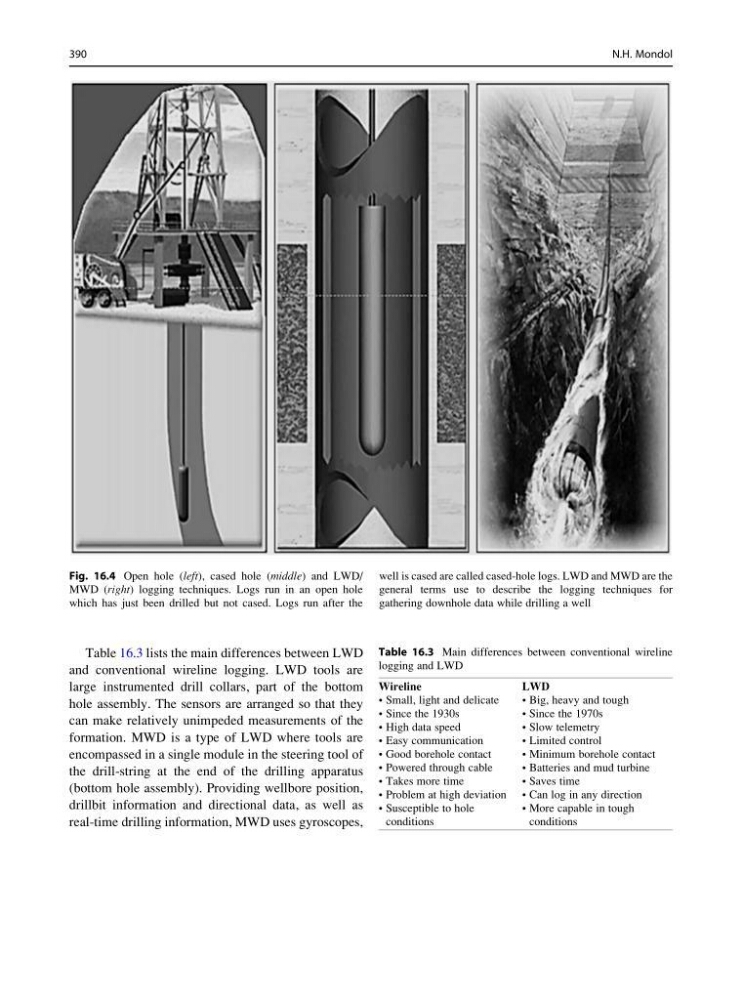
Fig. 16.4 Open hole (left), cased hole (middle) and LWD/
MWD (right) logging techniques. Logs run in an open hole
which has just been drilled but not cased. Logs run after the
well is cased are called cased-hole logs. LWD and MWD are the
general terms use to describe the logging techniques for
gathering downhole data while drilling a well
Table 16.3 Main differences between conventional wireline
logging and LWD
Wireline
• Small, light and delicate
• Since the 1930s
• High data speed
• Easy communication
• Good borehole contact
• Powered through cable
• Takes more time
• Problem at high deviation
• Susceptible to hole
conditions
LWD
• Big, heavy and tough
• Since the 1970s
• Slow telemetry
• Limited control
• Minimum borehole contact
• Batteries and mud turbine
• Saves time
• Can log in any direction
• More capable in tough
conditions
390
N.H. Mondol
and conventional wireline logging. LWD tools are
large instrumented drill collars, part of the bottom
hole assembly. The sensors are arranged so that they
can make relatively unimpeded measurements of the
formation. MWD is a type of LWD where tools are
encompassed in a single module in the steering tool of
the drill-string at the end of the drilling apparatus
(bottom hole assembly). Providing wellbore position,
drillbit information and directional data, as well as
real-time drilling information, MWD uses gyroscopes,
Fig. 16.4 Open hole (left), cased hole (middle) and LWD/
MWD (right) logging techniques. Logs run in an open hole
which has just been drilled but not cased. Logs run after the
well is cased are called cased-hole logs. LWD and MWD are the
general terms use to describe the logging techniques for
gathering downhole data while drilling a well
Table 16.3 Main differences between conventional wireline
logging and LWD
Wireline
• Small, light and delicate
• Since the 1930s
• High data speed
• Easy communication
• Good borehole contact
• Powered through cable
• Takes more time
• Problem at high deviation
• Susceptible to hole
conditions
LWD
• Big, heavy and tough
• Since the 1970s
• Slow telemetry
• Limited control
• Minimum borehole contact
• Batteries and mud turbine
• Saves time
• Can log in any direction
• More capable in tough
conditions
390
N.H. Mondol