

depth compaction is mainly chemical and controlled
by temperature (Fig. 13.7).
When the compaction is mechanical any reduction
in the effective stress due to uplift or the build-up of
overpressure will cause the sedimentary rocks to
become overconsolidated, and the deformation does
not follow the virgin loading curve (see Chap. 11).
Chemical compaction due to quartz cementation in
siliceous sediments will continue during uplift as long
as the temperature is higher than 70–80
C. Even a
small shrinkage (porosity loss) due to this compaction
will result in a reduction in the in situ stress controlled
by the bulk modulus. The mechanical extension due to
unloading will then at least partly be compensated for
Leak-off pressure data from Central Graben, North Sea
0
2000
4000
6000
8000
Sub-sea depth (feet)
10000
12000
14000
16000
18000
10 20 30 40 50 60 70 80 90 100 MPa
1 km
Hydrostatic gradient
Lithostatic gradient
Leak-off pressure data
2 km
3 km
4 km
5 km
Pressure (psi)
0 2000
6000 8000 10000 12000 14000 16000 18000 20000
4000
σ v = lith.grad.
σ h = Leak-off
pressure + τ
r = 2.25
g/cm
3
r = 2.0 g/cm
3
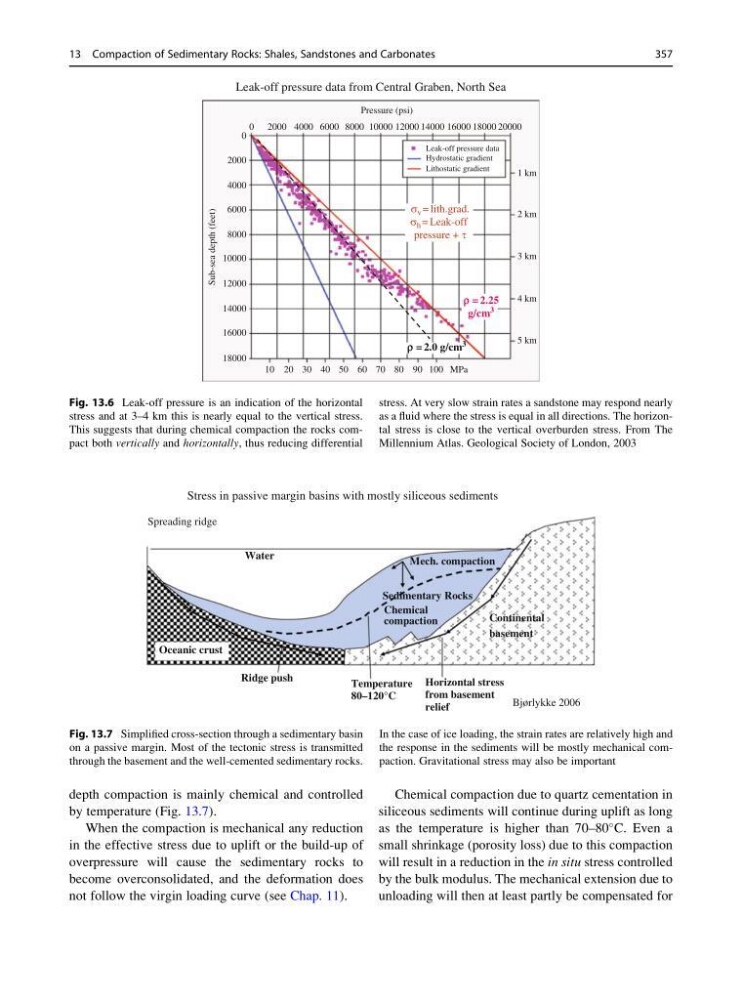
Fig. 13.6 Leak-off pressure is an indication of the horizontal
stress and at 3–4 km this is nearly equal to the vertical stress.
This suggests that during chemical compaction the rocks compact both vertically and horizontally, thus reducing differential
stress. At very slow strain rates a sandstone may respond nearly
as a fluid where the stress is equal in all directions. The horizontal stress is close to the vertical overburden stress. From The
Millennium Atlas. Geological Society of London, 2003
Chemical
compaction
Continental
basement
Oceanic crust
Mech. compaction
Temperature
80–120°C
Ridge push
Horizontal stress
from basement
relief
Sedimentary Rocks
Spreading ridge
Stress in passive margin basins with mostly siliceous sediments
Water
Bjørlykke 2006
Fig. 13.7 Simplified cross-section through a sedimentary basin
on a passive margin. Most of the tectonic stress is transmitted
through the basement and the well-cemented sedimentary rocks.
In the case of ice loading, the strain rates are relatively high and
the response in the sediments will be mostly mechanical compaction. Gravitational stress may also be important
13 Compaction of Sedimentary Rocks: Shales, Sandstones and Carbonates
357
by temperature (Fig. 13.7).
When the compaction is mechanical any reduction
in the effective stress due to uplift or the build-up of
overpressure will cause the sedimentary rocks to
become overconsolidated, and the deformation does
not follow the virgin loading curve (see Chap. 11).
Chemical compaction due to quartz cementation in
siliceous sediments will continue during uplift as long
as the temperature is higher than 70–80
C. Even a
small shrinkage (porosity loss) due to this compaction
will result in a reduction in the in situ stress controlled
by the bulk modulus. The mechanical extension due to
unloading will then at least partly be compensated for
Leak-off pressure data from Central Graben, North Sea
0
2000
4000
6000
8000
Sub-sea depth (feet)
10000
12000
14000
16000
18000
10 20 30 40 50 60 70 80 90 100 MPa
1 km
Hydrostatic gradient
Lithostatic gradient
Leak-off pressure data
2 km
3 km
4 km
5 km
Pressure (psi)
0 2000
6000 8000 10000 12000 14000 16000 18000 20000
4000
σ v = lith.grad.
σ h = Leak-off
pressure + τ
r = 2.25
g/cm
3
r = 2.0 g/cm
3
Fig. 13.6 Leak-off pressure is an indication of the horizontal
stress and at 3–4 km this is nearly equal to the vertical stress.
This suggests that during chemical compaction the rocks compact both vertically and horizontally, thus reducing differential
stress. At very slow strain rates a sandstone may respond nearly
as a fluid where the stress is equal in all directions. The horizontal stress is close to the vertical overburden stress. From The
Millennium Atlas. Geological Society of London, 2003
Chemical
compaction
Continental
basement
Oceanic crust
Mech. compaction
Temperature
80–120°C
Ridge push
Horizontal stress
from basement
relief
Sedimentary Rocks
Spreading ridge
Stress in passive margin basins with mostly siliceous sediments
Water
Bjørlykke 2006
Fig. 13.7 Simplified cross-section through a sedimentary basin
on a passive margin. Most of the tectonic stress is transmitted
through the basement and the well-cemented sedimentary rocks.
In the case of ice loading, the strain rates are relatively high and
the response in the sediments will be mostly mechanical compaction. Gravitational stress may also be important
13 Compaction of Sedimentary Rocks: Shales, Sandstones and Carbonates
357