

Mudstones may contain significant amounts of
organic (amorphous) silica (opal A), particularly radiolarian and diatoms, in areas with high organic productivity. Siliceous sponges may also be an important
source of silica in fine-grained siltstones and
sandstones.
Biogenic silica will react to form opal CT and
microcrystalline quartz at about 60–80
C and this
will also produce a strong stiffening of the mudstones
(Thyberg et al. 2009a, Peltonen et al. 2008, Marcussen
et al. 2009). Smectite becomes unstable and dissolves
at temperatures above 70–100
C and mixed layer
minerals and illite precipitate.
Smectite þ K
þ
¼ illite þ quartz
In the case of iron-rich smectite, chlorite may form
as well. This reaction releases excess silica which
must precipitate as quartz. Smectite is only stable
when the concentration (activity) of silica in the
porewater is high. The precipitation of quartz
provides a sink for the silica and lowers the silica
concentration in the porewater so that the reaction
can continue. Therefore the rate of quartz cementation,
which is a function of temperature, controls this
reaction.
It has been suggested that the silica released from
the above reaction could be transported by diffusion
into adjacent sandstones and precipitated as quartz
cement there. Recently, small authigenic (grown in
place) quartz crystals have been identified in
smectite-rich mudstones which have been heated to
more than about 80–85
C (Fig. 13.4). This shows that
the silica is conserved locally in the mudstones. Even
if the silica concentration in the mudstones were
higher than in sandstones, diffusive transport in shales
would be very inefficient. In mudstones without smectite or amorphous silica there are no obvious sources
0
1000
Haltenbanken,
western region
17 wells
Haltenbanken,
western region
17 wells
1W
2W
3W
4W
5W
6W
Black = Shale
Black = Shales
Red = Sandstones
Red = Sandstones
Green = Spekk Formation
Green = Spekk Formation
= Trend line, published data
2000
3000
Depth (mTVD)
4000
5000
1000
2000
3000
4000
5000
Velocity (m/s)
0
1000
2000
3000
Depth (mTVD)
4000
5000
1.6 1.8
2
2.2 2.4 2.6 2.8
RHOB (g/cm
3 )
Storvoll et al., AAPG Bull. (2005)
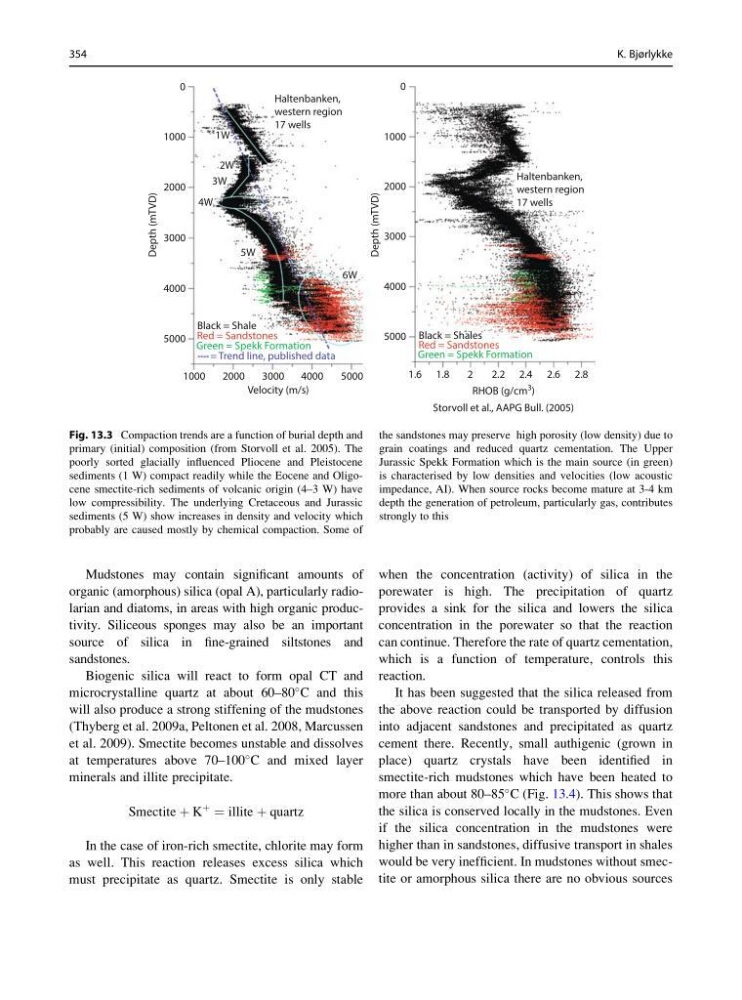
Fig. 13.3 Compaction trends are a function of burial depth and
primary (initial) composition (from Storvoll et al. 2005). The
poorly sorted glacially influenced Pliocene and Pleistocene
sediments (1 W) compact readily while the Eocene and Oligocene smectite-rich sediments of volcanic origin (4–3 W) have
low compressibility. The underlying Cretaceous and Jurassic
sediments (5 W) show increases in density and velocity which
probably are caused mostly by chemical compaction. Some of
the sandstones may preserve high porosity (low density) due to
grain coatings and reduced quartz cementation. The Upper
Jurassic Spekk Formation which is the main source (in green)
is characterised by low densities and velocities (low acoustic
impedance, AI). When source rocks become mature at 3-4 km
depth the generation of petroleum, particularly gas, contributes
strongly to this
354
K. Bjørlykke
organic (amorphous) silica (opal A), particularly radiolarian and diatoms, in areas with high organic productivity. Siliceous sponges may also be an important
source of silica in fine-grained siltstones and
sandstones.
Biogenic silica will react to form opal CT and
microcrystalline quartz at about 60–80
C and this
will also produce a strong stiffening of the mudstones
(Thyberg et al. 2009a, Peltonen et al. 2008, Marcussen
et al. 2009). Smectite becomes unstable and dissolves
at temperatures above 70–100
C and mixed layer
minerals and illite precipitate.
Smectite þ K
þ
¼ illite þ quartz
In the case of iron-rich smectite, chlorite may form
as well. This reaction releases excess silica which
must precipitate as quartz. Smectite is only stable
when the concentration (activity) of silica in the
porewater is high. The precipitation of quartz
provides a sink for the silica and lowers the silica
concentration in the porewater so that the reaction
can continue. Therefore the rate of quartz cementation,
which is a function of temperature, controls this
reaction.
It has been suggested that the silica released from
the above reaction could be transported by diffusion
into adjacent sandstones and precipitated as quartz
cement there. Recently, small authigenic (grown in
place) quartz crystals have been identified in
smectite-rich mudstones which have been heated to
more than about 80–85
C (Fig. 13.4). This shows that
the silica is conserved locally in the mudstones. Even
if the silica concentration in the mudstones were
higher than in sandstones, diffusive transport in shales
would be very inefficient. In mudstones without smectite or amorphous silica there are no obvious sources
0
1000
Haltenbanken,
western region
17 wells
Haltenbanken,
western region
17 wells
1W
2W
3W
4W
5W
6W
Black = Shale
Black = Shales
Red = Sandstones
Red = Sandstones
Green = Spekk Formation
Green = Spekk Formation
= Trend line, published data
2000
3000
Depth (mTVD)
4000
5000
1000
2000
3000
4000
5000
Velocity (m/s)
0
1000
2000
3000
Depth (mTVD)
4000
5000
1.6 1.8
2
2.2 2.4 2.6 2.8
RHOB (g/cm
3 )
Storvoll et al., AAPG Bull. (2005)
Fig. 13.3 Compaction trends are a function of burial depth and
primary (initial) composition (from Storvoll et al. 2005). The
poorly sorted glacially influenced Pliocene and Pleistocene
sediments (1 W) compact readily while the Eocene and Oligocene smectite-rich sediments of volcanic origin (4–3 W) have
low compressibility. The underlying Cretaceous and Jurassic
sediments (5 W) show increases in density and velocity which
probably are caused mostly by chemical compaction. Some of
the sandstones may preserve high porosity (low density) due to
grain coatings and reduced quartz cementation. The Upper
Jurassic Spekk Formation which is the main source (in green)
is characterised by low densities and velocities (low acoustic
impedance, AI). When source rocks become mature at 3-4 km
depth the generation of petroleum, particularly gas, contributes
strongly to this
354
K. Bjørlykke