

systems tract is the basin floor fan, dominated by
gravity-driven deposition of turbidite lobes and in
feeder channels. The upper part of the lowstand
systems tract is the lowstand wedge, which consists
of progradational parasequences. Uppermost, estuarine sediments are deposited in drowned incised
valleys (Fig. 7.17).
The transgressive systems tract is bounded by the
transgressive surface and the maximum flooding surface. It is composed of retrogradational parasequence
sets showing a generally upward-fining and upwarddeepening development. This systems tract is generally thin because much sediment is trapped in
estuaries, and the advancing transgression successively creates new accommodation space.
The highstand systems tract is developed between
the maximum flooding surface and the upper sequence
boundary. This systems tract represents a relatively
thick succession of progradational parasequences
showing an upward-coarsening and upward-shallowing
development (Fig. 7.17). The parasequences downlap
to the maximum flooding surface. The estuaries are
now filled up by sediments, therefore the systems tract
is characterised by outbuilding of deltas and shorelines.
7.9.5 Condensed Sections
The transgressive surface and maximum flooding surface were formed during periods of transgression
characterised by sediment starvation, which leads to
development of condensed intervals forming important marker horizons in the sequence stratigraphic
architecture of a basin (Fig. 7.12). Condensed sections
are thin marine horizons commonly showing several
of the following features: pelagic to hemipelagic sedimentation; presence of apparent hiatuses; borrowed
horizons and hardgrounds; presence of authigenic
minerals such as glauconite, phosphate, siderite; high
faunal abundance (if not anoxic); high faunal diversity
(if oxic), low diversity (if hypoxic). Deposition of
organic-rich black shales with high gamma readings
is typical of many condensed sections.
Flooding
surface
Seaward-inclined
laminae
Facies
Trough crossstratified
sandstones
Environment
Offshore
Foreshore
Shoreface
Transition zone
Offshore
Proximal storm
beds with
mudstone
interbeds
Burrowed
mudstones with
distal storm
beds
Flooding
surface
Meters to tens of meters
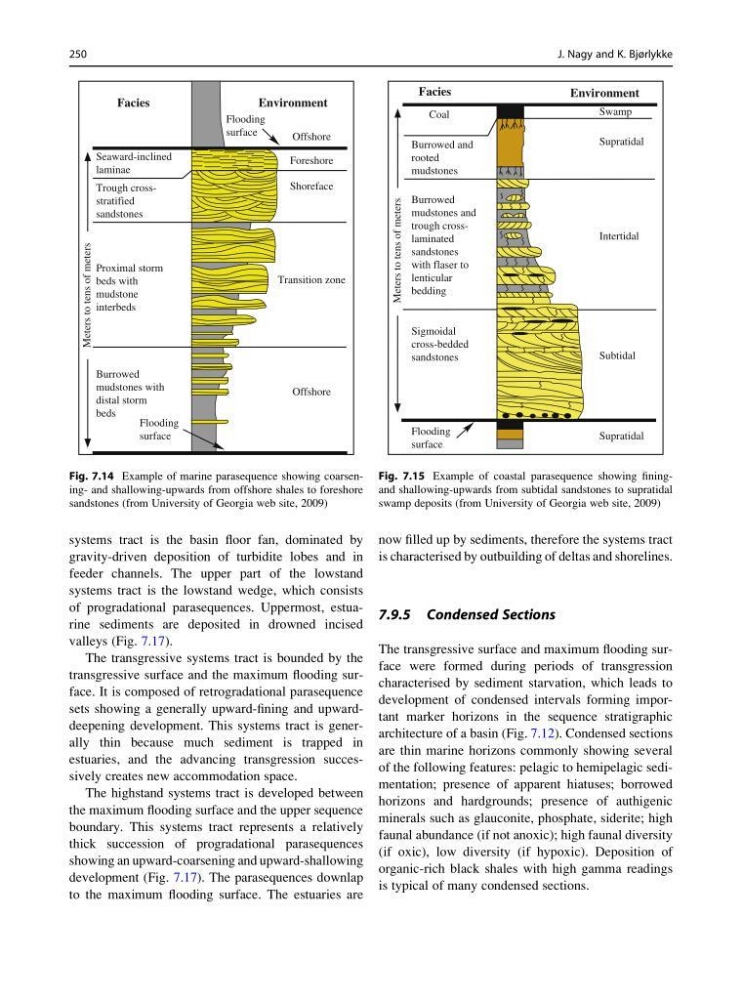
Fig. 7.14 Example of marine parasequence showing coarsening- and shallowing-upwards from offshore shales to foreshore
sandstones (from University of Georgia web site, 2009)
Coal
Facies
Burrowed and
rooted
mudstones
Environment
Swamp
Supratidal
Intertidal
Subtidal
Burrowed
mudstones and
trough crosslaminated
sandstones
with flaser to
lenticular
bedding
Sigmoidal
cross-bedded
sandstones
Flooding
surface
Meters to tens of meters
Supratidal
Fig. 7.15 Example of coastal parasequence showing finingand shallowing-upwards from subtidal sandstones to supratidal
swamp deposits (from University of Georgia web site, 2009)
250
J. Nagy and K. Bjørlykke
gravity-driven deposition of turbidite lobes and in
feeder channels. The upper part of the lowstand
systems tract is the lowstand wedge, which consists
of progradational parasequences. Uppermost, estuarine sediments are deposited in drowned incised
valleys (Fig. 7.17).
The transgressive systems tract is bounded by the
transgressive surface and the maximum flooding surface. It is composed of retrogradational parasequence
sets showing a generally upward-fining and upwarddeepening development. This systems tract is generally thin because much sediment is trapped in
estuaries, and the advancing transgression successively creates new accommodation space.
The highstand systems tract is developed between
the maximum flooding surface and the upper sequence
boundary. This systems tract represents a relatively
thick succession of progradational parasequences
showing an upward-coarsening and upward-shallowing
development (Fig. 7.17). The parasequences downlap
to the maximum flooding surface. The estuaries are
now filled up by sediments, therefore the systems tract
is characterised by outbuilding of deltas and shorelines.
7.9.5 Condensed Sections
The transgressive surface and maximum flooding surface were formed during periods of transgression
characterised by sediment starvation, which leads to
development of condensed intervals forming important marker horizons in the sequence stratigraphic
architecture of a basin (Fig. 7.12). Condensed sections
are thin marine horizons commonly showing several
of the following features: pelagic to hemipelagic sedimentation; presence of apparent hiatuses; borrowed
horizons and hardgrounds; presence of authigenic
minerals such as glauconite, phosphate, siderite; high
faunal abundance (if not anoxic); high faunal diversity
(if oxic), low diversity (if hypoxic). Deposition of
organic-rich black shales with high gamma readings
is typical of many condensed sections.
Flooding
surface
Seaward-inclined
laminae
Facies
Trough crossstratified
sandstones
Environment
Offshore
Foreshore
Shoreface
Transition zone
Offshore
Proximal storm
beds with
mudstone
interbeds
Burrowed
mudstones with
distal storm
beds
Flooding
surface
Meters to tens of meters
Fig. 7.14 Example of marine parasequence showing coarsening- and shallowing-upwards from offshore shales to foreshore
sandstones (from University of Georgia web site, 2009)
Coal
Facies
Burrowed and
rooted
mudstones
Environment
Swamp
Supratidal
Intertidal
Subtidal
Burrowed
mudstones and
trough crosslaminated
sandstones
with flaser to
lenticular
bedding
Sigmoidal
cross-bedded
sandstones
Flooding
surface
Meters to tens of meters
Supratidal
Fig. 7.15 Example of coastal parasequence showing finingand shallowing-upwards from subtidal sandstones to supratidal
swamp deposits (from University of Georgia web site, 2009)
250
J. Nagy and K. Bjørlykke