

tends to uplift. Subsequent cooling results in subsidence. (3) Weight of tectonic load added to lithosphere
can produce subsidence e.g. wedges of fold and thrust
belts pushed into foreland basins.
When analysing sedimentary successions, it is usually extremely difficulty to distinguish between the
effects of eustatic sea level changes and tectonic
movements. Therefore, in sequence stratigraphic studies, the phrase “relative sea level” is used to express
the local sum of global sea level and tectonic
movements.
7.9.3 Parasequences
Parasequences are sediment packages of genetically
related beds representing a single minor transgression
event followed by sediment progradation. In the
marine realm parasequences are bounded by flooding
surfaces. Most of the marine parasequences are
formed in offshore shelf to shoreface environments,
and show an upwards-coarsening development
(Fig. 7.14). In coastal areas upwards-fining
parasequences are formed during transgressions,
encroaching over the supratidal zone, and contain
shallowing-up subtidal, intertidal to supratidal strata
(Fig. 7.15).
Stacked parasequences form parasequence sets,
which show stacking patterns according to their position in the sequence stratigraphic architecture
(Fig. 7.16). If sediment supply exceeds the available
accommodation space, progradational stacking geometry will be the result. If accommodation space and
sediment supply are roughly balanced, aggradational
geometries occur. When sediment supply is less than
the creation of accommodation space, retrogradational
stacking geometries are formed.
7.9.4 System Tracts
The lowstand systems tract is bounded by the
sequence base and the first transgressive surface
(Fig. 7.12). It was deposited when the sea level was
located at or below the shelf break. The shelf was
exposed to erosion and crossed by rivers eroding
incised valleys and transporting sediments to the
shelf margin. The lowermost part of the lowstand
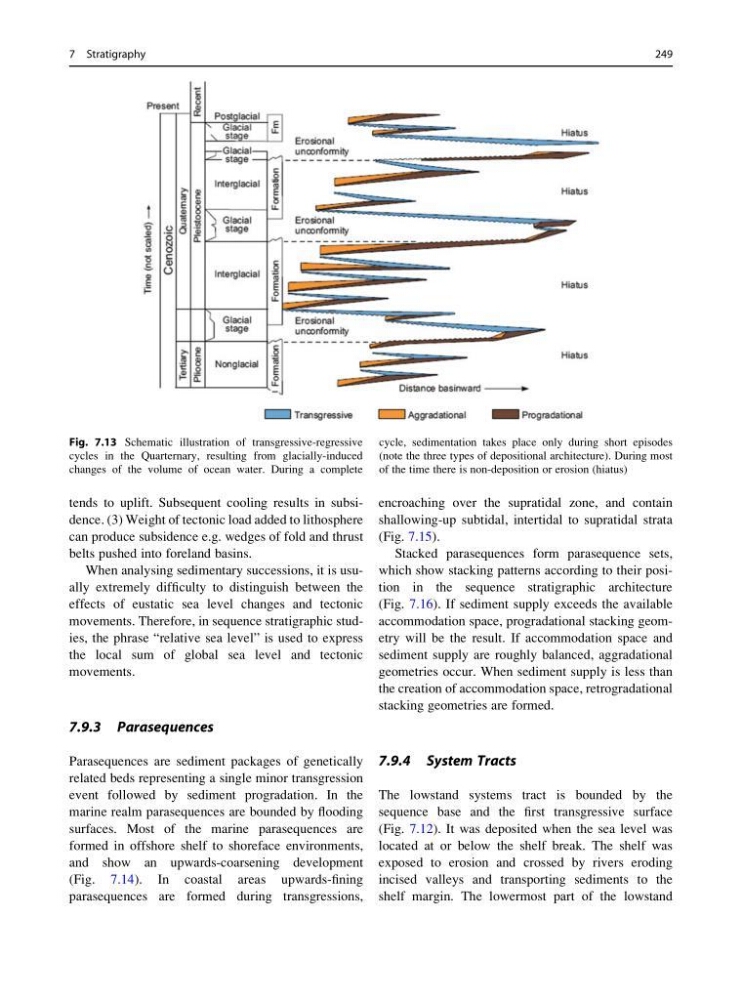
Fig. 7.13 Schematic illustration of transgressive-regressive
cycles in the Quarternary, resulting from glacially-induced
changes of the volume of ocean water. During a complete
cycle, sedimentation takes place only during short episodes
(note the three types of depositional architecture). During most
of the time there is non-deposition or erosion (hiatus)
7 Stratigraphy
249
can produce subsidence e.g. wedges of fold and thrust
belts pushed into foreland basins.
When analysing sedimentary successions, it is usually extremely difficulty to distinguish between the
effects of eustatic sea level changes and tectonic
movements. Therefore, in sequence stratigraphic studies, the phrase “relative sea level” is used to express
the local sum of global sea level and tectonic
movements.
7.9.3 Parasequences
Parasequences are sediment packages of genetically
related beds representing a single minor transgression
event followed by sediment progradation. In the
marine realm parasequences are bounded by flooding
surfaces. Most of the marine parasequences are
formed in offshore shelf to shoreface environments,
and show an upwards-coarsening development
(Fig. 7.14). In coastal areas upwards-fining
parasequences are formed during transgressions,
encroaching over the supratidal zone, and contain
shallowing-up subtidal, intertidal to supratidal strata
(Fig. 7.15).
Stacked parasequences form parasequence sets,
which show stacking patterns according to their position in the sequence stratigraphic architecture
(Fig. 7.16). If sediment supply exceeds the available
accommodation space, progradational stacking geometry will be the result. If accommodation space and
sediment supply are roughly balanced, aggradational
geometries occur. When sediment supply is less than
the creation of accommodation space, retrogradational
stacking geometries are formed.
7.9.4 System Tracts
The lowstand systems tract is bounded by the
sequence base and the first transgressive surface
(Fig. 7.12). It was deposited when the sea level was
located at or below the shelf break. The shelf was
exposed to erosion and crossed by rivers eroding
incised valleys and transporting sediments to the
shelf margin. The lowermost part of the lowstand
Fig. 7.13 Schematic illustration of transgressive-regressive
cycles in the Quarternary, resulting from glacially-induced
changes of the volume of ocean water. During a complete
cycle, sedimentation takes place only during short episodes
(note the three types of depositional architecture). During most
of the time there is non-deposition or erosion (hiatus)
7 Stratigraphy
249