

5.5.9 Microcrystalline Lime Mud (Micrite)
Lime mud deposited in areas with carbonate sedimentation has a grain size of about 1–4 μm. This precludes
effective study under an ordinary microscope, only
with an electron microscope can each individual
grain really be seen.
Carbonate mud (micrite) was previously assumed
to be chemically precipitated carbonate, as opposed to
fossils or fossil fragments of clearly organic origin.
However, a very large amount of modern lime mud,
for example from the Bahamas, has been found to
consist of aragonite needles from the breakdown of
calcareous green algae, particularly Halimeda,
Rhipocephalus and Penicillus. This was confirmed
partly by studies of the shape of aragonite needles
(by electron microscope) and partly through isotope
studies of the
18 O=
16 O and
13 C=
12 C ratios in the aragonite mud. The isotope values for the aragonite mud
correspond well with the values in needles formed by
various types of algae.
In shallow marine areas near the equator, like the
Bahamas, the seawater is often saturated with respect
to aragonite. Nevertheless it has not been possible to
prove conclusively that any purely chemical precipitation of aragonite takes place in these areas. Sudden
whitings of the seawater that are often observed in
these areas, has been interpreted as spontaneous
crystallisation of aragonite, but the phenomenon can
also be interpreted as a disturbance of the lime mud
from the bottom, for example by shoals of fish which
are present in large numbers where there is whiting of
the seawater.
In areas where strong evaporation and high salinity
approach evaporite conditions, such as in the Dead Sea
and the Persian Gulf, this kind of chemical precipitation does occur, but only when the salinity is very
high, about every fifth year. A sudden proliferation
of diatoms could also consume so much CO 2 that the
pH rises and causes aragonite to be precipitated.
Microcrystalline lime mud may also be formed by
mechanical abrasion. Fossils which lie exposed to
wave and current activity will be abraded mechanically, and a fine-grained lime mud formed. However,
this process will not produce the well-crystallised aragonite needles of which modern lime muds are found
largely to consist. We may therefore conclude that
mechanical abrasion of fossils or carbonate fragments
is not the main source of lime mud.
Through diagenetic processes, the microcrystalline
mud will dissolve and be replaced by microsparite, but
this is clearly distinguishable from other sparites, not
least by its brownish colour due to incorporated
organic matter (Fig. 5.34).
5.6
Non-skeletal Grains
Carbonate grains can be classified as skeletal or nonskeletal. Non-skeletal components are defined as
grains which do not appear to have been precipitated
as skeletal material. However, this neither proves
that they could not once have been skeletal, nor
that they have an inorganic origin, it only signifies
that in their present state no skeletal origin can be
ascertained.
Infestation by
microborers
Dissolution of
remaining
aragonitic
shell wall
Calcite
cementation
of skeletal
mould
Fresh aragonitic
mollusc fragment
Occurs rapidly in
the marine environment
Most commonly seen like
this in ancient limestones
Precipitation
of micrite
in holes
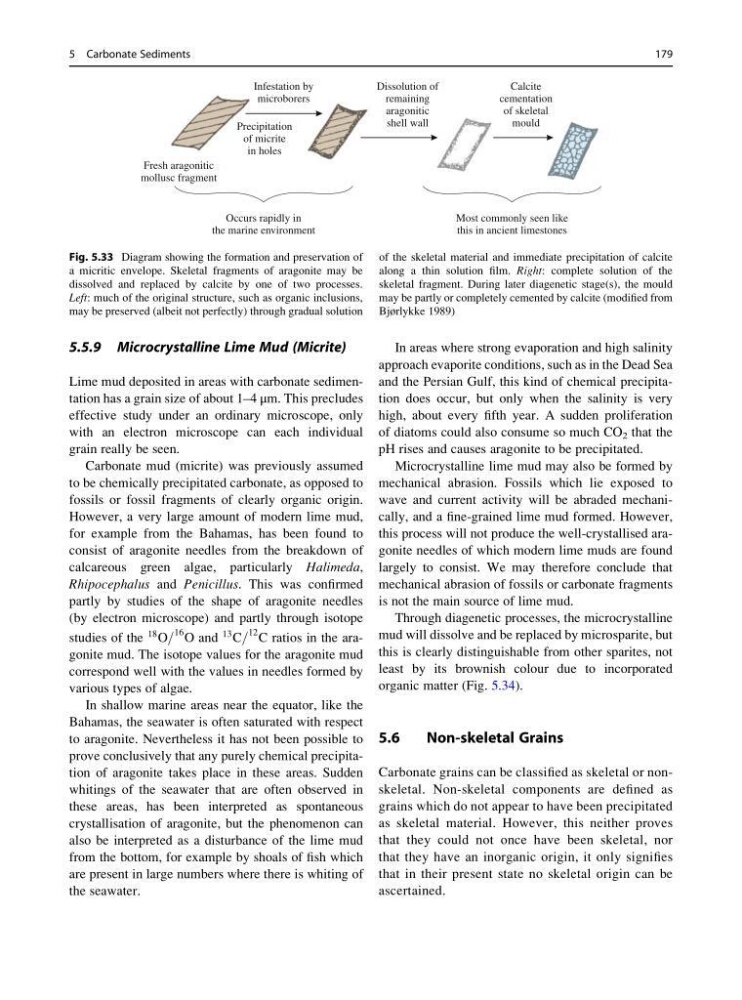
Fig. 5.33 Diagram showing the formation and preservation of
a micritic envelope. Skeletal fragments of aragonite may be
dissolved and replaced by calcite by one of two processes.
Left: much of the original structure, such as organic inclusions,
may be preserved (albeit not perfectly) through gradual solution
of the skeletal material and immediate precipitation of calcite
along a thin solution film. Right: complete solution of the
skeletal fragment. During later diagenetic stage(s), the mould
may be partly or completely cemented by calcite (modified from
Bjørlykke 1989)
5 Carbonate Sediments
179
Lime mud deposited in areas with carbonate sedimentation has a grain size of about 1–4 μm. This precludes
effective study under an ordinary microscope, only
with an electron microscope can each individual
grain really be seen.
Carbonate mud (micrite) was previously assumed
to be chemically precipitated carbonate, as opposed to
fossils or fossil fragments of clearly organic origin.
However, a very large amount of modern lime mud,
for example from the Bahamas, has been found to
consist of aragonite needles from the breakdown of
calcareous green algae, particularly Halimeda,
Rhipocephalus and Penicillus. This was confirmed
partly by studies of the shape of aragonite needles
(by electron microscope) and partly through isotope
studies of the
18 O=
16 O and
13 C=
12 C ratios in the aragonite mud. The isotope values for the aragonite mud
correspond well with the values in needles formed by
various types of algae.
In shallow marine areas near the equator, like the
Bahamas, the seawater is often saturated with respect
to aragonite. Nevertheless it has not been possible to
prove conclusively that any purely chemical precipitation of aragonite takes place in these areas. Sudden
whitings of the seawater that are often observed in
these areas, has been interpreted as spontaneous
crystallisation of aragonite, but the phenomenon can
also be interpreted as a disturbance of the lime mud
from the bottom, for example by shoals of fish which
are present in large numbers where there is whiting of
the seawater.
In areas where strong evaporation and high salinity
approach evaporite conditions, such as in the Dead Sea
and the Persian Gulf, this kind of chemical precipitation does occur, but only when the salinity is very
high, about every fifth year. A sudden proliferation
of diatoms could also consume so much CO 2 that the
pH rises and causes aragonite to be precipitated.
Microcrystalline lime mud may also be formed by
mechanical abrasion. Fossils which lie exposed to
wave and current activity will be abraded mechanically, and a fine-grained lime mud formed. However,
this process will not produce the well-crystallised aragonite needles of which modern lime muds are found
largely to consist. We may therefore conclude that
mechanical abrasion of fossils or carbonate fragments
is not the main source of lime mud.
Through diagenetic processes, the microcrystalline
mud will dissolve and be replaced by microsparite, but
this is clearly distinguishable from other sparites, not
least by its brownish colour due to incorporated
organic matter (Fig. 5.34).
5.6
Non-skeletal Grains
Carbonate grains can be classified as skeletal or nonskeletal. Non-skeletal components are defined as
grains which do not appear to have been precipitated
as skeletal material. However, this neither proves
that they could not once have been skeletal, nor
that they have an inorganic origin, it only signifies
that in their present state no skeletal origin can be
ascertained.
Infestation by
microborers
Dissolution of
remaining
aragonitic
shell wall
Calcite
cementation
of skeletal
mould
Fresh aragonitic
mollusc fragment
Occurs rapidly in
the marine environment
Most commonly seen like
this in ancient limestones
Precipitation
of micrite
in holes
Fig. 5.33 Diagram showing the formation and preservation of
a micritic envelope. Skeletal fragments of aragonite may be
dissolved and replaced by calcite by one of two processes.
Left: much of the original structure, such as organic inclusions,
may be preserved (albeit not perfectly) through gradual solution
of the skeletal material and immediate precipitation of calcite
along a thin solution film. Right: complete solution of the
skeletal fragment. During later diagenetic stage(s), the mould
may be partly or completely cemented by calcite (modified from
Bjørlykke 1989)
5 Carbonate Sediments
179