

5.6.1 Intraclasts
Intraclasts are erosional fragments of essentially
penecontemporaneous carbonate sediment. They are
of intrabasinal origin, i.e. were eroded from the sea
bottom or adjacent tidal flats and deposited within the
area of original deposition. Early cementing, e.g. in
the beach zone, or freshwater cementation due to
regressions, may result in cemented sediments which
are later broken up. We may also find early cementation in a marine environment, forming seafloor hard
grounds. If these are then eroded by tidal channels, for
example, the resulting intraclasts may accumulate as
characteristic
intraformational
conglomerates.
Intraclasts can also consist of semi-consolidated
pieces of stromatolites.
Intraclasts may be of any size or shape. They are
quite common in shallow water limestone facies and
are good indicators of early cementation and erosion.
5.6.2 Lithoclasts
Lithoclasts, which encompass both intraclasts and
extraclasts (or extrabasinal clasts), are produced by
the erosion of exposed older or synsedimentary
lithified or partially lithified sediment. On carbonate
platforms, lithoclasts are normally derived from erosion of the landward margin, where exposed,
cemented limestones are broken up by physical, chemical and/or biological processes. Lithoclasts may be of
any size or shape, but have generally become well
rounded during transport. Because carbonates are vulnerable to weathering and are mechanically weak, the
content of extrabasinal carbonate clasts declines with
increasing transport distance, particularly in humid
climates.
5.6.3 Faecal Pellets
Faecal pellets are organic excrements generally produced by mud-eating grazing animals such as
crustaceans, worms and molluscs. They are generally
round, oval or rod-like in shape and commonly consist
of carbonate mud. Most faecal pellets are 0.1–0.6 mm
in length and 0.1–0.4 mm in diameter, but can be up to
2 mm long. Animals which eat mud deposit vast
quantities of carbonate mud pellets in carbonate
environments, and clay and silt pellets where finegrained siliciclastic material forms the seafloor. Faecal
pellets have a characteristic dark brownish colour
imparted by their organic content.
Faecal pellets are produced in all environments,
often in well-sorted large quantities forming
pelsparite/pelloidal grainstone (Fig. 5.35). Their
preservation within a sediment generally requires
intragranular lithification, a process occurring in shallow waters which are supersaturated with respect to
calcium carbonate. The presence of a low-energy
environment is also important to prevent physical
destruction. This implies that faecal pellets are most
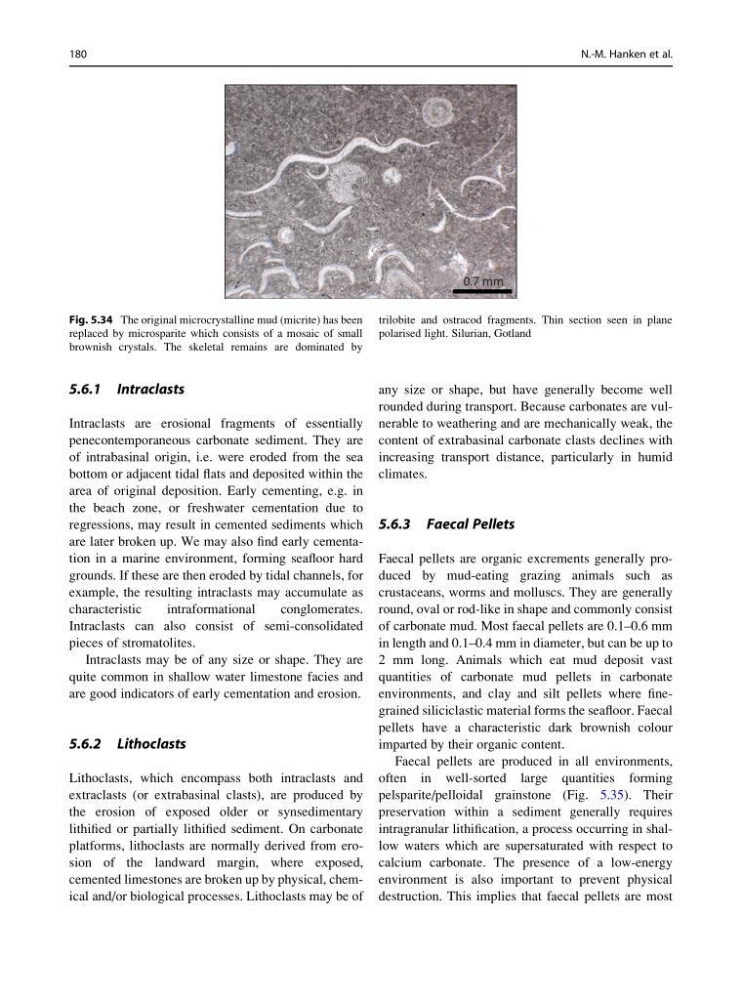
Fig. 5.34 The original microcrystalline mud (micrite) has been
replaced by microsparite which consists of a mosaic of small
brownish crystals. The skeletal remains are dominated by
trilobite and ostracod fragments. Thin section seen in plane
polarised light. Silurian, Gotland
180
N.-M. Hanken et al.
Intraclasts are erosional fragments of essentially
penecontemporaneous carbonate sediment. They are
of intrabasinal origin, i.e. were eroded from the sea
bottom or adjacent tidal flats and deposited within the
area of original deposition. Early cementing, e.g. in
the beach zone, or freshwater cementation due to
regressions, may result in cemented sediments which
are later broken up. We may also find early cementation in a marine environment, forming seafloor hard
grounds. If these are then eroded by tidal channels, for
example, the resulting intraclasts may accumulate as
characteristic
intraformational
conglomerates.
Intraclasts can also consist of semi-consolidated
pieces of stromatolites.
Intraclasts may be of any size or shape. They are
quite common in shallow water limestone facies and
are good indicators of early cementation and erosion.
5.6.2 Lithoclasts
Lithoclasts, which encompass both intraclasts and
extraclasts (or extrabasinal clasts), are produced by
the erosion of exposed older or synsedimentary
lithified or partially lithified sediment. On carbonate
platforms, lithoclasts are normally derived from erosion of the landward margin, where exposed,
cemented limestones are broken up by physical, chemical and/or biological processes. Lithoclasts may be of
any size or shape, but have generally become well
rounded during transport. Because carbonates are vulnerable to weathering and are mechanically weak, the
content of extrabasinal carbonate clasts declines with
increasing transport distance, particularly in humid
climates.
5.6.3 Faecal Pellets
Faecal pellets are organic excrements generally produced by mud-eating grazing animals such as
crustaceans, worms and molluscs. They are generally
round, oval or rod-like in shape and commonly consist
of carbonate mud. Most faecal pellets are 0.1–0.6 mm
in length and 0.1–0.4 mm in diameter, but can be up to
2 mm long. Animals which eat mud deposit vast
quantities of carbonate mud pellets in carbonate
environments, and clay and silt pellets where finegrained siliciclastic material forms the seafloor. Faecal
pellets have a characteristic dark brownish colour
imparted by their organic content.
Faecal pellets are produced in all environments,
often in well-sorted large quantities forming
pelsparite/pelloidal grainstone (Fig. 5.35). Their
preservation within a sediment generally requires
intragranular lithification, a process occurring in shallow waters which are supersaturated with respect to
calcium carbonate. The presence of a low-energy
environment is also important to prevent physical
destruction. This implies that faecal pellets are most
Fig. 5.34 The original microcrystalline mud (micrite) has been
replaced by microsparite which consists of a mosaic of small
brownish crystals. The skeletal remains are dominated by
trilobite and ostracod fragments. Thin section seen in plane
polarised light. Silurian, Gotland
180
N.-M. Hanken et al.