

of planktonic foraminifera relative to benthic ones
declines in shallower water, and so can be used in
reconstructions of palaeobathymetry.
However, only a small percentage of the
foraminiferal tests are preserved in the geological
record because they are generally fragile and easily
broken by the action of scavangers and burrowing
organisms. The calcareous tests also dissolve as they
sink through the deeper and colder waters and will not
be preserved if they are deposited below the carbonate
compensation depth (CCD).
5.5.1.2 Mineralogy
Benthic foraminifera may have tests of precipitated
calcium carbonate, usually calcite, or of small sand
grains cemented together (agglutinated shell). Some
foraminifera have aragonite tests. The calcite tests
vary from high-Mg to low-Mg calcite, so that their
solubility in seawater varies greatly. Benthic foraminifera with high-Mg calcite are found especially in
warm-water environments, where they are less soluble.
5.5.1.3 Geological Range
Foraminifera range from the Cambrian to Recent.
Most of the Lower and Middle Palaeozoic forms had
an agglutinated test whereas calcareous forms were
most common in late Palaeozoic and later times.
Planktonic foraminifera did not appear until the Mesozoic but are important constituents of Cretaceous and
younger deep-sea deposits. The large-sized, lensshaped nummulitid foraminifera (up to about 15 cm)
are widely distributed in Early Tertiary carbonate
1 mm
1 mm
a
b
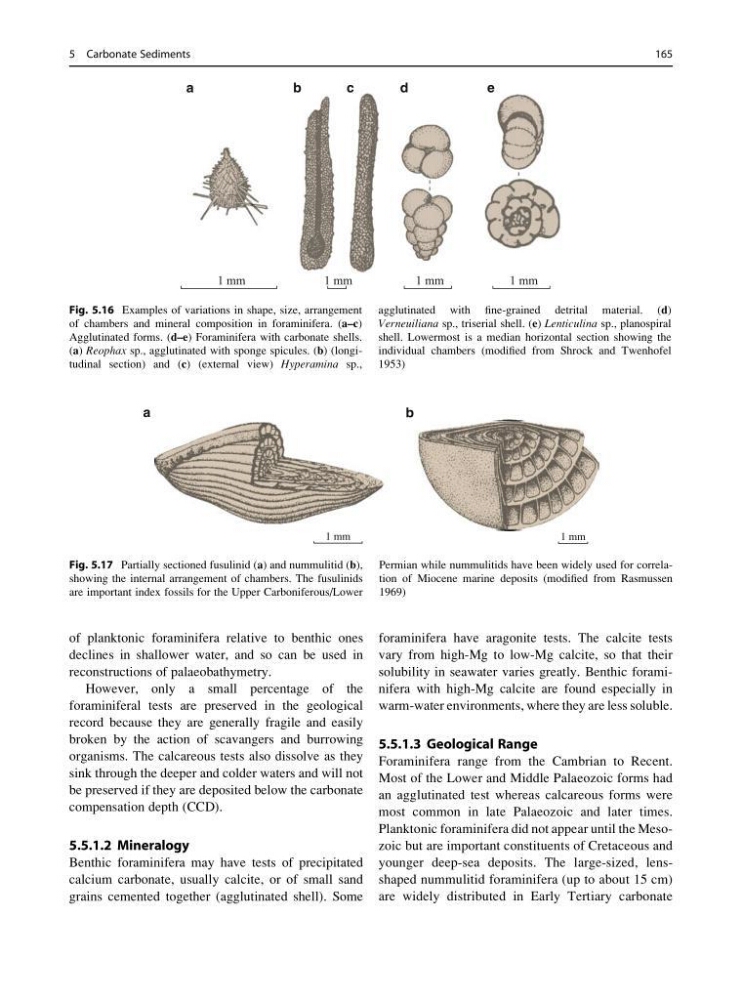
Fig. 5.17 Partially sectioned fusulinid (a) and nummulitid (b),
showing the internal arrangement of chambers. The fusulinids
are important index fossils for the Upper Carboniferous/Lower
Permian while nummulitids have been widely used for correlation of Miocene marine deposits (modified from Rasmussen
1969)
a
b
c
d
e
1 mm
1 mm
1 mm
1 mm
Fig. 5.16 Examples of variations in shape, size, arrangement
of chambers and mineral composition in foraminifera. (a–c)
Agglutinated forms. (d–e) Foraminifera with carbonate shells.
(a) Reophax sp., agglutinated with sponge spicules. (b) (longitudinal section) and (c) (external view) Hyperamina sp.,
agglutinated with fine-grained detrital material. (d)
Verneuiliana sp., triserial shell. (e) Lenticulina sp., planospiral
shell. Lowermost is a median horizontal section showing the
individual chambers (modified from Shrock and Twenhofel
1953)
5 Carbonate Sediments
165
declines in shallower water, and so can be used in
reconstructions of palaeobathymetry.
However, only a small percentage of the
foraminiferal tests are preserved in the geological
record because they are generally fragile and easily
broken by the action of scavangers and burrowing
organisms. The calcareous tests also dissolve as they
sink through the deeper and colder waters and will not
be preserved if they are deposited below the carbonate
compensation depth (CCD).
5.5.1.2 Mineralogy
Benthic foraminifera may have tests of precipitated
calcium carbonate, usually calcite, or of small sand
grains cemented together (agglutinated shell). Some
foraminifera have aragonite tests. The calcite tests
vary from high-Mg to low-Mg calcite, so that their
solubility in seawater varies greatly. Benthic foraminifera with high-Mg calcite are found especially in
warm-water environments, where they are less soluble.
5.5.1.3 Geological Range
Foraminifera range from the Cambrian to Recent.
Most of the Lower and Middle Palaeozoic forms had
an agglutinated test whereas calcareous forms were
most common in late Palaeozoic and later times.
Planktonic foraminifera did not appear until the Mesozoic but are important constituents of Cretaceous and
younger deep-sea deposits. The large-sized, lensshaped nummulitid foraminifera (up to about 15 cm)
are widely distributed in Early Tertiary carbonate
1 mm
1 mm
a
b
Fig. 5.17 Partially sectioned fusulinid (a) and nummulitid (b),
showing the internal arrangement of chambers. The fusulinids
are important index fossils for the Upper Carboniferous/Lower
Permian while nummulitids have been widely used for correlation of Miocene marine deposits (modified from Rasmussen
1969)
a
b
c
d
e
1 mm
1 mm
1 mm
1 mm
Fig. 5.16 Examples of variations in shape, size, arrangement
of chambers and mineral composition in foraminifera. (a–c)
Agglutinated forms. (d–e) Foraminifera with carbonate shells.
(a) Reophax sp., agglutinated with sponge spicules. (b) (longitudinal section) and (c) (external view) Hyperamina sp.,
agglutinated with fine-grained detrital material. (d)
Verneuiliana sp., triserial shell. (e) Lenticulina sp., planospiral
shell. Lowermost is a median horizontal section showing the
individual chambers (modified from Shrock and Twenhofel
1953)
5 Carbonate Sediments
165