

5.4.2.1 Ecology
Red algae are almost exclusively marine and prefer
shallow (<25 m) subtidal environments where the
light is strong. They may, however, range down to a
depth of approximately 250 m. Some of the growth
forms can withstand fairly strong agitation and are
common on shallow, rocky substrates associated with
reef and near-reef environments on platform margins.
Red algae are generally less tolerant of salinity
variations than green algae and cyanobacteria.
During photosynthesis, algae consume CO 2 and
produce oxygen. The absorption of sunlight by water
is not, however, equally rapid for the various constituent wavelengths, the red portion of the spectrum
(longwave light) being more rapidly absorbed than
the blue (shortwave). Red algae can also use blue
shortwave light, enabling them to live at greater depths
than, for example, green algae, which are dependent
on long-wave red light (Fig. 5.9). Areas with carbonate
sedimentation normally have little clastic material in
suspension, and the water is therefore very clear. The
absorption of light drops off exponentially with depth
and below about 50 m there is very little light left.
Most recent green algae grow in shallow marine,
tropical waters of normal salinity, but some tolerate
hypersaline or brackish water. Recent green algae are
abundant in depths of 5–10 m, but may range down to
100 m and also extend into lagoons and mangrove
1 cm
a
b
c
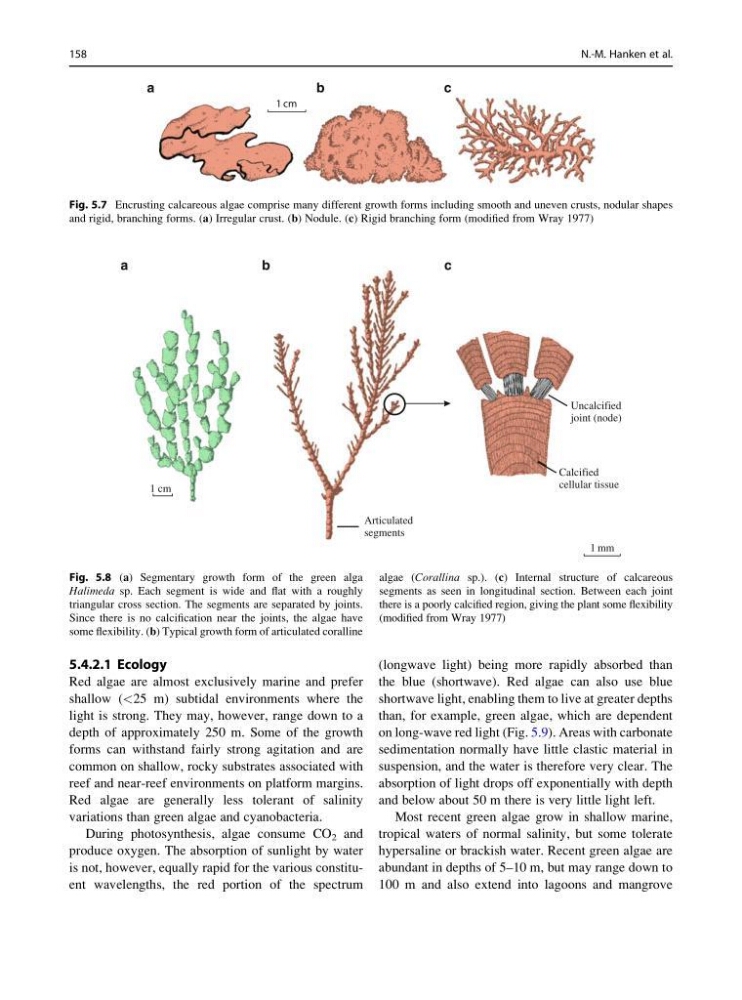
Fig. 5.7 Encrusting calcareous algae comprise many different growth forms including smooth and uneven crusts, nodular shapes
and rigid, branching forms. (a) Irregular crust. (b) Nodule. (c) Rigid branching form (modified from Wray 1977)
1 cm
1 mm
b
c
Articulated
segments
a
Uncalcified
joint (node)
Calcified
cellular tissue
Fig. 5.8 (a) Segmentary growth form of the green alga
Halimeda sp. Each segment is wide and flat with a roughly
triangular cross section. The segments are separated by joints.
Since there is no calcification near the joints, the algae have
some flexibility. (b) Typical growth form of articulated coralline
algae (Corallina sp.). (c) Internal structure of calcareous
segments as seen in longitudinal section. Between each joint
there is a poorly calcified region, giving the plant some flexibility
(modified from Wray 1977)
158
N.-M. Hanken et al.
Red algae are almost exclusively marine and prefer
shallow (<25 m) subtidal environments where the
light is strong. They may, however, range down to a
depth of approximately 250 m. Some of the growth
forms can withstand fairly strong agitation and are
common on shallow, rocky substrates associated with
reef and near-reef environments on platform margins.
Red algae are generally less tolerant of salinity
variations than green algae and cyanobacteria.
During photosynthesis, algae consume CO 2 and
produce oxygen. The absorption of sunlight by water
is not, however, equally rapid for the various constituent wavelengths, the red portion of the spectrum
(longwave light) being more rapidly absorbed than
the blue (shortwave). Red algae can also use blue
shortwave light, enabling them to live at greater depths
than, for example, green algae, which are dependent
on long-wave red light (Fig. 5.9). Areas with carbonate
sedimentation normally have little clastic material in
suspension, and the water is therefore very clear. The
absorption of light drops off exponentially with depth
and below about 50 m there is very little light left.
Most recent green algae grow in shallow marine,
tropical waters of normal salinity, but some tolerate
hypersaline or brackish water. Recent green algae are
abundant in depths of 5–10 m, but may range down to
100 m and also extend into lagoons and mangrove
1 cm
a
b
c
Fig. 5.7 Encrusting calcareous algae comprise many different growth forms including smooth and uneven crusts, nodular shapes
and rigid, branching forms. (a) Irregular crust. (b) Nodule. (c) Rigid branching form (modified from Wray 1977)
1 cm
1 mm
b
c
Articulated
segments
a
Uncalcified
joint (node)
Calcified
cellular tissue
Fig. 5.8 (a) Segmentary growth form of the green alga
Halimeda sp. Each segment is wide and flat with a roughly
triangular cross section. The segments are separated by joints.
Since there is no calcification near the joints, the algae have
some flexibility. (b) Typical growth form of articulated coralline
algae (Corallina sp.). (c) Internal structure of calcareous
segments as seen in longitudinal section. Between each joint
there is a poorly calcified region, giving the plant some flexibility
(modified from Wray 1977)
158
N.-M. Hanken et al.